


In Summary
- Somalia’s community-led rangeland restoration has revived over 200,000 hectares of grazing land in five years, reducing livestock losses during dry seasons.
- Zimbabwe’s adoption of drought-tolerant crops like sorghum has increased yields by up to 40% in dry regions, boosting food security despite erratic rains.
- South Africa’s water recycling projects now supply nearly 10% of urban water demand, easing pressure on traditional sources during extended dry periods.
Deep Dive!!
Lagos, Nigeria, Wednesday, August 27 – Drought influences how African nations plan for food security, water management, and sustainable growth in 2025. Countries are moving beyond short-term relief efforts to long-term strategies ensuring communities thrive despite unpredictable rainfall. Investments in modern irrigation systems, renewable energy-powered water projects, and drought-tolerant crops are becoming central to national development agendas.
Partnerships between governments, local communities, and international organizations are yielding measurable results. Large-scale reforestation programs in the Sahel are restoring degraded lands, while innovative water-harvesting technologies in Southern Africa are improving access to clean water in rural areas. These initiatives represent a growing commitment to resilience and self-reliance, setting the stage for sustainable progress in the face of environmental challenges.
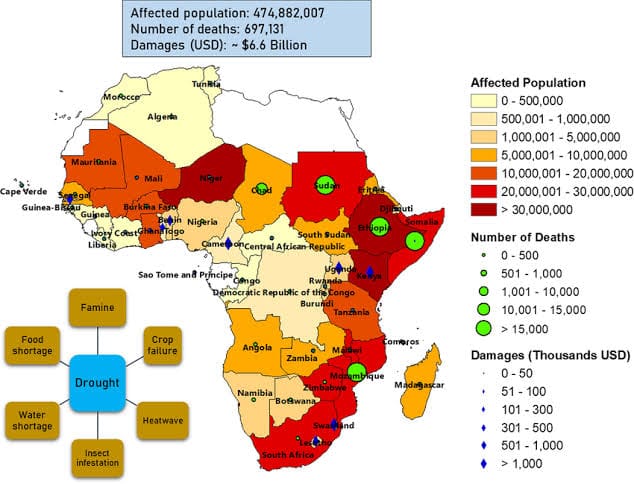
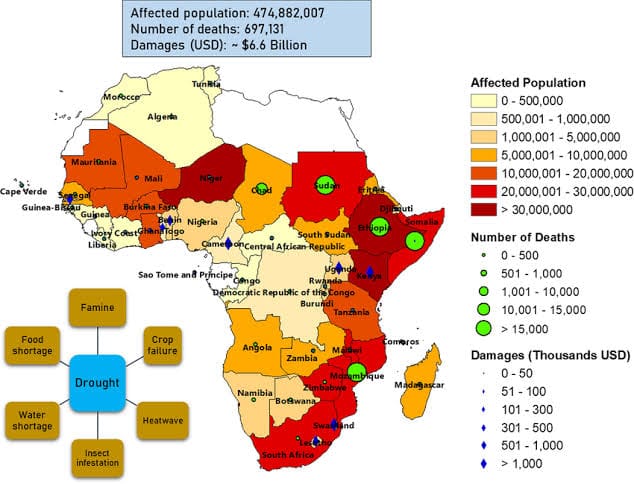
This article highlights the ten African countries most impacted by drought in 2025 and the measures they are taking to adapt and secure their future.
10. Botswana
Botswana faces drought in 2025 particularly in its southern and western regions where rainfall has been below average for several seasons. The country’s heavy reliance on groundwater makes it vulnerable when replenishment is low. Rural farming communities have seen reduced crop yields, especially in sorghum and maize, which are staples in the country. Despite these difficulties, Botswana has taken notable steps to manage the situation.
The government has expanded its National Drought Management Strategy, which focuses on monitoring water resources, supporting farmers with subsidies for animal feed, and investing in small-scale irrigation projects. In areas like the Kgalagadi District, community-led water harvesting systems are helping households maintain supply through the dry months. The country is also working on renewable energy projects such as solar-powered boreholes to secure sustainable water access in remote areas.
Botswana’s approach shows a shift from reacting to drought impacts to actively preparing for them. The focus on long-term solutions such as climate-resilient agriculture and technology-driven water management demonstrates how even landlocked countries with arid climates can adapt to changing environmental conditions.
9. Niger
Niger’s drought data in 2025 shows how it is strengthening its ability to cope with harsh conditions. The country’s northern and central regions have faced extremely low rainfall this year, affecting pasturelands and reducing harvests of millet and sorghum, which are vital for food security. Water levels in parts of the Niger River have dropped, impacting both irrigation and fishing activities. These challenges continue to place pressure on rural livelihoods, yet Niger has been proactive in addressing them.
Large-scale initiatives such as the African Union–backed Great Green Wall project are transforming parts of Niger’s drylands into productive farmland by restoring degraded soil and planting millions of trees. Farmers are adopting zai pits and half-moon farming techniques, which retain water and improve yields even in poor rainfall years. The government has increased support for livestock vaccination and fodder distribution to keep pastoral communities stable during dry periods.
8. Sudan
Sudan experiences drought particularly in the Darfur, Kordofan, and Eastern regions where rainfall has been highly unreliable. This has disrupted agriculture, which is the main source of income for much of the population. Crops such as sorghum, sesame, and groundnuts have been hit hard, and livestock herders have faced challenges as pasturelands dry up. Despite these pressures, Sudan is making progress in adapting to recurring droughts.
The government and local organizations have expanded irrigation networks along the Nile to support farmers who previously relied solely on seasonal rains. Community-led water storage projects, such as small dams and reservoirs, are becoming more common in rural areas, reducing the impact of dry spells. International partners have supported the introduction of drought-tolerant crop varieties, which are improving yields in areas with poor rainfall.
7. Kenya
Kenya faces low rainfall across its arid and semi-arid counties including Turkana, Marsabit, and Garissa. These areas rely heavily on seasonal rains for both farming and pastoralism, making them highly sensitive to dry conditions. Crop production of maize and beans has fallen below average, and livestock losses have increased as grazing lands deteriorate. Despite these pressures, Kenya is advancing measures to reduce the effects of drought on its population and economy.
The country has expanded its national early warning systems, allowing communities to prepare for dry spells before they reach crisis levels. Investment in irrigation schemes in regions like Galana-Kulalu is improving food production beyond the rainy season. Water trucking and borehole rehabilitation projects are keeping remote settlements supplied. Kenya is also promoting climate-smart agriculture, encouraging farmers to diversify crops and adopt practices that conserve soil moisture.
6. Senegal
Senegal faces limited rainfall in 2025, particularly across the northern regions of Louga, Matam, and Saint-Louis where agriculture and livestock are central to livelihoods. Despite this, Senegal is taking significant steps to manage the impact of recurring dry conditions.
The government has prioritized irrigation development in the Senegal River Valley, boosting rice production and reducing dependence on unpredictable rains. Farmers are increasingly adopting drought-resistant crop varieties supported by national research programs. The country is also a leading participant in the Great Green Wall initiative, restoring degraded land and creating green belts that improve soil fertility and prevent desertification.
These efforts demonstrate a commitment to long-term resilience. By strengthening agriculture, restoring ecosystems, and supporting rural communities, Senegal is building a stronger foundation to withstand the pressures of a changing climate.
5. Mozambique
Mozambique is experiencing drought particularly in the southern and central provinces such as Gaza, Inhambane, and Sofala. Agriculture, which employs the majority of the population, has been heavily affected as rain-fed crops like maize and cassava have seen significant declines. Water shortages have also impacted livestock and limited access to safe drinking water in some rural areas.
The government has responded by expanding small-scale irrigation systems that support farmers during prolonged dry spells. Programs promoting drought-tolerant seeds are helping communities sustain food production even in low-rainfall periods. Mozambique is also investing in reforestation and watershed protection projects aimed at improving long-term water availability. International partnerships have supported the construction of solar-powered water supply systems in drought-prone areas, reducing reliance on erratic rainfall.
4. Namibia
Namibia in 2025 faces another challenging year for water security and food production, with low rainfall across the Kunene, Erongo, and Omaheke regions affecting both pastoral and farming communities. The response to these conditions shows a strong focus on adaptation. The government continues to invest in coastal desalination plants that supply water to towns and mining operations, easing pressure on inland sources. Borehole drilling and solar-powered pumping systems are being expanded to remote settlements, ensuring communities have access to reliable water even during extended dry spells.
In agriculture, farmers are receiving training in rotational grazing and sustainable rangeland management to prevent land degradation during drought periods. The introduction of drought-tolerant crop varieties, supported by research institutions, is helping to secure harvests in regions that depend entirely on rainfall.
Namibia is also integrating climate adaptation into national development planning. Large-scale initiatives such as the Namibia Water Sector Support Program are modernizing water infrastructure and improving distribution networks making it rank among the best water and sanitation systems in 2025. Community-based natural resource management programs are empowering rural groups to protect ecosystems that sustain their livelihoods.
4. South Africa
Large areas of the Northern Cape, Eastern Cape, and Free State have recorded below-average rainfall, leading to reduced maize and wheat harvests and forcing livestock farmers to rely heavily on purchased feed as natural grazing declines. Water shortages have also affected hydropower generation and the cooling systems of coal plants, adding pressure to an already strained energy grid.
The government has intensified efforts to manage these conditions. Irrigation schemes in the Vaal and Orange River catchments are being expanded to sustain high-output farming regions. Coastal desalination plants are supplying additional water to major cities, reducing the demand on inland sources. Farmers are receiving support through subsidies for drought-tolerant seeds and training in conservation agriculture, which improves soil moisture retention. Early warning systems have been upgraded to provide timely alerts, enabling communities to prepare for water shortages and minimize…
