


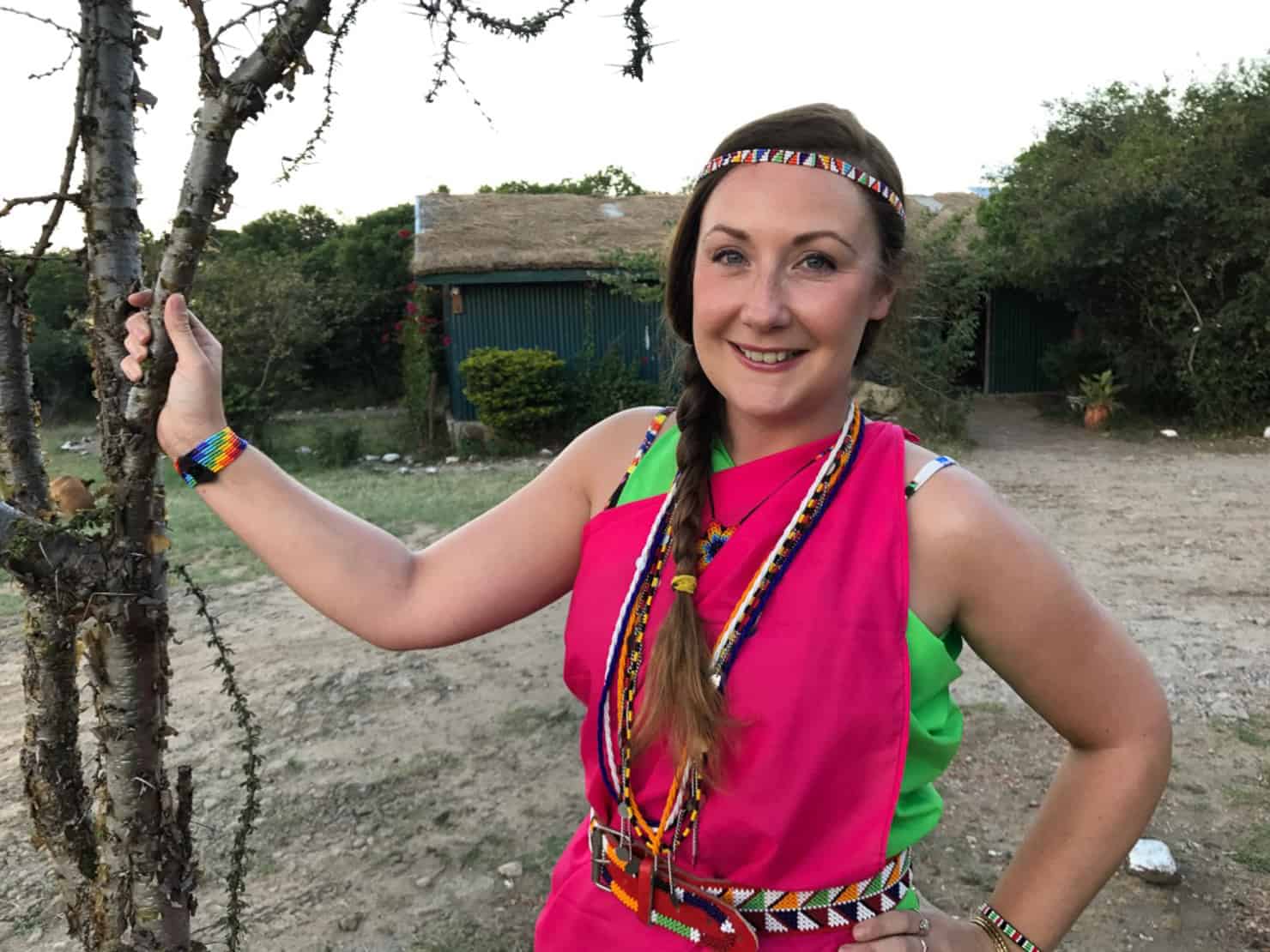
It was August 2017. I was leading my first private tour in Kenya for two couples from the US.
I was hanging out with my friends Dickson and Mike, two Maasai from the village next to Mara Explorers, owned by my friends Laura & Moses.
I met Dickson and Mike a few years ago and we became friends. We talk very openly. I can ask them anything about their culture (and often do) and they are also interested in my culture too. Often we talk about just regular things, like the news, politics, safari, people.
They often call me by the Maasai name they gave me, Naserian, which means “blessed one”.
When I’m in the Mara, Mike and his wife Jane usually invite me round to their home and we share masala tea and chapatis. Jane and I usually exchange gifts.
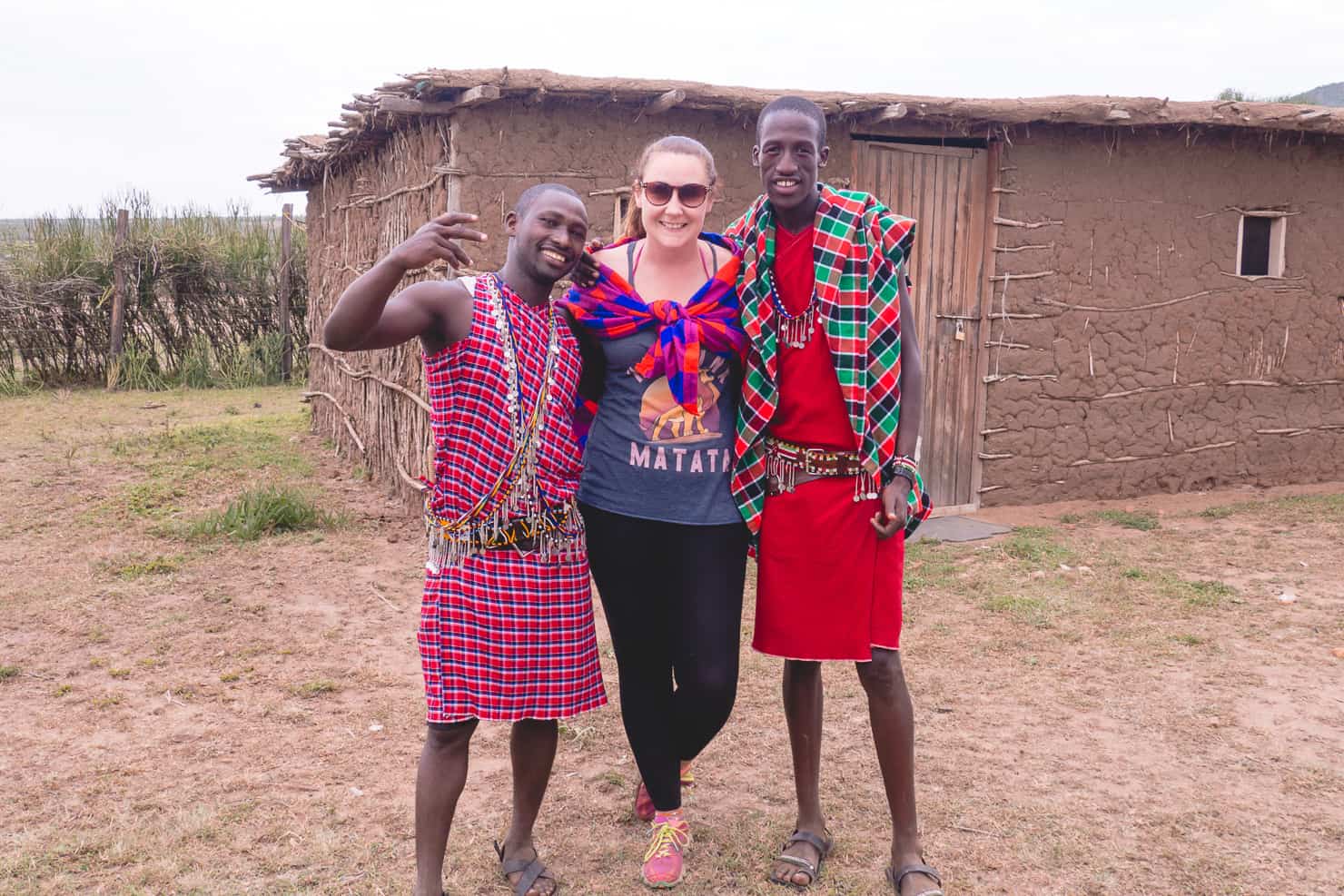
On this occasion, we were talking about their clothes. I already own a few Maasai shukas (blankets) that the Maasai wear and generally buy a different one each time I go to the Maasai Mara as they’re great for keeping warm on a cold safari morning.
I also have a lot of Maasai-made jewellery picked up on my travels around Kenya & Tanzania.
I was admiring their colourful clothing and beaded belts adorned with dangly silver chains when Mike said that as I was an “honourary Maasai”, I should get some Maasai clothes of my own. He said his mum could add the silver dangly bits to the belt if I bought the rest.
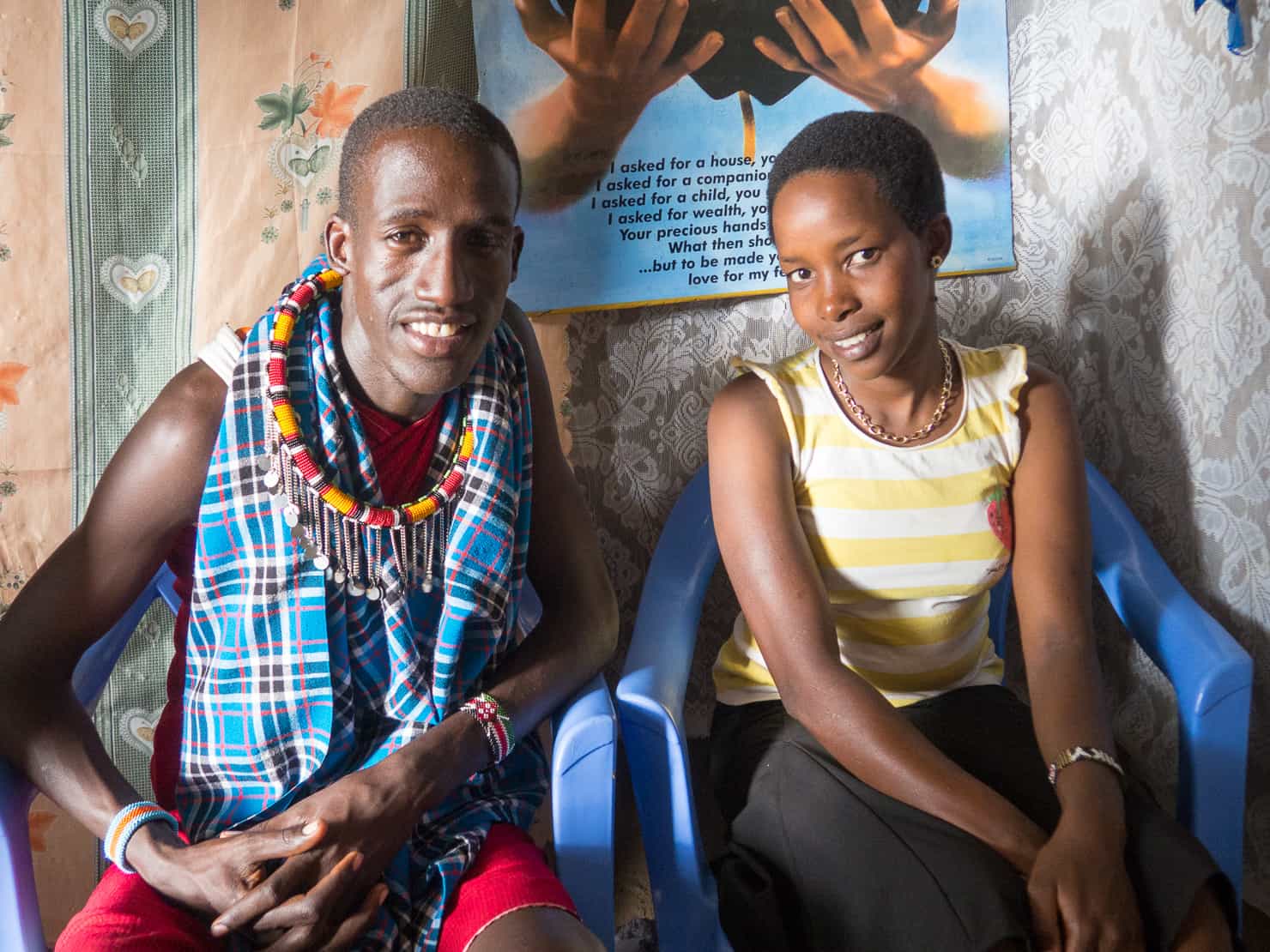
That day Mike was taking my clients out on safari, but Dickson wasn’t working so he suggested that we go shopping in the nearby township of Sekenani to buy my outfit. This sounded awesome, so we arranged to meet after breakfast.
After breakfast, I called at the village, picked up Dickson and we walked the 4km into town.
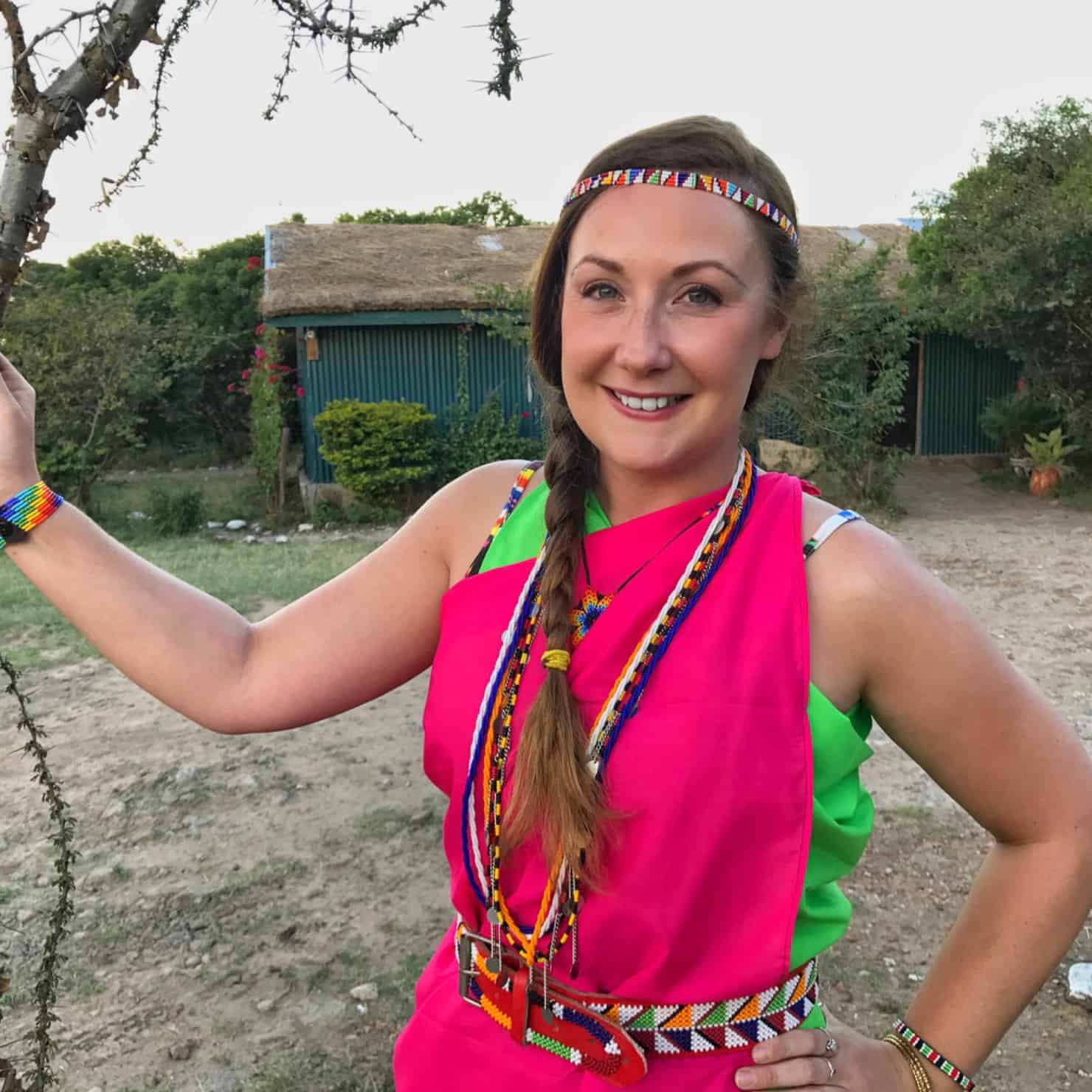
On the way, we met a smartly-dressed Maasai lady, returning from church who gave me a headband. I offered to pay, but Dickson insisted that it was a present and I should accept it, which I did.
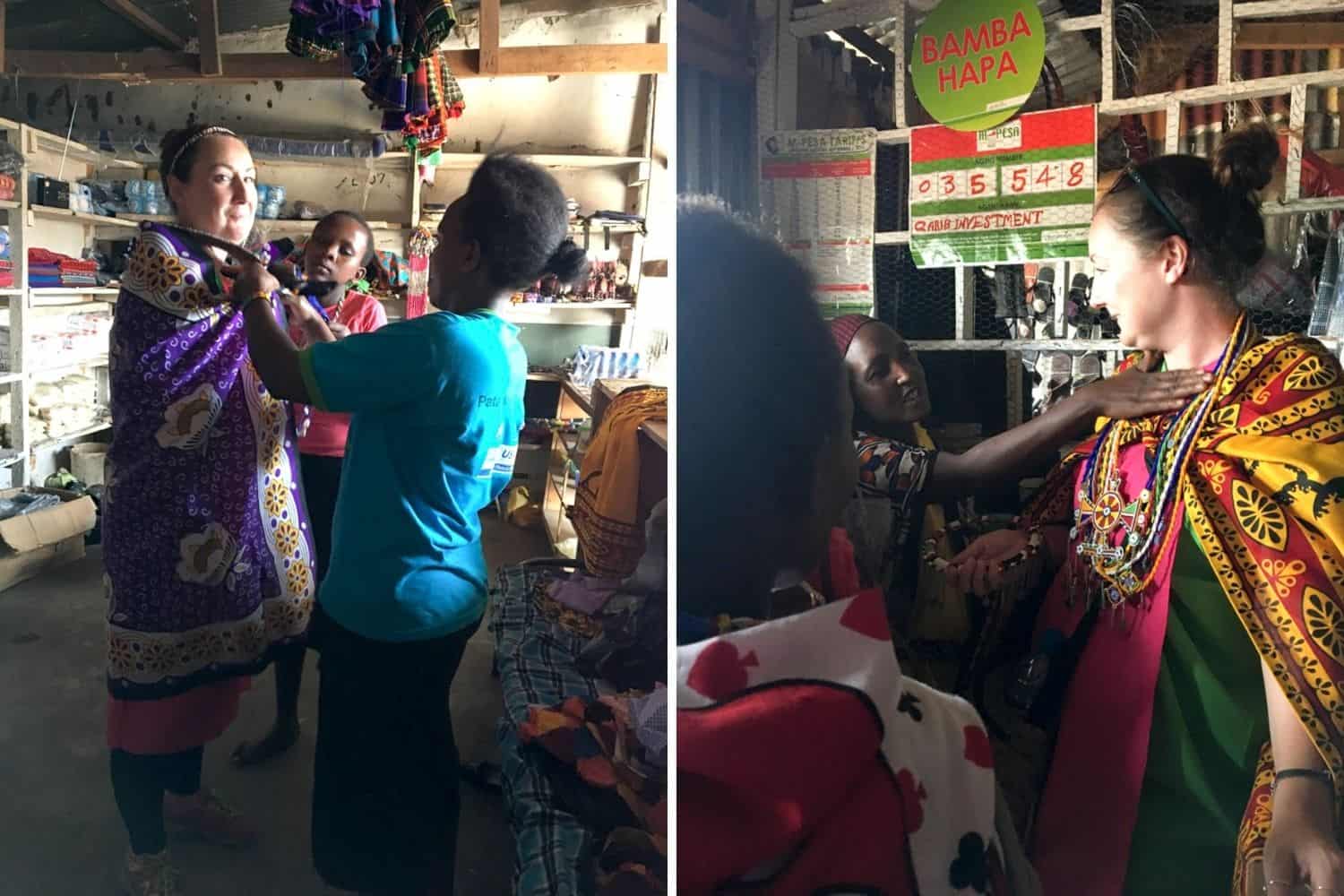
We arrived at a small shop selling the clothes that the Maasai women wear.
I ended up buying two cotton shukas like the Maasai women wear, a pink one and a green one, as well as two lesos (the shawl I am wearing in the below picture) and a beaded belt. Before I knew it, the lady in the shop had thrown the shukas over my head and insisted I wear them to walk home in.
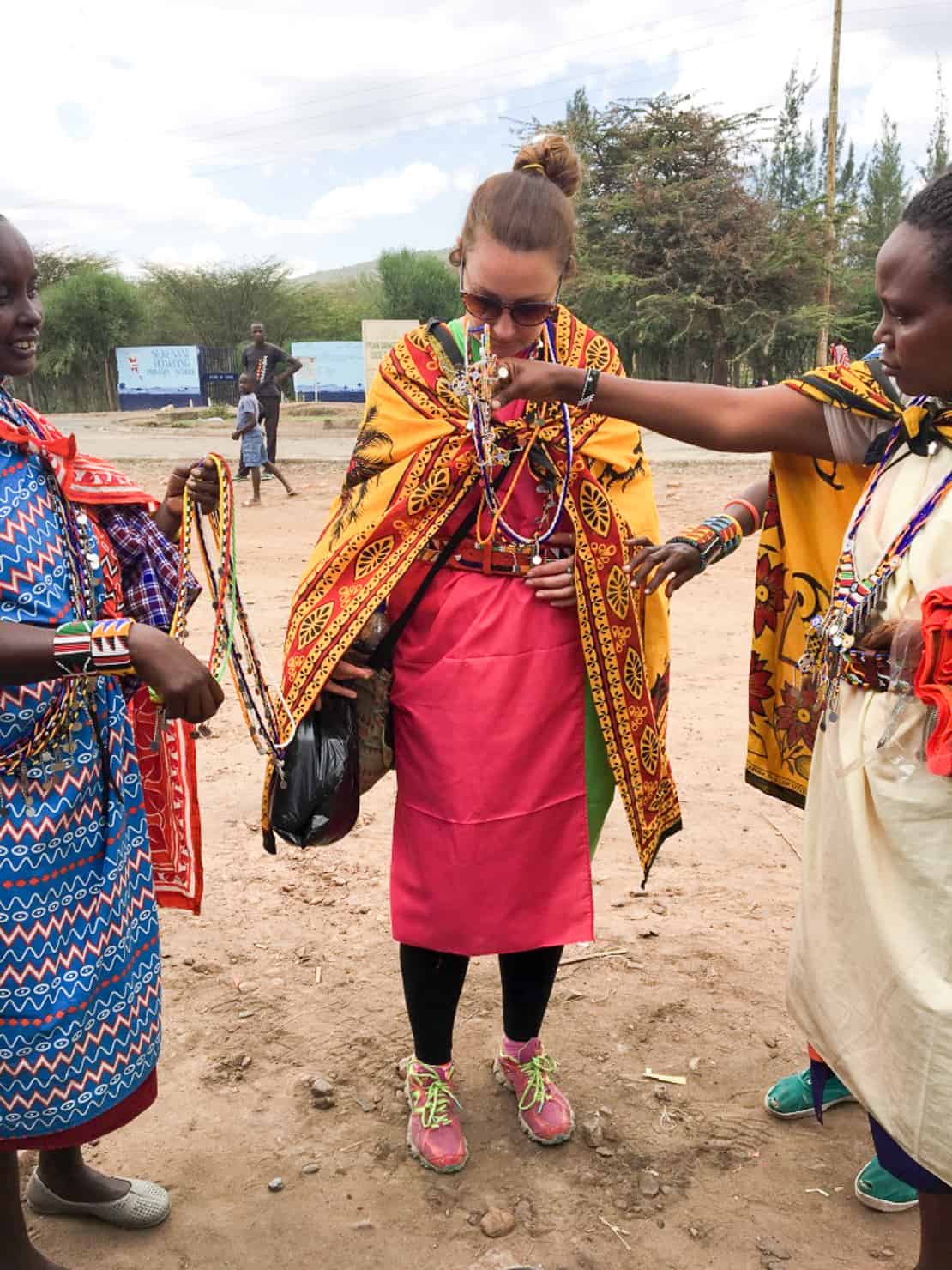
Word had obviously got around that there was a tourist in town who was in a buying mood (you don’t find many tourists here, aside from those checking in at the nearby Sekenani park gate), and a group of the local Maasai women hovering at the door of the shop.
They were selling bangles, earrings, and necklaces and I ended up buying a necklace from one of the ladies.
As I walked home, we attracted quite a bit of attention, as you can imagine.
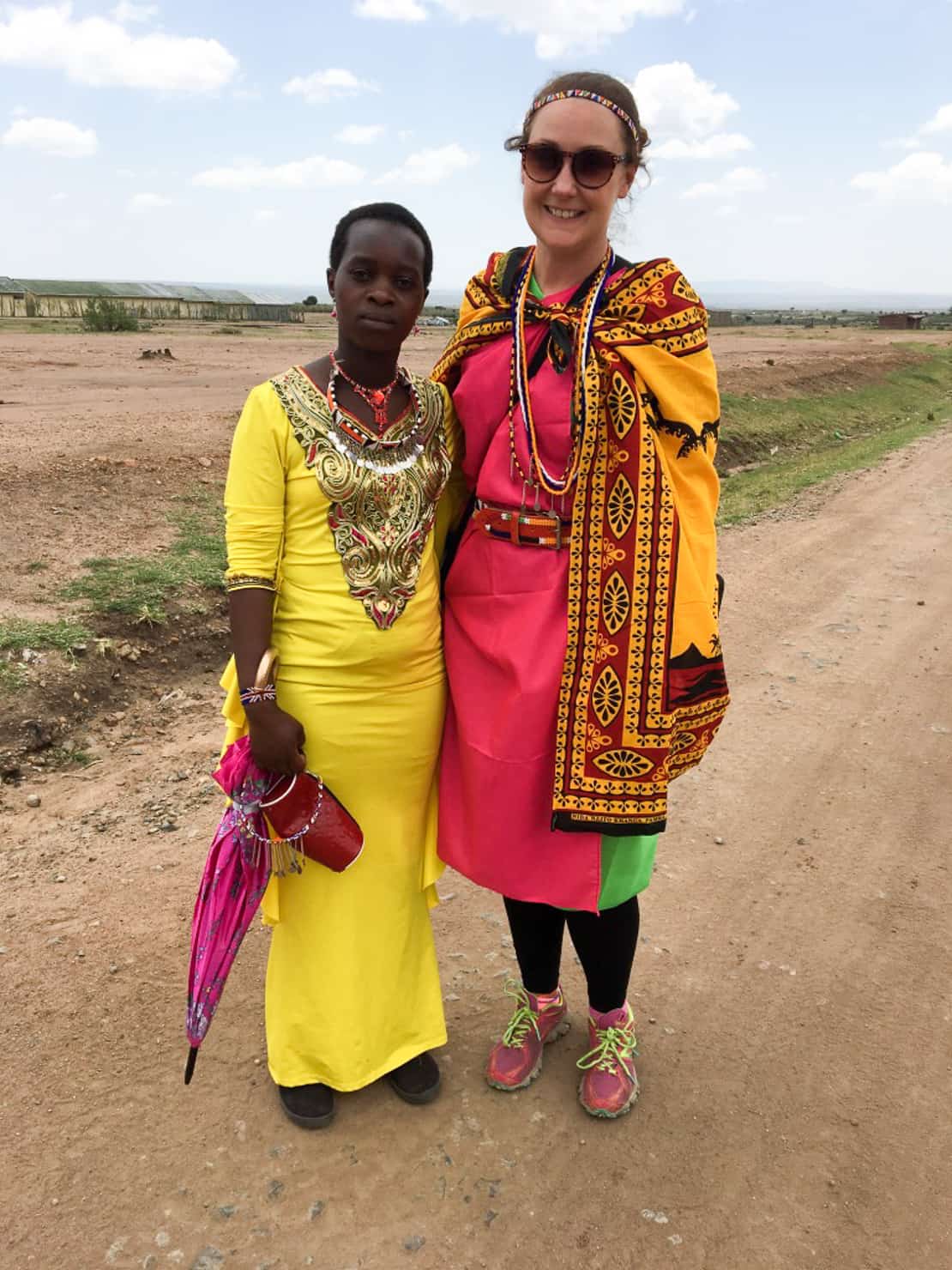
People came running over to tell me how “smart” or “beautiful” I looked. Was I Dickson’s new wife? Was one of the most commonly asked questions.
We ran into the lady who had given me the headband and she asked to have her photo taken with me.
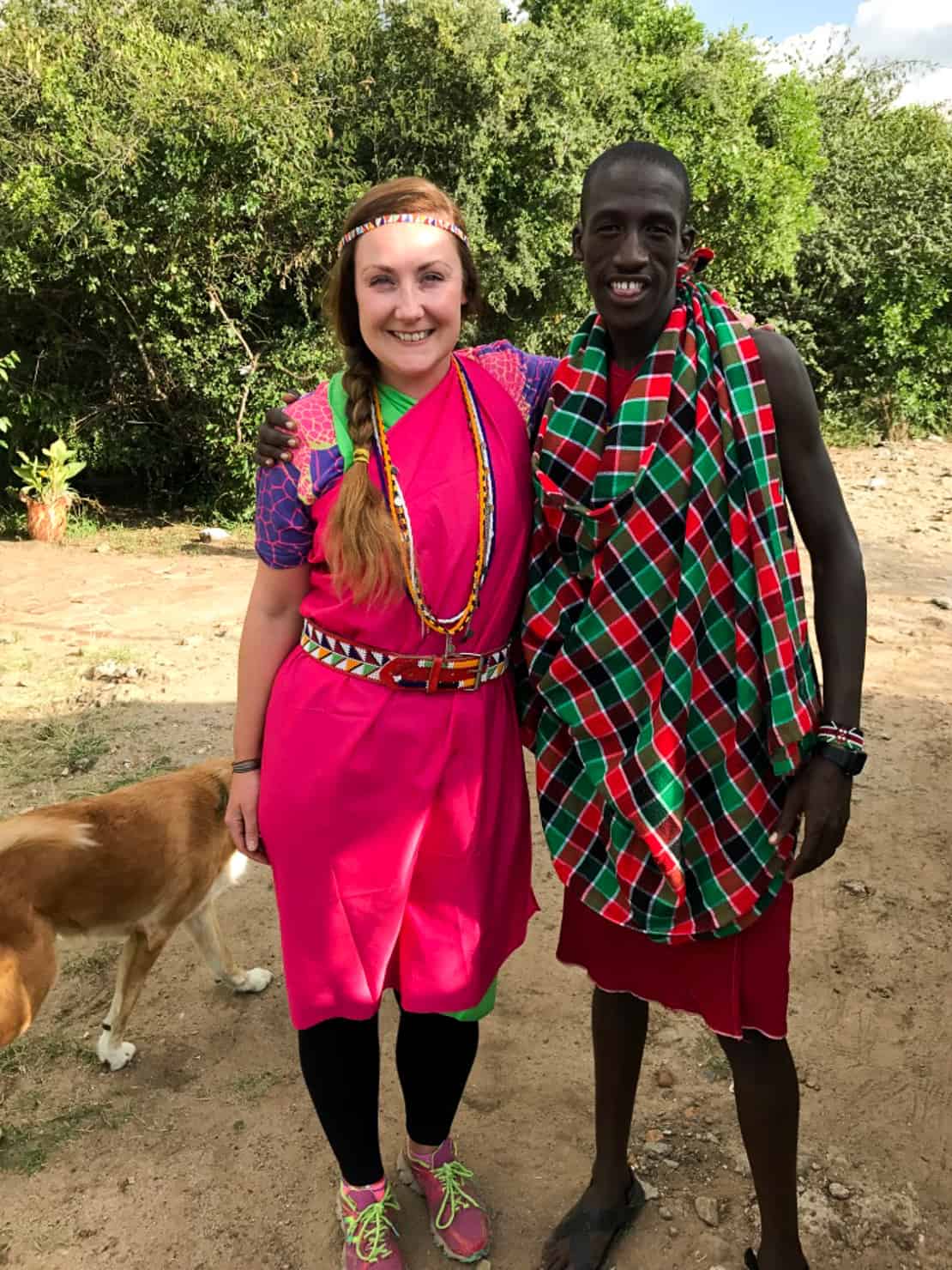
When Mike returned from safari he was super impressed when he saw my ‘transformation’. He too said I looked smart and I wore my new clothes for the rest of the day.
It was only about a year or so later that I even became aware of the term cultural appropriation.
I always try to be a responsible traveller, but wondered if I was guilty of that in this situation?
Cultural Appropriation vs Cultural Appreciation & Africa Travel
What is cultural appropriation?
The Cambridge Dictionary defines cultural appropriation as “the act of taking or using things from a culture that is not your own, especially without showing that you understand or respect this culture.â€
In this video, Travel Blogger and TV Host, Oneika Raymond says:
“Cultural appropriation occurs when a dominant culture adopts elements of a minority culture not because they’re genuinely interested or connected to it, but because it’s fun, cool, edgy or even profitable.”
In this particular video, Oneika is referencing Coachella a music festival in California that is known for cultural appropriation.
More specifically for people taking items of sacred cultural significance from a marginalised group and wearing them as a fashion statement or as a costume.
And most of the people who are wearing these items having no understanding or appreciation for the culture they are appropriating/taking away from.
But this isn’t just an issue at Coachella, it’s many festivals around the world. And it’s not just festivals, it crosses into art, music, religion, food, hairstyles, fashion… all elements of life.
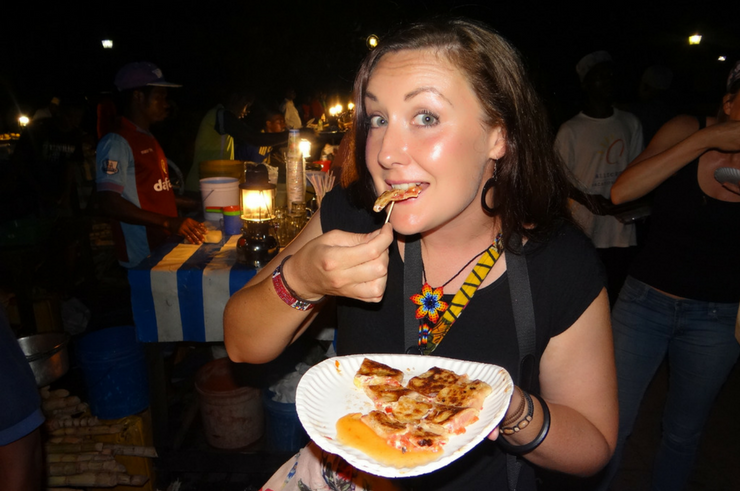
Cultures have been evolving and borrowed since the beginning of time. But when do inspiration and appreciation become appropriation?
Celebrities are often the worst offenders when it comes to cultural appropriation. One of the most famous examples was when supermodel Karlie Kloss wore a Native American headdress, moccasins, and a fringed bikini at the Victoria’s Secret catwalk show.
Adele came under fire last year after she wore a bikini top printed with the Jamaican flag, with her hair in Bantu knots, in a picture referencing the Notting Hill Carnival. An annual event that celebrates Black British culture in her home city of London. The caption read “Happy what would be Notting Hill Carnival my beloved London.”
The opinions were divided. Some people slammed her for cultural appropriation. Others, including many Jamaicans/Jamaican descendants, praised the look.
The use of the word “Namaste” at the beginning or end of yoga lessons has been called cultural appropriation.
Now, I am a yoga teacher and I was taught by Indian teachers at a Goan yoga school, who taught me to say Namaste at the beginning and end of my lessons.
The way they taught me, is that yoga is something that cannot be owned or stolen, only taught and shared.
I always think of this as an appreciation of the origins of yoga which dates back to ancient India and I fully believe in the sentiment. There is no word in the English language that even comes close to being able to capture the beauty and the essence of yoga.
Without honouring the roots of yoga, it could be very easy for the true purpose of yoga to be lost.
But does that mean that I have any right to use it?
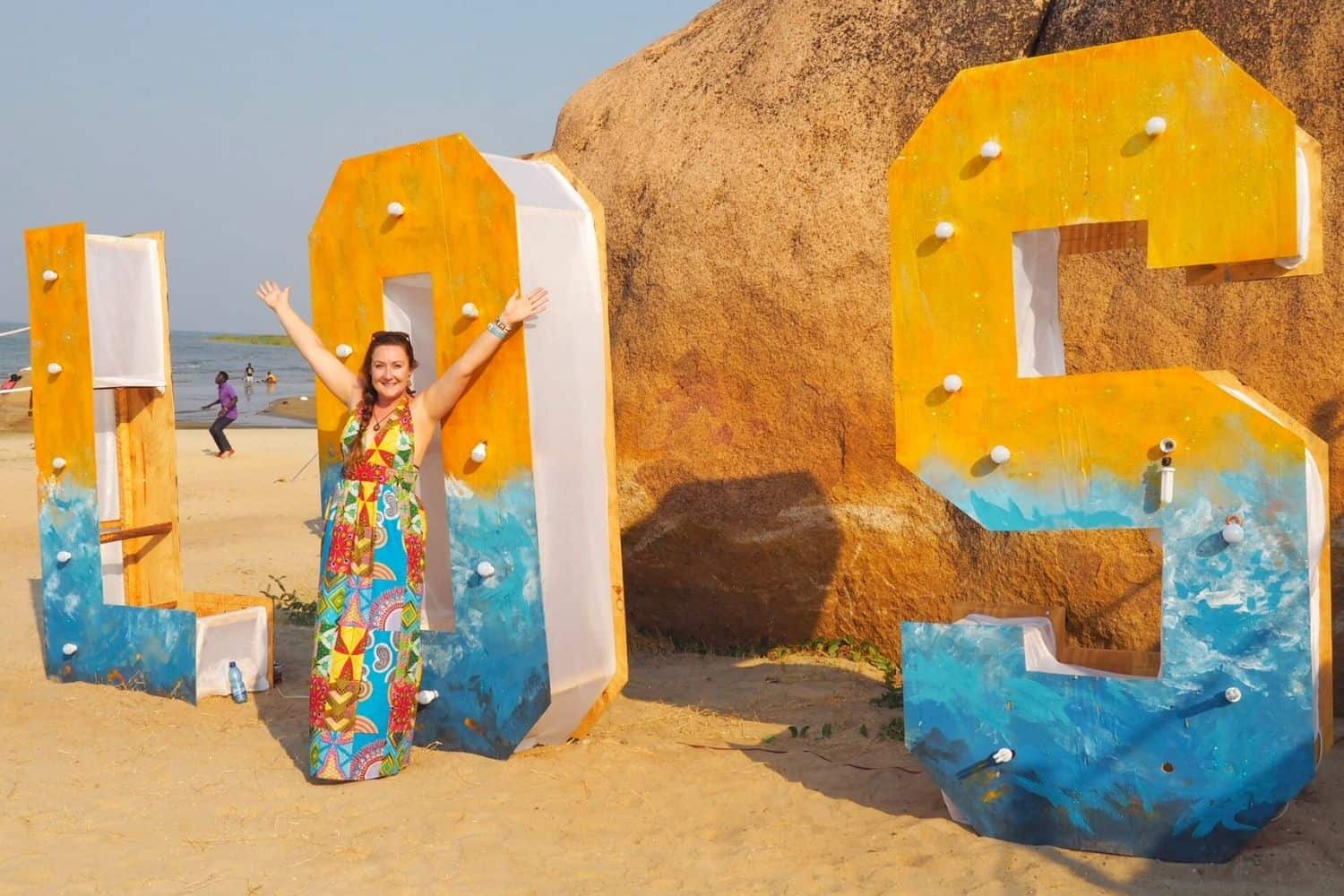
I love African fabrics. In the above picture, I’m at the Lake of Stars festival in Malawi, wearing a dress that I had made in Zambia, with material bought at a Zambian market.
But is wearing something or being inspired by something from another culture always cultural appropriation?
I think it very much depends on the circumstances. Then again, I am a white woman, so my experience is coming from a place of privilege.
I’m no expert and I don’t have all the answers here. But I am interested in opening a dialogue and learning from others’ opinions and thoughts on the subject.
Through my research, I’ve learned that there is a very thin line between cultural appropriation and cultural appreciation.
On IDEAS.TED.COM says:
“It comes down to the spirit in which you wear a garment — and whether that spirit communicates respect versus condescension. The line between celebration and appropriation gets crossed when there is the unacknowledged or inappropriate adoption of the customs, practices, or ideas of one group by another, typically more dominant group. It comes down to whether you’re aware of a look’s cultural history, whether you give credit where it is due (as opposed to renaming the style), and how you honor whatever you are borrowing. So borrow away — just be conscious about it.”
Similarly, in this video Franchesca “Chescaleigh” Ramsey, talks about circumstances that it might be appropriate to wear something from another culture. She says:
“Say you’re invited to an Indian wedding and you’re not Indian, wearing a traditional sari or getting henna would be a great example of cultural exchange. You’re bring invited to participate, enjoy the culture instead of just picking and choosing parts of it for yourself.”
Going by the explanation above, me wearing Maasai clothes in that situation was cultural apprciation, as I was invited to partake in a cultural exchange by friends who are of that culture. This is not a case of dominance, exploitation, or oppression.
However, if I were to then wear that outfit to a costume party, reinforcing stereotypes or making fun of a culture, that would not be ok and that would cross over the line into cultural appropriation.
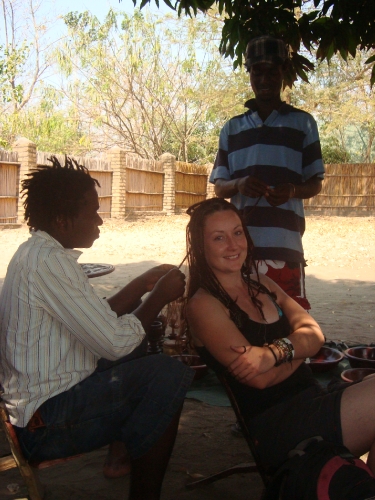
That’s not to say I haven’t been guilty of cultural appropriation in the past. I definitely have. I admit that and I am 100% sorry for it.
At the time, I didn’t know any better.
But what I can do is learn, apologise, move forward, and try to help bring awareness to the issue.
Either way, I know that me, as a white woman dressing in traditional Maasai clothes, may upset some people – regardless of my intentions or the story behind it.
But then what about in other scenarios? What about wearing African print? Or African jewellery?
When I travel I buy quite a lot of stuff because I like to support local businesses, they’re a reminder of a place I love and I genuinely like the items.
But does that mean I have any right to wear those things? I honestly don’t know.
I’m sure some people will say yes, and some will say no.
I have blankets, fabric, scarves, bags, clothes, art, and jewellery from every single African country I’ve been to. And I want to wear them. If I can’t wear them, what is the point in buying them?
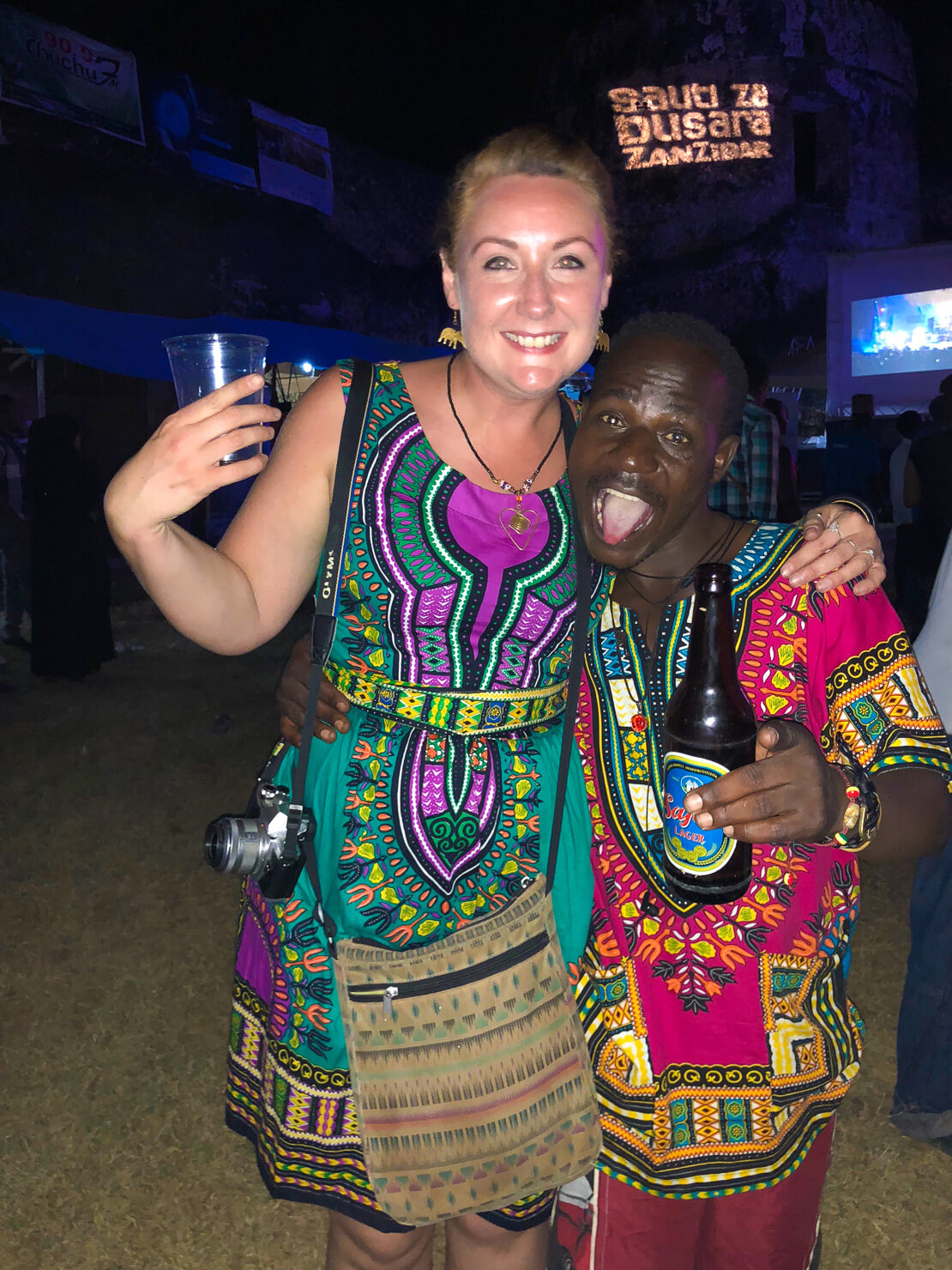
I have outfits and skirts made from African fabrics. Most of which I bought at local market stalls and had made up into items of clothing by a local tailor. I have Dashiki shirts and dresses. And I wear them often – both in Africa in the UK.
Me and the guy in the picture above bonded at the Sauti za Busara festival due to the fact we were wearing matching outfits.
But does wearing things you’ve…
