


A few years before the cataclysmic end of Mars Hill, I can remember Mark Driscoll exhorting pastors to preach like Arminians but sleep like Calvinists. And as much as I appreciated it at the time, if we’re honest that line is all heat and little light. In fact, I think a good case can be made for preaching like a Calvinist, as Lucky Mogakane has done. Furthermore, if our theology informs practice—something no one should deny—Driscoll’s rhetorical flourish ends up looking a little silly. All of that brings us to the question of this short article: why wasn’t Isaiah’s ministry more successful?
Perhaps a few tweaks to Isaiah’s methods would’ve resulted in greater results in his ministry.
Perhaps a few tweaks to his methods would’ve resulted in greater results in his ministry. Maybe some well-informed and strategic changes would’ve yielded better outcomes to his preaching? Oh, if only Isaiah had implemented a better ministry model, his preaching might’ve averted Israel’s exile. But he didn’t. He failed. Miserably. By many accounts, he didn’t succeed. All this begs the question—at least, for those who believe growing the church is up to men or their methods, and (dare I say it) Arminians—what Isaiah might’ve done differently.
Having recently had an opportunity to preach on Isaiah, and also teach it in an adult Sunday school class, I’ve enjoyed the opportunity to reflect on the book as a whole and the prophet’s calling. So, why wasn’t Isaiah’s ministry more successful?
God Commissions His Prophet
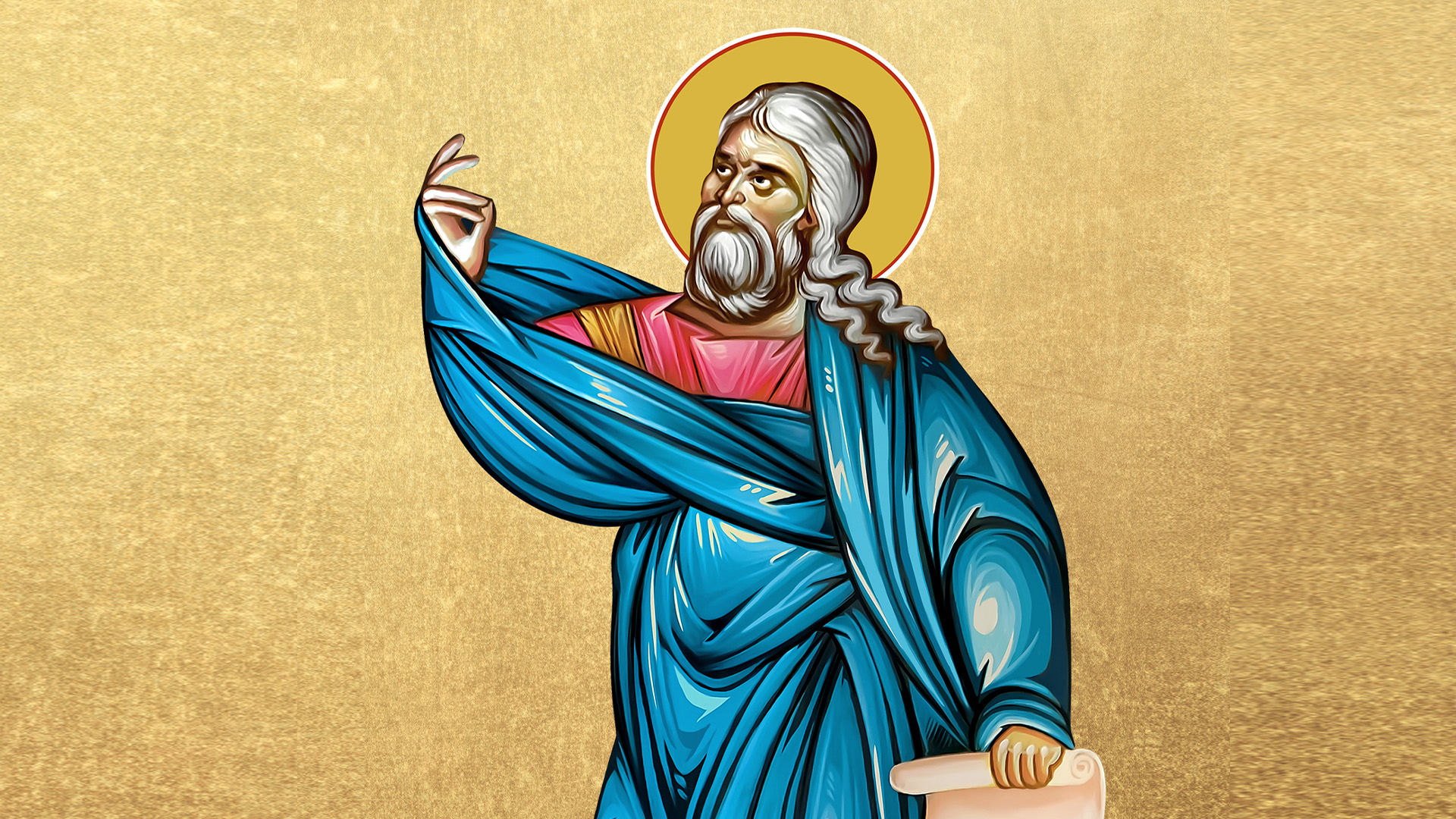
Some readers will already know the answer. It’s Isaiah’s commission. After God makes atonement for the prophet (Isaiah 6:6-7), the latter is sent to preach (Isaiah 6:9). The message given to the prophet contains what he could expect from his ministry.
The prophet couldn’t turn back the sovereign God’s hand.
Israel will hear without understanding, and see without perceiving (Isaiah 6:9). Their hearts would grow increasingly dull, instead of turning back to God (Isaiah 6:10). So the prophet cries out: “How long, O Lord?” God answers: “Until cities lie waste without inhabitant, and houses without people, and the land is a desolate waste, and the Lord removes people far away, and the forsaken places are many in the midst of the land” (Isaiah 6:11-12). Finally there is the slightest suggestion of a remnant, a mere tenth. Only God says that that too will burn like an oak until nothing but a holy seed is left (Isaiah 6:13).
God Is Sovereign Over Isaiah’s Ministry
The reason Isaiah’s ministry ushered Israel into exile rather than national repentance was because of the sovereign God at work in history. No amount of pragmatism could’ve saved his hearers. Regardless of how many conferences he attended to help him adjust his approach, the prophet couldn’t turn back the sovereign God’s hand (Isaiah 40:2).
If you were hosting a conference, you probably wouldn’t make Isaiah your keynote speaker.
A striking aspect of Isaiah’s ministry and the eponymous Old Testament book is its mingling of salvation and judgment—both are promised. Redemption is repeatedly held out, yet God’s wrath is treated as imminently unavoidable. Just look again at the prophet’s commission. “Make the heart of this people dull, and their ears heavy, and blind their eyes; lest they see with their eyes, and hear with their ears, and understand with their hearts, and turn and be healed” (Isaiah 6:10). So God commissioned Isaiah to call Israel back to himself and simultaneously told the prophet that they wouldn’t. If anything, Isaiah’s ministry compounded their guilt and accountability. Israel’s refusal of God’s proffered salvation spelt judgment. Isaiah preached both.
In the end, among Isaiah’s hearers very few people turned back to God. Though this shouldn’t surprise us (Isaiah 6:13). Across a ministry that spanned around half a century, some 50 years, the prophet’s metrics make for poor reading. To adapt something I wrote in a recent post: if you were hosting a conference on Christian leadership you probably wouldn’t make Isaiah your keynote speaker. For, compared with the pantheon of megachurch pastors, he appears unambitious and unsuccessful.
Isaiah’s Ministry Could Never Outgrow God’s Purposes
Being a short article, I don’t have time to chase down all the implications; nor to tie up all the threads. I started off by turning over Driscoll’s rhetorical flourish: preach like an Arminian; sleep like a Calvinist. So let’s try get back there. As I said: for Christians, praxis should be a consistent outworking of our theology. So Driscoll’s exhortation was foolish, in the end.
The Old Testament people of God could never outgrow God’s sovereignty. Neither will your church.
Likewise, the conclusion that Isaiah’s ministry was unsuccessful is a stupid one. And while Old Testament scholars will take umbrage with me labelling him as such, I reckon we might call Isaiah a Calvinist. That is, the outcomes of his ministry could never surpass the Lord’s intentions—nor could they fall short of them. This seems baked into his commission. On one level, a profoundly fundamental and theological one, the prophet’s preaching would never succeed; and on another, it did. Israel were exiled, after being amply warned and urged to repent. The prophet was a faithful witness to the God who called him. The Old Testament people of God could never outgrow God’s sovereignty. Neither will your church.
“Not One Is Missing”
In Holiness, John Webster notes that Ephesians 2:8-10, “entails an affirmation that the agency at the heart of the Church is God’s. There is,” Webster continues, “accordingly, a proper passivity to the being of the Church, for faith — that is, recognition and assent and trust in the word and work of God — and not boasting — that is, self-grounded, proud competence — is the fundamental act of the Church’s existence.”
The outcomes of Isaiah’s ministry could never surpass the Lord’s intentions—nor could they fall short of them.
But perhaps the prophet under consideration put it better. “Lift up your eyes on high and see: who created these? He who brings out their host by number, calling them all by name; by the greatness of his might and because he is strong in power, not one is missing” (Isaiah 40:26).
