


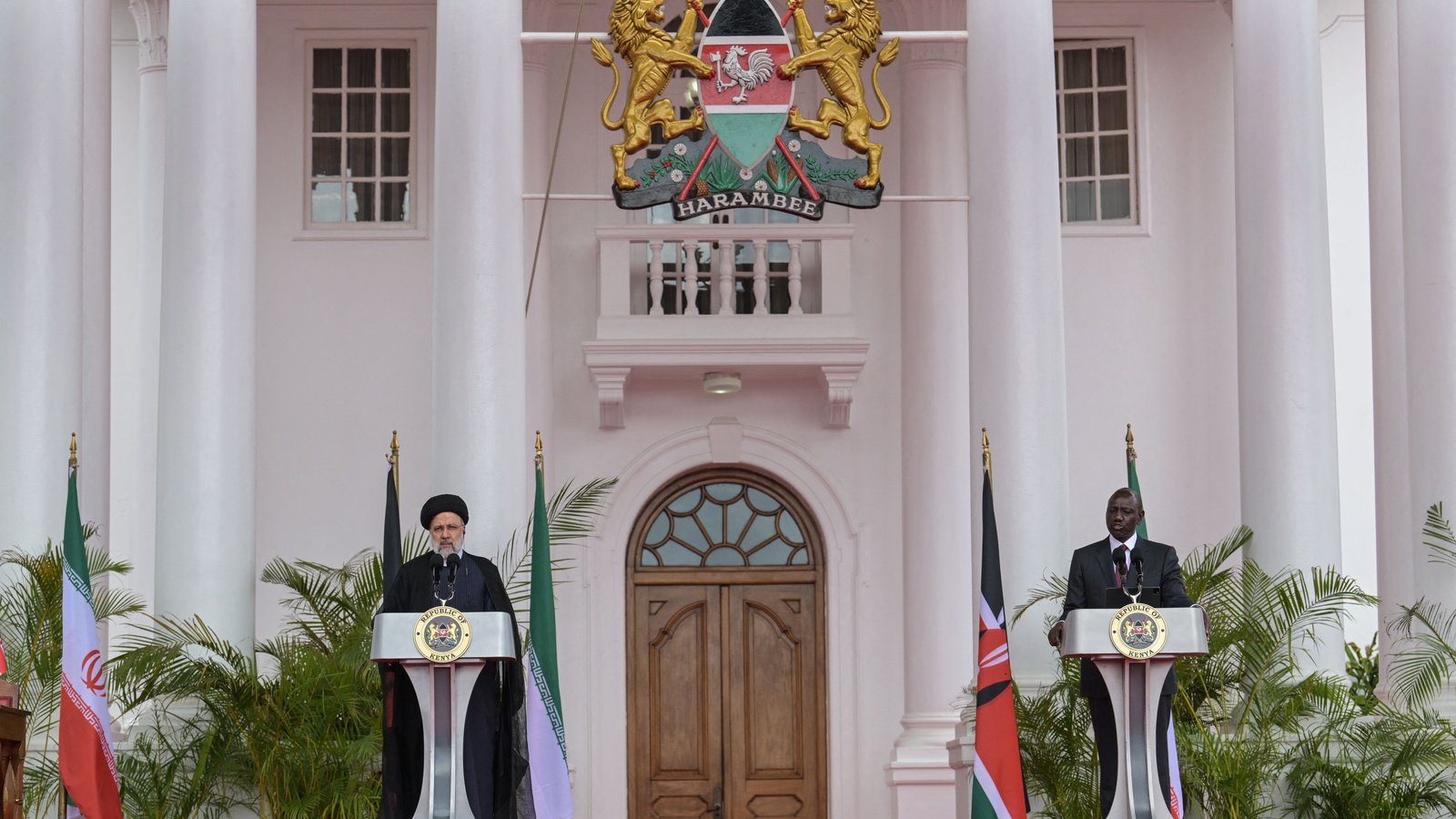
When Iranian President Ebrahim Raisi made a swing through east and southern Africa last week, his agenda was unsurprising. He sought to evade isolation by shoring up relations with Kenya, Uganda, and Zimbabwe, signing a flurry of agreements aimed at enhancing cooperation and trade, though whether these deals yield much in the way of results remains to be seen. He seized on the opportunity to align himself with Ugandan leadership in support of its new, draconian laws targeting the LGBTQ+ community, finding common ground in a toxic and hateful campaign. In Zimbabwe’s President Mnangagwa, he found a host particularly eager to embrace a helpful narrative of resolute solidarity in the face of Western sanctions. All of the “highlights” were predictable.
But the absence of surprises should not prevent the United States from seizing on two important lessons that Raisi’s tour helped to drive home. First, African states will continue to welcome a diverse array of potential partners as governments struggle to meet the demands of their populations. For example, the U.S.-Kenya relationship is a strong one. But Kenyan President Ruto is under pressure to deliver new opportunities to young Kenyans eager for jobs and socioeconomic mobility, while operating with very little fiscal space. For leaders charged with delivering on Kenyan ambitions, a potential new trade partner or market for Kenyan goods is an opportunity to seize, even if that partner is Iran. Washington will need to keep these engagements in perspective, while reckoning with a more serious problem.
More on:
Sub-Saharan Africa
U.S. Foreign Policy
Kenya
Diplomacy and International Institutions
As Raisi demonizes the West and as the BRICS diplomatic bloc pursue African expansion plans, it should be clear that allowing others to cast the United States as the chief architect and enforcer of the status quo in African states is a massive strategic mistake. For all the region’s diversity, one reliable through line across African public opinion is an appetite for change. From Kenyans and Angolans at their wits end with the rising cost of living, to Malians and Congolese frustrated by persistent, and often terrifying, insecurity, populations across the continent are rejecting old formulas and looking for new answers. Other external powers like Russia and Iran may have little to offer by way of sustainable solutions to persistent problems. But they can create real trouble by offering up ready scapegoats to blame for what is going wrong—namely, Western powers that hold privileged positions of leadership and influence in the international architecture that fails so many African populations.
Every time a security crisis in Europe becomes a top priority while one in Africa generates little high-level engagement, America’s adversaries can capitalize on the disparity to gain traction. Every time debt relief negotiations drag on at a snail’s pace, it’s easier for others to claim that Washington wants to keep African states impoverished and dependent—even when the foot-dragging is not coming from Washington. When Africans pay a premium for capital to meet critical infrastructure needs, the message that the system is intentionally stacked against them gains currency. Every time management of global crises like COVID-19 or climate change leaves Africans at the back of the line for vaccines or coping with devastating consequences of others’ emissions, non-African powers at odds with the United States will capitalize on the resulting outrage and suffering. It’s a short distance from frustration with all of the structural challenges African populations face to blaming the most powerful actor on the international stage for upholding these structures, and there are plenty of actors ready to encourage that journey.
Washington has to find meaningful ways to demonstrate that it, too, is interested in reform to the rules-based international order that was designed without African equities in mind. This has to be about more than membership in the G20 or endorsements of reform to the utterly dysfunctional United Nations Security Council. It requires listening more closely to the many African proposals to amend the way international systems work, and taking action to affect real, substantive change. It also requires acknowledging what is not working in our policies, or where our efforts at forging partnerships fail to align with the priorities of African populations. The African appetite for trying something new is undeniable, and external actors of all stripes have taken note. The United States needs to find the will to meet the moment, or risk becoming a perennial scapegoat.
More on:
Sub-Saharan Africa
U.S. Foreign Policy
Kenya
Diplomacy and International Institutions
