

Close Menu
  • Home
  • Free Gifts
  • Self Help
  • Make Money
  • Video
  • Hot Deals
Facebook X (Twitter) Instagram
Thursday, September 10
Facebook X (Twitter) Instagram
Afro ICONAfro ICON
  • Politics
  • Economy
  • Entertainment
  • Technology
  • Sports
  • Society
    1. Art and Culture
    2. Education
    3. Family & Relationship
    4. View All

    Gathered by God to Worship: Why We Meet

    August 10, 2026

    Networks of Belonging: A Series of Artistic Exhibitions across East Africa

    August 9, 2026

    A Voice above the fray (Q&A)

    August 8, 2026

    Explaining the theory of political ‘Morari’ in Zimbabwe

    August 7, 2026

    ACC reiterates UCT Council’s call to reject acts of xenophobia and violence

    August 10, 2026

    Urban95 Academy expands to Africa in partnership with the African Centre for Cities

    August 7, 2026

    Olaudah Equiano: Lost grave of daughter of slave turned pioneer abolitionist found by A-level student

    November 10, 2025

    Tanzania: President Samia Hassan’s grip on power has been shaken by unprecedented protests

    November 7, 2025

    Vacancy: Project Coordinator (City Hall Fellowship)

    August 10, 2026

    Gender roles in African societies

    November 23, 2025

    Empowerment of women in Africa

    November 23, 2025

    Barriers to Women’s Leadership in Africa

    November 23, 2025

    7 Celebrity Transitional Fall Outfits to Recreate Now

    September 5, 2026

    Iyabo Ojo Goes From Cowboy Glam to Orange Mini Dress for Rakeem’s First Birthday

    September 1, 2026

    Progress Doesn’t Happen In Silos and Why the Law of Proximity Matters

    August 28, 2026

    Shocked Details Of How Gorgeous Zambian Model Lisa Mutambo Mysteriously Died Suddenly After Night Out

    August 24, 2026
  • Lifestyle
    1. Foods & Recipes
    2. Health & Wellness
    3. Travel & Tourism
    Featured
    Recent

    7 Celebrity Transitional Fall Outfits to Recreate Now

    September 5, 2026

    Why Nike Air Rift White Sneakers are a Must-Have for Your Wardrobe

    September 4, 2026

    Discover the Versatility of Nike Air Rift Buckle Strap: From Streetwear to Athleisure

    September 4, 2026
  • International
    • Asia
    • Europe
    • North America
    • Oceania
    • South America
Afro ICONAfro ICON
Home»Lifestyle»Travel & Tourism»Interesting facts about elephants at Letaba rest camp, Kruger – Roxanne Reid
Travel & Tourism

Interesting facts about elephants at Letaba rest camp, Kruger – Roxanne Reid

King JajaBy King JajaOctober 2, 2021No Comments0 Views
Facebook Twitter Pinterest LinkedIn WhatsApp Reddit Tumblr Email
Interesting facts about elephants at Letaba rest camp, Kruger – Roxanne Reid
Share
Facebook Twitter LinkedIn Pinterest Email

By Roxanne Reid
I don’t know about you but elephants, especially the young and playful ones, are among my favourite animals to watch. I can do it for hours. To enhance your appreciation of these fascinating animals, find out some interesting facts about elephants when you visit Letaba rest camp in South Africa’s Kruger National Park.

​
​The first time we popped in to the Letaba Elephant Hall, or info centre, at Kruger’s Letaba rest camp many years ago, we thought it might be a good way to cool down in air-conditioned luxury for 20 minutes, away from the heat and humidity outside (it had been 32 degrees and 80% humidity that day). What we discovered was a place that deserved much more detailed attention. Now we never miss a chance to return to remind ourselves of some elephant facts whenever we’re at Letaba.
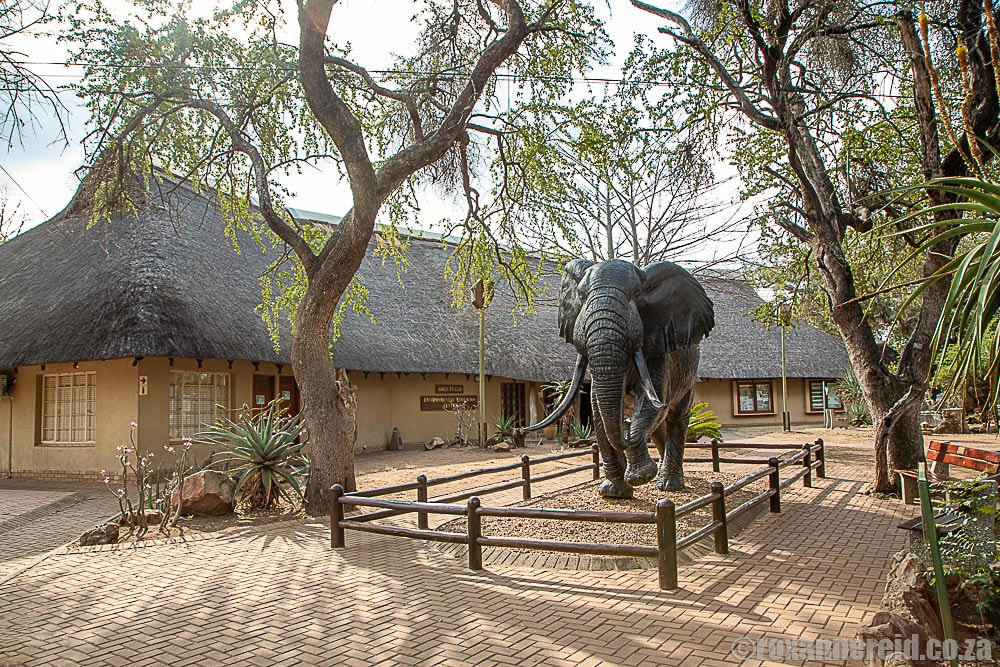
Letaba Elephant Hall, Letaba rest camp, Kruger National Park

Statue of an elephant outside the Letaba Elephant Hall

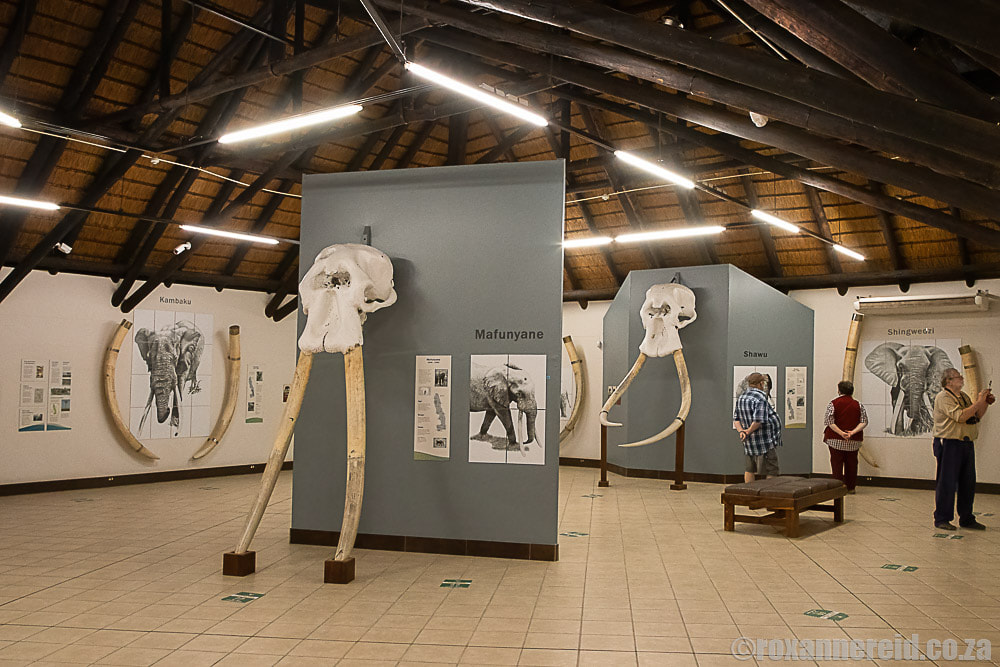
​For starters, the Letaba Elephant Hall has photos and potted histories of some of Kruger’s Magnificent Seven, its most famous tuskers. Take Shawu, for instance. By the time he died of old age in 1982 his tusks had reached an impressive 317cm (left) and 305cm (right). That’s at least as high as the walls of your house. Between them, the tusks weighed 103.4kg. No wonder they’re on record as the biggest tusks ever recorded in the Kruger National Park and among the six longest in Africa. 
Magnificent Seven tuskers display at Letaba rest camp

The Magnificent Seven tuskers

​The centre is also a mine of other fun facts about elephants, from their anatomy and physiology, locomotion and reproduction to their society, behaviour and effect on the environment. Here are 23 interesting facts about elephants.

1. An elephant’s heart weighs up to 28kg, which is more than an entire female Chacma baboon. Compare this to a scrawny 300g for a human heart. The elephant heart beats at only 25-30 beats per minute when it’s standing and a little higher when it lies down. By contrast, the average human’s heart beat is more than double that at around 70 beats per minute.

2. Given the distances that blood has to travel through the elephant’s massive body, blood vessels can be a whopping 3m long and the elephant needs to maintain a fairly high blood pressure to prevent the blood vessels from collapsing in on themselves. When standing, their blood pressure is around 178/119 whereas ours is about 120/80. 
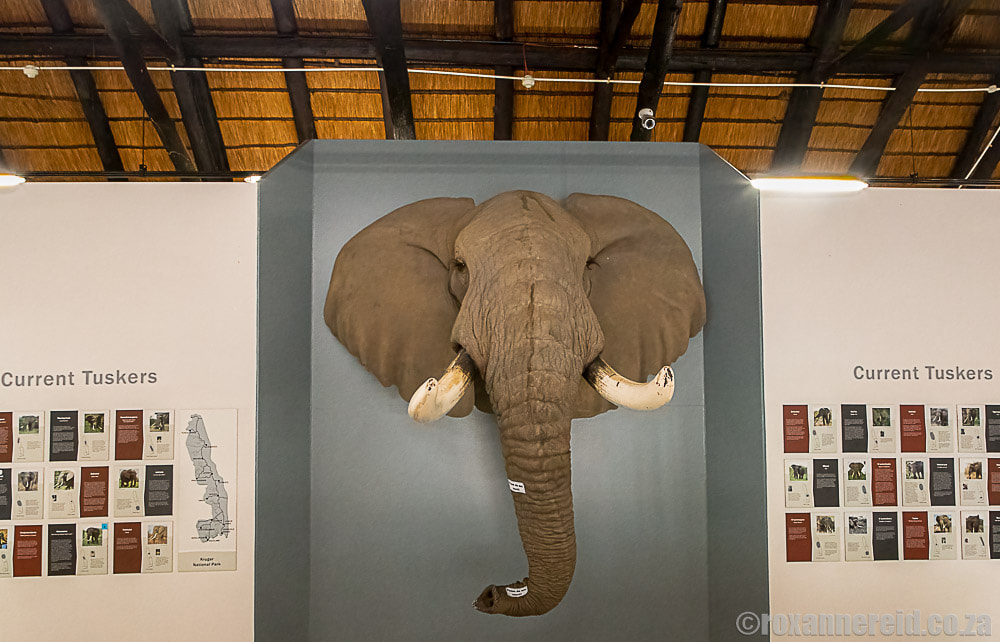
Current tuskers display at Letaba Elephant Hall, Kruger Park

Current tuskers get some attention too

​3. Elephants have excellent hearing.Their massive ears also combine with blood circulation to create a nifty air conditioning system; as they fan the ears they circulate and cool the blood, bringing their body temperature down by around 8%.

4. Elephants have the largest brains of any land mammal, weighing 4-6kg (compared to a puny 1.5kg for humans). The temporal lobes that are the memory centres are large, backing up the legend that elephants have good memories. Like humans, elephant babies have much smaller brains than adults. In newborns, elephant brains are about 35% of the size of an adult’s whereas in humans it’s 26% – both of them with a lot to learn and develop. Compare this to most newborn mammals, which have brains around 90% of the size of a full-grown adult’s.

5. Elephants’ eyes are about the same size as yours or mine and their sight is not their strongest sense, with a maximum range of about 50m.
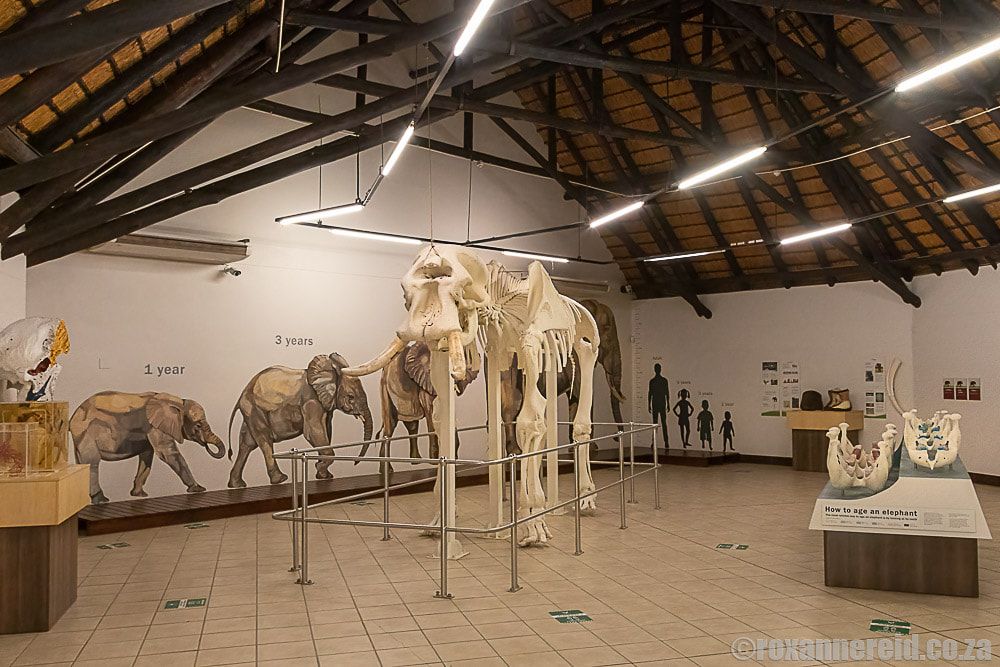
Skeleton and elephant facts at Letaba rest camp, Kruger

Experience just how big an elephant really is

6. That miracle of control, the trunk, contains 40 000 to 100 000 muscles. This means the elephant is both strong enough to push over enormous trees and delicate enough pick up a single small berry, depending on its mood – except, of course, when it’s still a youngster. Until it’s about a year old, it can’t even control that floppy thing well enough to slurp up water and swoosh it into its mouth. It’s all it can do to hold it out of the way as it tries to lap up water with its tongue, just as a dog or cat might do.

7. A tusk is actually an upper incisor tooth that erupts at the age of about one year. Tusks are used for defence, to dig for water, salt or roots, to debark trees, and as a lever for lifting heavy objects (even new-born calves). In cross-section, there’s a geometric pattern of lines that follows a mathematical Fibonacci sequence. This is unique to elephants and doesn’t occur in the tusks of other animals (like warthogs, for instance).

8. What do elephants eat? 96.5% of their diet is grass, shrubs and small trees, and 3.5% leafy branches and bark. They spend 16 hours a day feeding and may eat between 150 and 170kg a day. Their digestive system isn’t very effective so about half of what they eat passes through the gut fairly undigested, providing food for other animals like baboons and insects. The seeds of some plants germinate much better once they have passed through an elephant’s gut.

9. What goes in must come out. Not surprisingly given how much elephants eat, they produce a large amount of dung. For instance, Smithers’ Mammals of Southern Africa notes that a 10-year-old female can generate about 100kg of dung in a day. The dung provides food and brood balls for some 780 species of dung beetle in Southern Africa.
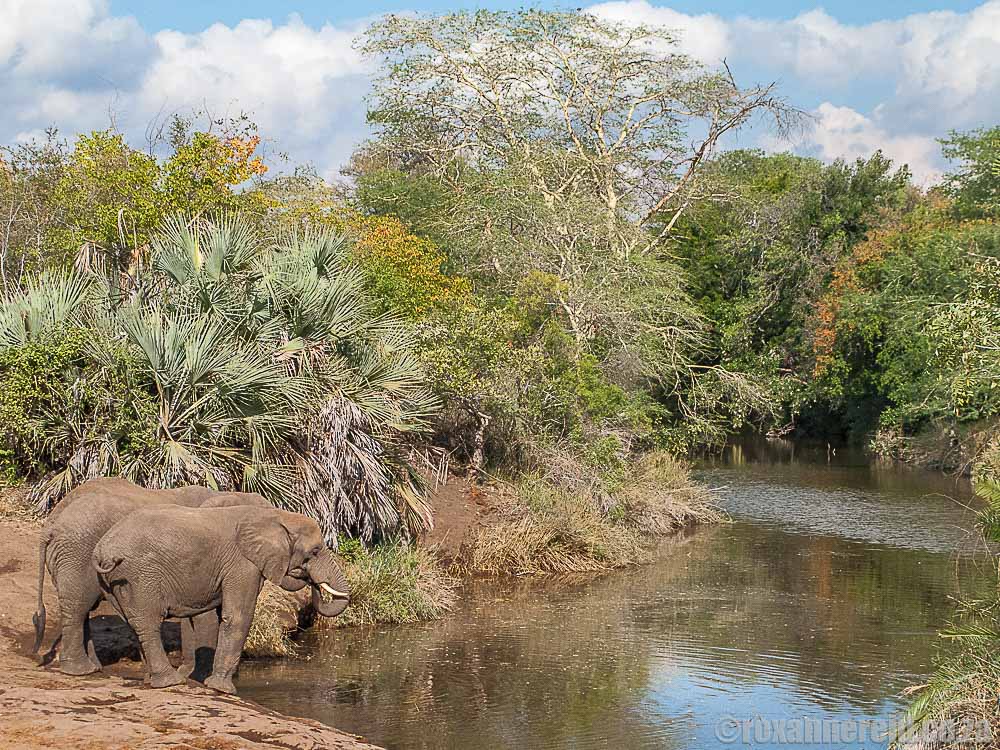
Fun elephant facts, Kruger National Park

Elephants drinking at a waterhole near Shingwedzi in the Kruger National Park

​10. Elephants can go several days without water but would much rather drink and bath daily if they can. A large bull may drink up to 100 litres at a time and up to 227 litres a day.

11. An elephant molar is about the same size as a house brick. During an elephant’s life of up to around 60 years, they go through six sets of teeth which migrate forward along the jaw. Once the last set are lost, the animal can’t feed properly and dies of malnutrition.

12. The surface of the feet is flexible, allowing it to move surprisingly silently for such a large animal. In fact, you could say it tip-toes because the elephant’s weight rests on the tip of each toe and the fibrous cushion of cartilage that acts like a shock absorber. The front legs carry the weight of the head, tusks and trunk, which together make up 44% of the animal’s whole weight.

13. How fast can an elephant move? The average walking speed is 6-8km/h whereas they can pump that up to a top speed of 30-40km/h over short distances. In other words, if you were belting along on a 50cc motorbike, they’d be able to keep up with you. Although elephants can’t jump or run, you still can’t run away fast enough from a speed-walking elephant.

14. We tend to think of elephants as thick skinned, but in fact skin thickness varies from around 2.5cm on the back to just paper thin on the inside of the ears. Mud wallowing protects the skin against UV radiation, parasites and moisture loss.
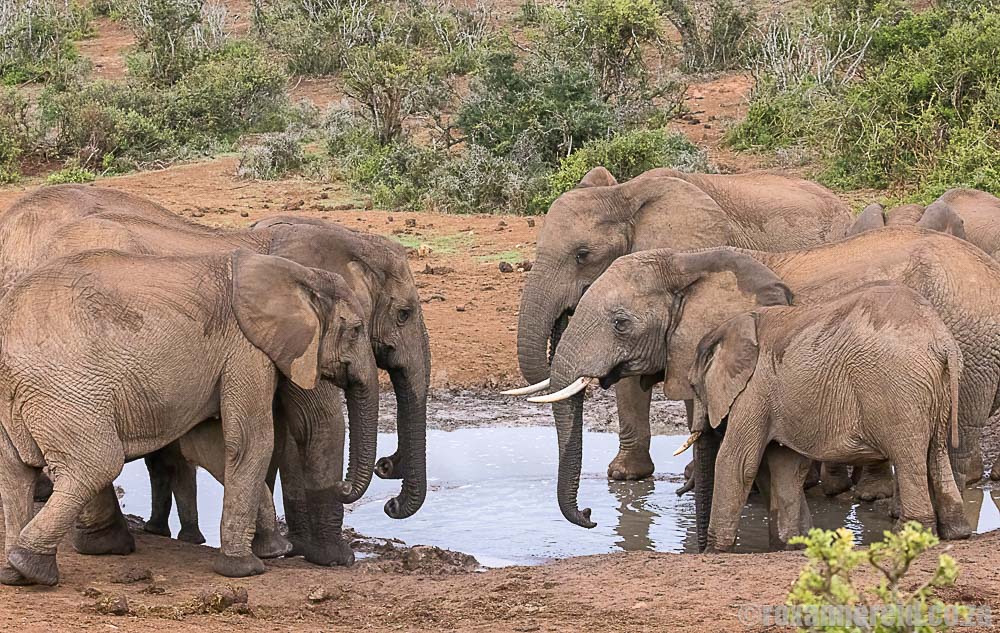
What do elephants eat and how much do they drink ?

Elephants love water, both for drinking and bathing

​15. How can you tell the sexes apart? You could of course look at their private bits and bobs, but a much easier way is to look at the head. A female’s forehead is more angular and squared while the male’s is more rounded. A fully grown bull is also bigger than a cow, nearly as tall as a double-decker bus and weighing as much as 80 men.

16. When they are in musth – a state of heightened testosterone – bulls leave their home range looking to mate. Musth isn’t seasonal, but most bulls come into musth about once a year and it lasts from a few days to several months. You can recognise a musth bull by the secretion from the temporal gland between the eye and ear. They may also constantly dribble urine and be unusually grumpy and aggressive.

17. Before young cows have their own calves, they are the main caretakers of young calves. Called allmothers, they protect or help any calf in trouble and have a significant impact on calf survival compared to calves with no allmothers.

18. Pregnancy lasts almost 22 months and the calf weighs 120kg when it’s born – that’s as big as two full-grown women.

19. Elephants communicate by four different sounds – rumbling, bellowing, growling and trumpeting. Most of them are of such a low frequency that humans can’t hear them.
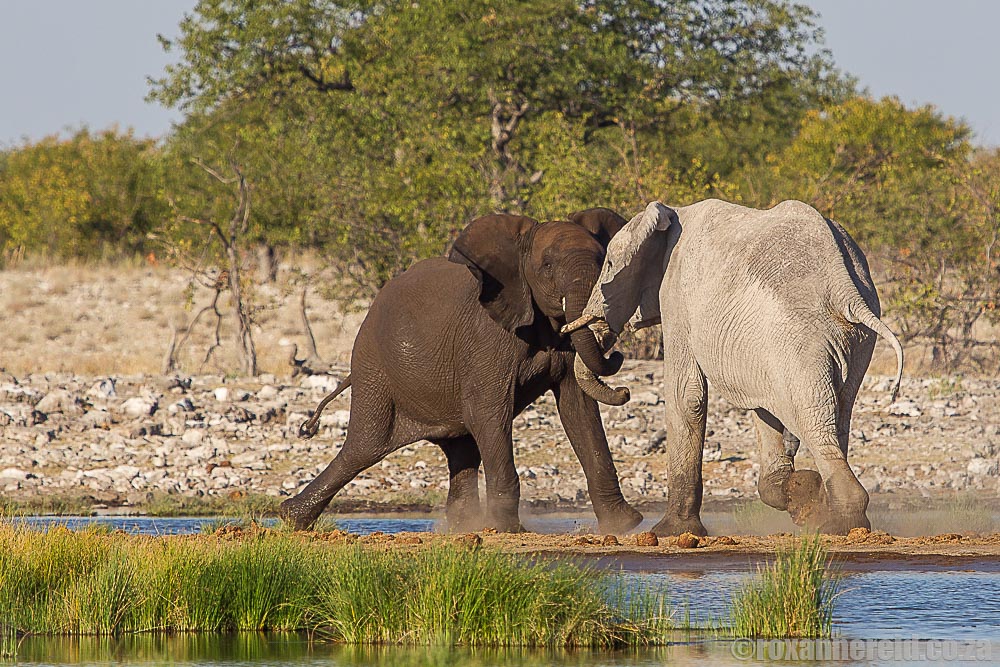
Interesting facts about elephants, Etosha National Park

Note the different colours of these wet or dry elephants at Etosha National Park

20. Elephants are usually peaceful creatures, but they can become aggressive when they’re sick, injured, harassed, when they have calves with them, or when they’re in musth (see point 16). An aggressive elephant will stand tall with its head and tail raised, ears spread. It trumpets, shakes it head and kicks the ground to create dust clouds. All these indicate that it’s not happy with your presence and you should back off. It sways back and forward and then charges. Most are mock charges, signaling that it’s now way past time for you to get out of the way. If it carries through with a charge it can kill other animals and squish your car (and you) to a pulp. For more about how to read elephant behaviour, see How to stay safe while watching elephants in the wild.

21. Elephants are highly social animals and live in family units of related females with their offspring, with a large matriarch in charge. From the age of around 12, bulls leave their family herds. They may be solitary or form small temporary bachelor herds. Young bulls of 10-15 years and up to 20 years spend more than 80% of their time away from their family unit.

22. Elephants have more impact on the environment than any animal other than humans. This is good when the number of elephants is in balance with the environment, For instance, they clear bush, create seedbeds and paths, dig wells, and bring food in reach of smaller animals. Where they are over-concentrated in parks, however, their destruction of trees can be a problem.
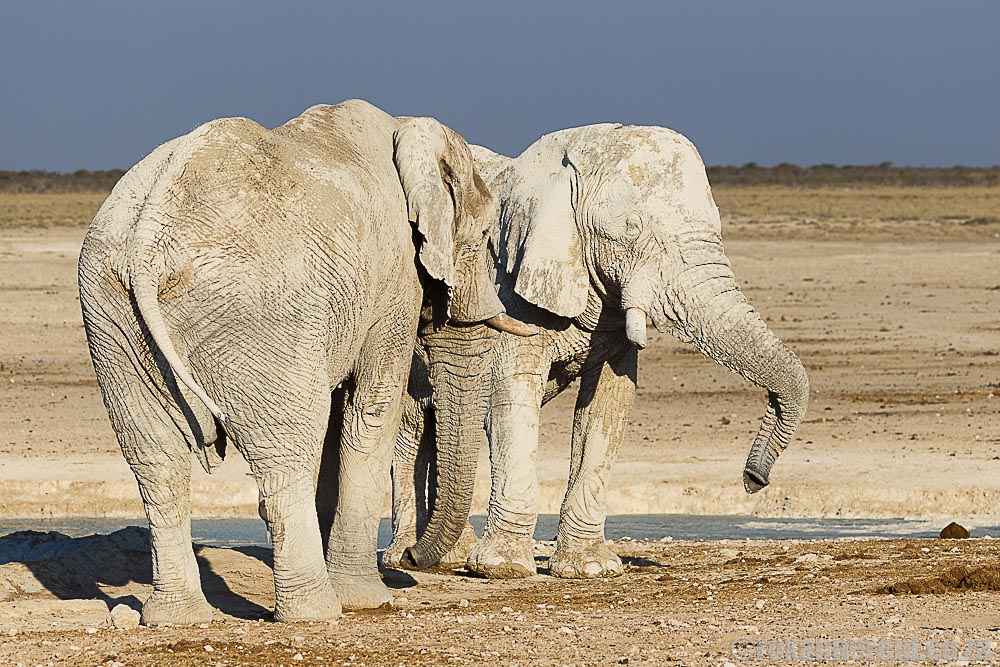
Elephants at Etosha National Park

Elephants turn almost white from the clay at Etosha National Park, Namibia

23. Have elephant populations in the Kruger area grown or dwindled over the years? Only three of more than 100 San rock paintings at Kruger depict elephants, so there probably weren’t lots of them in the area around…

Source link

4x4 Africa Baviaanskloof Botswana camping conservation Eastern Cape Etosha Free State Garden Route Kalahari Karoo Kgalagadi Kruger National Park Kruger Park Lesotho Namaqualand Namibia nature road trip Southern Africa travel Wildlife
Share. Facebook Twitter Pinterest LinkedIn Tumblr Telegram Email
King Jaja
  • Website

Related Posts

Family, HotTubs & Midlands Charm

August 8, 2026

Best Places to Eat in Nairobi by Area (2025 Guide)

November 9, 2025

Africa’s journalists increasingly under threat

November 7, 2025
Leave A Reply Cancel Reply

© 2026 Afro Icon. Powered by African People.
  • Home
  • Privacy
  • Disclaimer
  • Contact us
  • Terms of Use

Type above and press Enter to search. Press Esc to cancel.

Go to mobile version