




Conrad Mbewe’s recent book examines the profound theological indicatives and imperatives of unity, within the Christian Church. Drawing on Philippians 1:27, Mbewe explores the multifaceted nature of unity that Christ envisions for his people. Thus the book confronts churches that divide because of secondary issues. At the same time, Mbewe warns against compromising on fundamental Christian doctrines for the sake of unity. Both of these correctives are necessary in the African context.
A helpful guide to recognising and upholding the unity that Christ already achieved.
Mbewe’s book is a very helpful guide to recognising and upholding the unity that Christ achieved on the cross. That’s how he concludes it, with a vision of the ultimate unity of the consummated new heavens and earth. For then all divisions will be destroyed. Believers from every tribe, tongue and nation will worship as one people under God’s reign.
Throughout this book, Mbewe’s theological exposition is robust. He emphasises the completed work of Christ as the foundation for unity is theologically sound and practically significant. By highlighting the indicative aspects of unity, Mbewe rightly places the onus on believers to maintain what has already been achieved through Christ.
God’s Vertical Work Has Horizontal Significance
Unity begins by underscoring the universal human longing for peace and unity, a desire thwarted by sin. Mbewe argues that Christ’s death and resurrection doesn’t only reconcile humanity to God, but also creates the foundation for reconciliation between people. The work that God does in vertically uniting us to himself, should make us a people who seek unity in our relationships horizontally. The church must therefore be a beacon of this reconciliatory unity.
For example, in Africa, specifically Zambia, the mainline churches (Roman Catholic, Baptist, Anglican, Seventh Day Adventist, Dutch Reformed, and others) arrived years ago with missionaries. But those missionaries established their mission stations in specific regions and therefore among particular tribes.
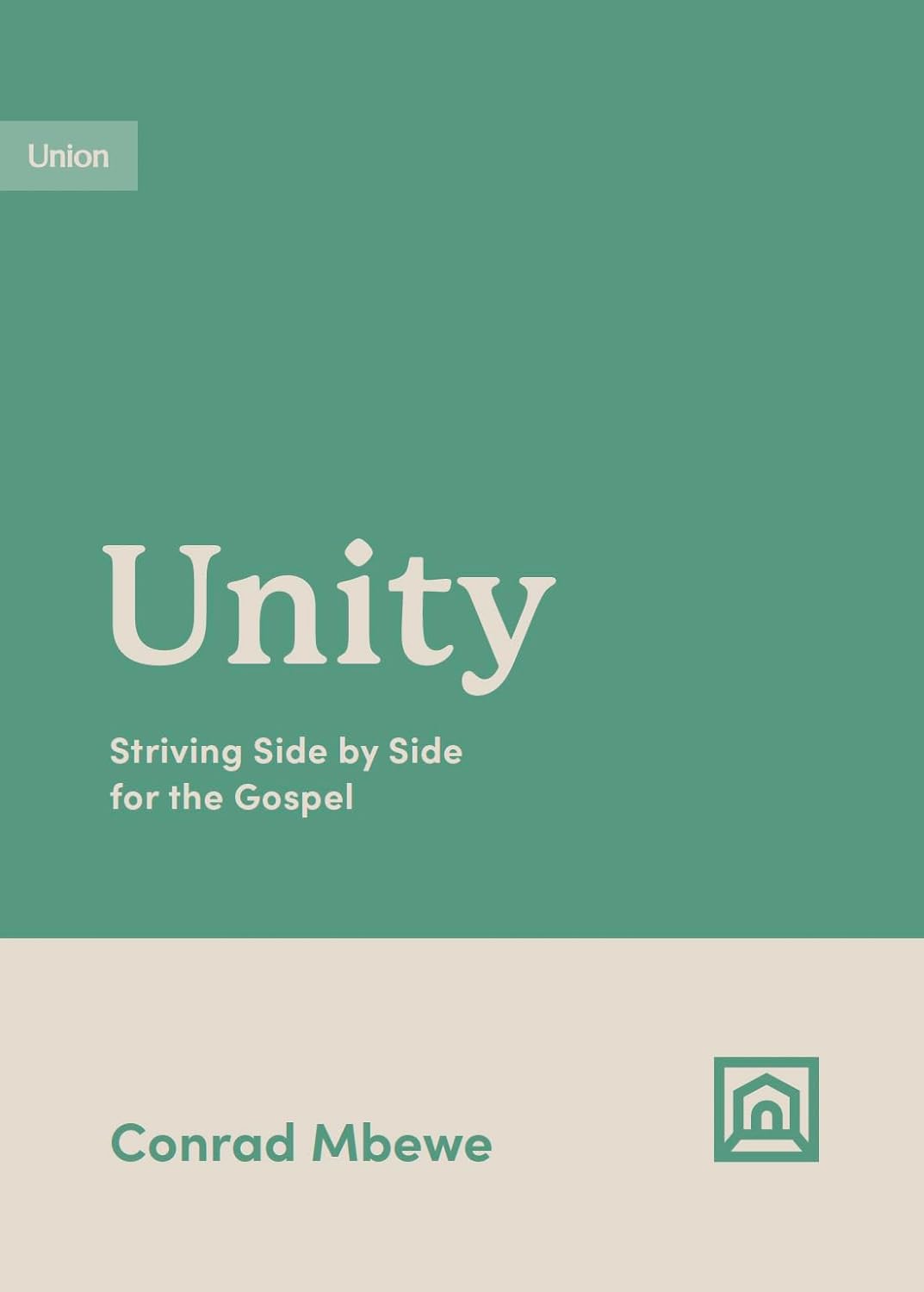
Unity: Striving Side by Side for the Gospel
Conrad Mbewe
Unity: Striving Side by Side for the Gospel
Conrad Mbewe
Crossway. 136 PAGES.
In this short, accessible guide, Conrad Mbewe explores unity as a fruit of the gospel. He finds that biblical unity is only achieved after understanding what God has done through Christ and how it is continuously executed by the Holy Spirit. This biblically centred book encourages readers to respond to Paul’s apostolic plea of “standing firm in one spirit, with one mind striving side by side for the faith of the gospel” (Philippians 1:27), embracing unity as a valuable, God-given blessing.
Crossway. 136 PAGES.
If individuals are reconciled to God through Christ, they work against division.
While it wasn’t intentional, the result is that certain churches appear affiliated with different local tribes. These associations have often led to tribal disputes, which in turn influence church dynamics. Only, as Mbewe asserts, if individuals are genuinely regenerated by God’s Spirit and reconciled to God through Christ’s death, they would pursue unity rather than division.
The Indicatives of Christian Unity
The first part of Mbewe’s book focuses on the indicatives. That is, it’s concerned with what God has done; not what we must do (imperatives). This section is divided into two primary themes, unity:
- Accomplished in Christ
- Applied by the Spirit.
Mbewe asserts that unity is a completed work by Christ, evidenced by the reconciliation of Jews and Gentiles into one body (Ephesians 2:13-16). Thus believers are simply called to maintain the unity established by God. The Holy Spirit’s role is crucial here, as the Spirit fosters true love and universal understanding of the gospel. This is amazing because, despite the African church’s strong spiritual claims, it often fails to recognise the unity fostered by the Holy Spirit among Christians across churches.
Believers are called to maintain the unity established by God.
By overlooking this unity, we’ve left room for the prosperity gospel and its heralds to thrive. How so? Well, a shallow understanding of unity is usually uncomfortable with criticism. Thus even though many preachers across our continent clearly centre their entire ministries on themselves and grow rich in the process, when someone calls them out it’s labelled as divisive. True unity lies in the knowledge of the gospel, completed by Christ and applied by the Holy Spirit. God reconciles us to himself and therefore each other.
Christian unity is premised on having the same Spirit and hope; one Lord, faith, baptism, and God (Ephesians 4:4-6). This both creates room to criticise any and everyone who preaches another gospel, while also demands greater unity among Christians who profess the true faith.
The Imperatives for Christian Unity
Like the first section of Mbewe’s book, the second also has two primary themes. Unity is to be:
- Jealously guarded by believers
- Evidenced in gospel endeavour.
Here, Mbewe discusses the importance of preserving unity (Philippians 1:27). He warns against superficial alliances with those who merely profess Christianity without genuine faith and holiness. In the case of African churches, unity should not be based solely on some pastor’s or founder’s shared tribe or origin. Instead, the gospel should be the central foundation of this unity. This will help churches hold each other accountable for their actions and beliefs. By doing so, there will be fewer instances of false teaching, fake miracles, sexual scandals, and similar issues.
Mbewe warns against superficial alliances with those who merely profess Christianity.
Mbewe also addresses the importance of distinguishing between core gospel truths and secondary doctrinal differences, advocating for unity in diversity within the church. This is another place where African churches fall horribly short. He encourages the church to manifest its God-given unity in collaborative gospel efforts, emphasising the need for churches to work together in evangelism, theological training, and social projects. Such unity, he contends, won’t only strengthen the church’s witness but also demonstrates practical love and integrity.
Some Practical Applications
1. We Need More Gospel Collaboration
The book’s emphasis on practical collaboration in gospel endeavours and the importance of maintaining doctrinal purity while embracing diversity provides valuable guidance for the African church leaders and members. Given Africa’s diversity of cultures and tribes, Unity serves as a guide to protecting against tribal divisions. If you know your history, then you’ll know such divisions haven’t been without their tragedies. By repeatedly pointing people to Christ’s completed work, Mbewe compelling exhorts Christians to work together both for the glory of God and good of their neighbours.
2. We Need to Work Against Division and Disunity
Mbewe’s work challenges African church leaders to rethink the basis and expression of Christian unity. Our unity should not be based on tribe or region of origin or having same cultural beliefs, but on the sound doctrinal teachings of the Christian faith. We are all one in the body of Christ, which is the church. Furthermore, Mbewe’s theological insights deepen one’s understanding of the integral relationship between reconciliation with God and with each other.
3. We Need to Guard the Gospel
Mbewe’s call to guard against sin and uphold holiness as essential to true unity is a timely reminder for African churches, which are often pressured to compromise the gospel based on cultural moral standards. For instance, syncretism is a major challenge that demands attention in the African church. By adhering to Mbewe’s guidelines in this book, churches can be protected against cultural norms that contradict scripture and create divisions.
Unity: Gospel Indicative and Imperative
This book will help the African church to realise the eschatological hope of unity, which will be fully realised in the new heaven and new earth. It is a profound exploration of Christian unity, both its theological and practical dimensions. Mbewe offers invaluable insights for fostering true unity in the church, grounded in the finished work of Christ and the ongoing work of the Holy Spirit.
Furthermore, Mbewe’s conclusions are spot on, emphasising that our hope lies in the ultimate unity to be fully realised in glory. For then, all divisions will be abolished. Believers from every tribe and nation will worship together. Mbewe’s balanced approach, focusing on both doctrinal integrity and practical love, makes this book a significant contribution to contemporary theological discourse.
