


Professor Robert I. Rotberg is a long-time CFR member. He is also the Founding Director of the Harvard Kennedy School Program on Intrastate Conflict and President Emeritus of the World Peace Foundation. He is the author and editor of two books about Haiti’s politics and several on Africa.
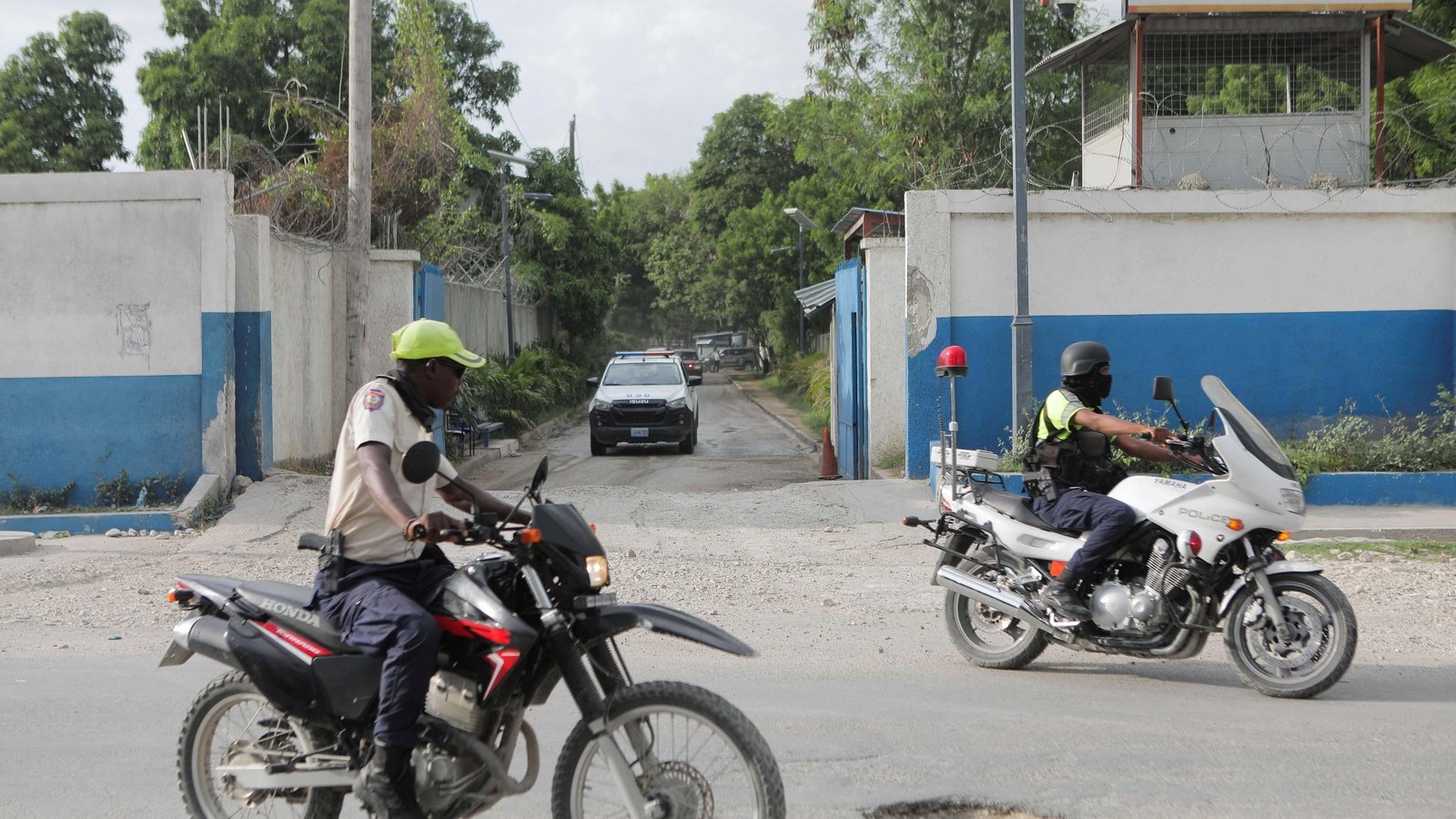
Haiti is in desperate straits. Murderous gangs control 90 percent of the nation’s capital, Port-au-Prince. Since 2022, these gangs have killed nearly 3,000 mostly slum dwellers, kidnapped 1,300 wealthy and not-so-wealthy local inhabitants, and terrorized the city of three million, a quarter of the country’s total. Nearly 200,000 Haitians have been forced from their homes and are now living without permanent shelter or steady food sources. The country’s 9,000-strong police force is outgunned and, in part, controlled, bribed, and frightened by gangs.
More on:
Kenya
Conflict Prevention
Haiti
Wars and Conflict
Peacekeeping
Haiti is a collapsed state, one category worse than being a failed state. Strong states guarantee their citizens’ safety and security; some even provide basic education and health. (Weak states do so too, only less effectively). Strong states ensure the provision of potable water and passable roads, for example, and even make sure that the national currency is stable, mail arrives, and dams do not overflow. Those are some of the components of good governance, but security of person is paramount.
The United Nations Security Council’s authorization of a Kenyan-led, American-financed, police security detachment to clean up the Haitian mess is well-intended but is unlikely to succeed without more focus on its mandate, much more scrutiny of its composition, and careful attention to the larger and more critical problem of how to ultimately establish a Haiti that functions as a modern state. Haiti must eventually provide reasonable governance to its long-suffering people; wiping out the gangs (if that proves possible) only solves the immediate security problem. It does not necessarily create a country that serves its people well.
Following an invitation last year by Haiti’s unelected acting prime minister (no other local authority exists) and financed by Washington, Kenya apparently now has official UN license to pacify the 200 or so rampant gangs, including several powerful ones, that rule Port-au-Prince. But how will 1,100 Kenyan police security officers, plus a few hundred more police from the Bahamas, Jamaica, and Antigua-Barbuda, manage to overcome the gangsters, who are believed to comprise more than 30,000 armed killers? Moreover, so far, Kenya has not specified what kind of training, armor, and combat experience the detailed security officers have or will have.
Kenyan commanders and soldiers formed the core of AMISOM, the African Union army that was dispatched to Somalia to fight the al-Shabaab insurgency in 2018, and widely adjudged to have performed reasonably well before they were replaced in 2020 by Ugandans. But they did not overcome the jihadists, who often still attack Mogadishu, the Somali capital, and cause mayhem throughout what is left of Somalia.
Kenyan soldiers also joined Ugandan forces in trying to end the insurgency in the eastern Democratic Republic of Congo, but those battles continue. Moreover, within Kenya, its police and other security forces have a dreadful reputation as abusers of human rights. They are also alleged to be corrupt.
More on:
Kenya
Conflict Prevention
Haiti
Wars and Conflict
Peacekeeping
The Kenyans will be greatly handicapped in Haiti by their inability to speak either French or Kreyol, the languages of the country and the gangsters. None of the Caribbean countries that has offered police detachments speak French or Kreyol, either. It would have been preferable—if Africans were to be recruited to restore Haitian order—for a Francophone African country to have taken the lead or at least have participated. But there will be no French-speaking Rwandans or Martinicans, say, engaged in the pacification process. How, then, will the Kenyans (or anyone else) really manage to acquire the intelligence on which the success of all major pacification operations depends?
The situation in Haiti is not, as the Kenyan Foreign Ministry appears to believe, a simple facsimile of what obtains in Africa; indeed, there are few similarities, and the intrinsic problems are very different. Haitian gangs are fueled by ransom monies and drug trafficking payoffs. Their guns are smuggled in from the United States and are lethal. How will KiSwahili-speaking security police make themselves understood to a Kreyol/French-speaking population?
In the meantime, the initiative has run into headwinds within Kenya itself. Kenyan President William Ruto has demoted and reassigned Foreign Minister Alfred Mutua apparently for upstaging the president. Furthermore, opposition leader Raila Odinga has raised a stink, alleging that the mission will result in needless loss of Kenyan lives, and that the mission to Haiti should be aborted. His attack on Ruto has sympathy among the Kenyan public, and there is a distinct possibility that the Kenyans may never make it to Port-au-Prince.
But let us suppose that the Kenyans eventually arrive in Port-au-Prince and somehow manage relatively expeditiously to knock heads and tame the gangs. It will not be an easy accomplishment for a contingent fewer than 2000 strong, with little expectation of significant assistance from Haiti’s own police. But say the Kenyans have the toughness and firepower to reduce the hegemony of the gangs. What then?
Haiti needs to become a ward of the United Nations, a revived “trust territory.” Once the gangs are at least quieted and people in Port-au-Prince can go about their normal business without fear, then the bigger issue becomes how the restored Haiti can be sustained. It has not experienced enduring stability, much less good governance, or considerable development since the ouster of President Jean-Claude (Baby Doc) Duvalier in 1986.
Haiti remains the poorest polity in the Western Hemisphere, with precious few resources and little productive capacity. The country cannot simply be turned back to Acting Prime Minister Ariel Henry, or be asked to hold elections and afterwards “get on with it.” Haiti has almost no democratic experience to speak of. It needs as a nation and as a people to be stabilized and then nurtured during a period (perhaps as long as ten years) when the UN or a Canadian mission deputized by the UN rebuilds governance and gradually transforms a UN trusteeship into a Haitian-run instrument of democratic governance.
The last suggestion is bound to be controversial, but stemming gang power will not be enough. The core of national governance must be re-established with the help of the United Nations.
