



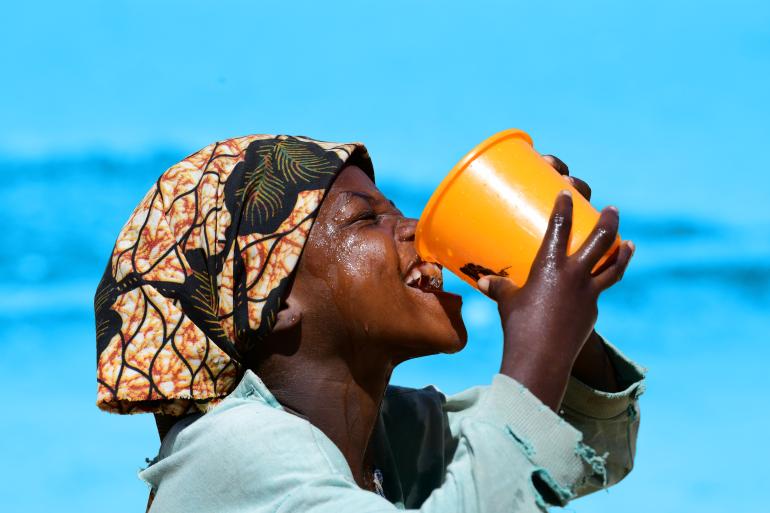
Did you know on the continent, 418 million people still lack even a basic level of drinking water service, 779 million lack basic sanitation services (including 208 million who still practice open defecation) and 839 million still lack basic hygiene services? How can this be changed to have clean water and sanitation for everybody?
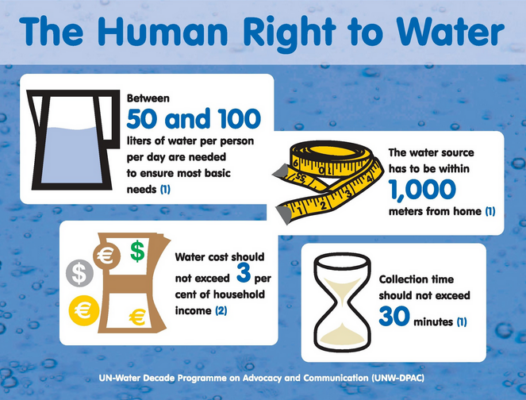
Access to safe, affordable, reliable drinking water and sanitation services is a fundamental human right. Water is essential in achieving sustainable economic, social, and ecologic development in line with the United Nations Agenda 2030. If current progress trends continue, very few African Union member states may achieve universal access to safely managed drinking water, sanitation or basic hygiene services by 2030.
To drastically accelerate progress in water, sanitation and hygiene, African countries must embrace sustainable water technologies to achieve water security across the continent.
African Union Goal 7 of Agenda 2063 aims at achieving environmentally sustainable and climate-resilient economies and communities. This goal calls for water security in Africa, defined as “the reliable availability of an acceptable quantity and quality of water for health, livelihoods and production, coupled with an acceptable level of water-related risks”.
Role of Science, Technology and Innovation in Achieving Water Security
The African Union (AU) Science, Technology and Innovation Strategy for Africa 2024 (STISA-2024) has two priority areas that speak to managing Africa’s water resources using technology and innovation.
Currently, many complex water challenges in Africa need urgent attention.
- Climate change: Disrupting weather patterns, leading to extreme weather events and unpredictable water availability.
- Increase population: As the population increases, the percentage of people without access to clean water increases. In many urban areas, water scarcity is already a reality.
- Limited infrastructure for the water supply of domestic and industrial water usage.
- Water contamination and pollution of existing water bodies ( Rivers, Groundwater and Lakes) from industrial, pharmaceuticals and urban areas.
- Lack of water treatment facilities
- Historical legacies of countless shared river basins are resulting in conflicts and disputes; thereby, shunning water sharing within African communities.
- Non-effective and robust water technology infrastructure enactment that can promote effective water supply management.
African governments and the private sector must address the limited water treatment and supply infrastructure to eradicate water pollution and the scarcity of clean water. Decision-makers and policymakers are encouraged to recommend and implement new and effective water treatment technologies as soon as possible.These new water technologies are compatible with conventional water treatment methods.
The need to shift to sustainable modern water technologies is highly encouraged because most conventional water treatment technologies commonly used in the continent are increasingly being confronted with identification challenges of contaminants, fast population growth, ever-increasing industrial activities, and diminishing freshwater sources. Consequently, there has been an increased public demand for better-quality water.
Modern water treatment technologies that can be used for suitable and effective water treatment processes in Africa include:
- Hydropanel technology: Incorporates multiple patented inventions alongside proprietary trade secrets, making it a one-of-a-kind renewable water technology that uses the power of the sun to extract clean, pollutant-free drinking water from the air.
- Natural treatment systems: Progressively being exploited to encapsulate, retain, and treat stormwater; thereby converting sheer wastage into a valuable source of water.
- New urban sanitation technology: Utilizes wastewater treatment by reclaiming energy and minerals combined with electro-flocculation and anaerobic digestion technologies
- Nanotechnology: Nano-materials can be incorporated and merged with existing adsorbents and membrane filters to deactivate microorganisms, and even remove micro-pollutants from water at low concentrations.
- Automated variable filtration (AVF) technology: A state-of-the-art technology used for wastewater treatment, utilizes an upward flow of influent to clean the downward flow using filter media.
- Microbial fuel cells : A technology through which electrochemical energy is extracted directly from organic matter present in the waste stream.
- Urine separating process technology: Can be incorporated into domestic wastewater systems. This technology can confine up to 90% of nitrogen and 50% phosphorus.
African countries are encouraged to adopt and adapt emerging water treatment technologies to provide safe drinking water to their citizens. Above all, clean and sustainable water supply is critical for Africa’s food security, health, survival, societal well-being, and economic growth. As a result of modern water technologies, Africa will no longer thirst.
Case Studies: How Communities Across Africa are Using Modern Sustainable Technologies to Address Access to Clean Safe Water For All
Case Study : South Africa
The Angel Rock Project South Africa is a nonprofit organization working to bring much-needed support to the community of Diesploot, a low-income post-apartheid township in Johannesburg. Recognizing the need at Musenga Vhadzimu Primary School in Diesploot, Angel Rock sought to provide clean, reliable drinking water for students, staff and community grandmothers on the school’s campus.

In partnership with Angel Rock South Africa and SOURCE, Musenga Vhadzimu Primary School installed 45 Hydropanels as the first phase of their school-wide clean drinking water initiative. Today, students and grandmothers from grades 1-3 live with the peace of mind that their drinking water supply is clean, resilient and easily accessible from SOURCE taps placed around the school. Moving forward, the installation will be scaled to meet the needs of the entire campus.
Case Study : Zimbabwe
Matthew Rusike Children’s Home (MRCH) provides residential care facilities for orphaned and vulnerable children in Epworth, Zimbabwe. MRCH is one of the largest child welfare organization in Zimbabwe, caring for over six thousand children and employing a staff of fifty. Passionate about creating a space in which children could thrive, MRCH sought a solution to their clean water access challenges for residents and staff.

Access to clean drinking water protects children from water-borne illnesses and improves their growth development, but this region faces some extreme barriers to meeting this basic human need. The main challenge faced by MRCH is access to a supply of clean water for consumption and use for activities of daily living.
In partnership with Women in Action, Andana Consulting and MRDH, Safety Nett Ltd installed four SOURCE Hydropanels at Matthew Rusike Children’s Home to provide a supply of clean, safe, delicious and renewable drinking water for youth and staff.
Case Study: Kenya
Dr. Josephine Kulea founded the Samburu Girls Foundation to provide young girls an alternative path to harmful cultural practices common in the region. As the girls’ home away from home, Dr. Kulea sought a water solution for the foundation’s campus to support residents’ health and wellness.

Drinking water is a vital part of any healthy living and learning environment, yet the foundation did not have access to reliable, running water. To bring water to the campus, residents would walk nearly 2 miles to the nearest river to collect water.
In June 2018, the Samburu Girls Foundation partnered with Hip Hop Architecture and the University of Wisconsin to bring safe, reliable water to the more than 200 young women studying at the institution. With 40 SOURCE Hydropanels installed on campus, Dr. Kulea ensures her students have the water they need to grow and thrive.
