



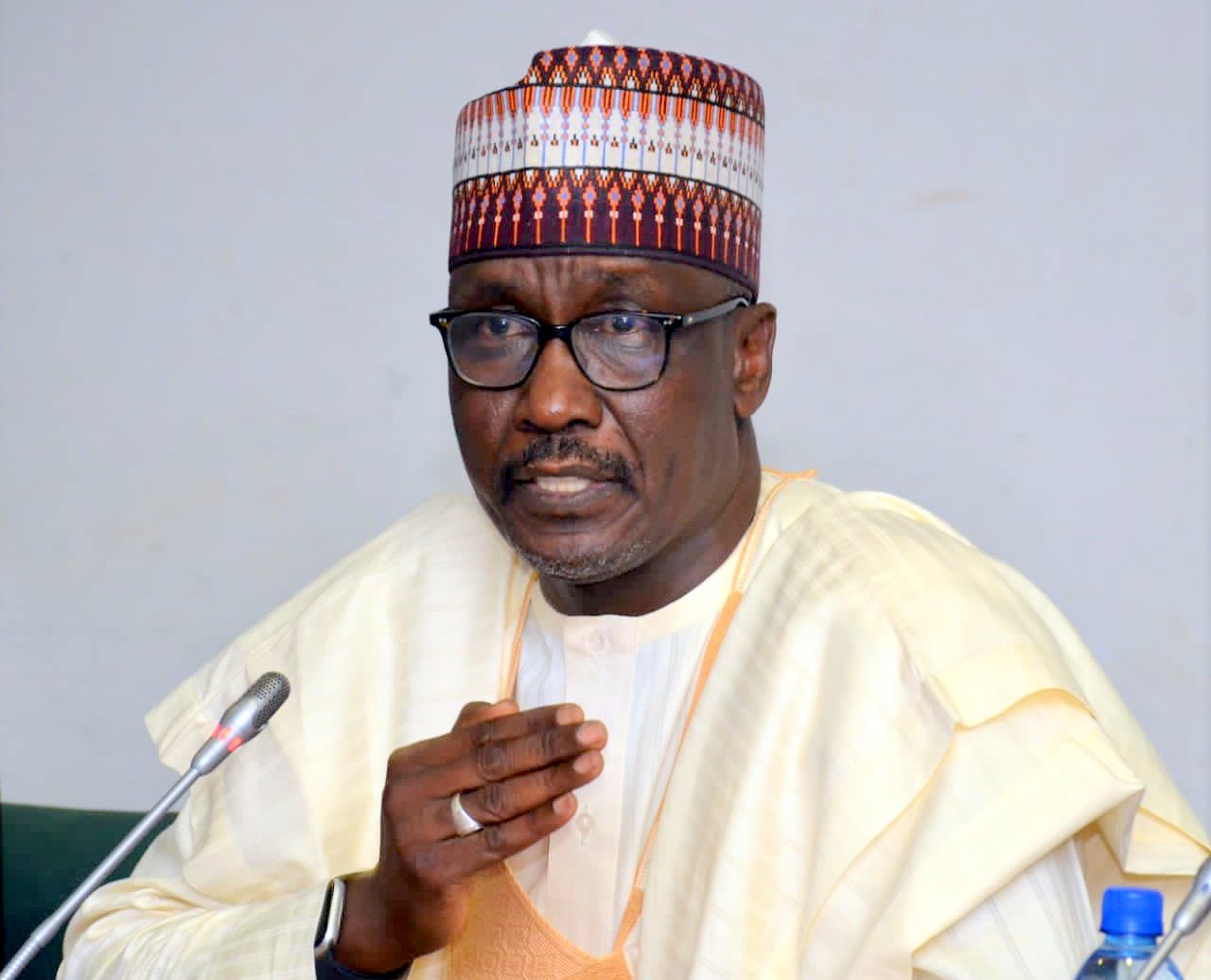
The Nigerian National Petroleum Company Limited (NNPCL) on Thursday said the petroleum subsidy regime in the country ended in February 2022.
The NNPCL Group Chief Executive Officer, Mele Kyari, disclosed this while speaking during an interview on Channels Television’s Politics Today programme Thursday evening.
President Bola Tinubu, on Monday, in his inaugural address at Eagle Square, Abuja, declared that there would no longer be a petroleum subsidy regime as it was not sustainable.
“We commend the decision of the outgoing administration in phasing out the petrol subsidy regime, which has increasingly favoured the rich more than the poor. Subsidy can no longer justify its ever-increasing costs in the wake of drying resources,” the president said.
Responding to why the petroleum subsidy was removed last Monday rather than the last week of June, Mr Kyari said by the provisions of the Petroleum Industry Act (PIA), the subsidy regime “vanished” on 17th February 2022.
“By the provisions of the Petroleum Industry Act (PIA), the subsidy regime vanished on 17 February 2022. The law states that six months after the enactment of the PIA, petroleum products, particularly PMS must be priced at market rates,” Mr Kyari said.
“That means by law, the subsidy regime is gone by 17 February 2022. But of course, the government can always decide to spend on its citizens, in the manner that it wants.
“There are subsidies on bread, fertilizer, and all kinds of other things all over the world. But the government in its wisdom, decided that there would be an appropriation for subsidy in 2022 and also a provision for subsidy up till the half of 2023.

READ ALSO: Why Nigeria must end fuel subsidy regime in June – Minister
“That means that provision is made, but the law sets the pricing at the market. So you can choose to spend your money which is what the government did. But the government did not fund the subsidy because it didn’t have the money to fund it.”
He added that NNPC is now a commercial entity and by its new design under the PIA, it can no longer fund the subsidy regime.
The NNPCL boss, responding to how the government came about the end of June if the subsidy ended in February 2022 noted that the general understanding is that since there is a provision in the Appropriation Act, it means that there is a subsidy regime up till the end of June 2023.
“…(it’s) technically correct, but budget is budget. You have to fund your budget if you don’t have to fund your budget then it doesn’t exist,” he said.
“And the government did not fund the subsidy because it didn’t have the money to fund it.”
Mr Kyari added that the latest decision to remove the subsidy only affects Premium Motor Spirit (PMS), otherwise known as petrol, adding that other products have been deregulated.
Therefore, he explained, the decision will have no impact on AGO (Diesel) or DPK (Kerosene).

Fuel subsidy
The Nigerian government has, for decades, subsidised fuel and fixed retail prices of petroleum products. The payment has, however, threatened the nation’s fiscal position and impacted the government’s ability to fund developmental projects nationwide.
In November 2021, the federal government announced its plan to remove the fuel subsidy and replace it with a monthly N5,000 transport grant for poor Nigerians.
But the government later suspended the plan after the Nigeria Labour Congress (NLC) and Trade Union Congress (TUC) threatened to embark on mass protests.
The government subsequently said that it would phase out the subsidy regime by the end of the first half of the year.
But in April, the National Economic Council (NEC) suspended the planned removal of subsidy on petroleum products by the end of President Muhammadu Buhari’s administration.
On Monday, Mr Tinubu announced that the subsidy regime has ended because it’s not sustainable.
The announcement was trailed by a sharp increase in transport fares across Nigeria.
Following the announcement, the NNPCL on Wednesday directed its outlets nationwide to sell fuel between N480 and N570 per litre; an almost 200 per cent increase from the initial price of below N200.
Support PREMIUM TIMES’ journalism of integrity and credibility
Good journalism costs a lot of money. Yet only good journalism can ensure the possibility of a good society, an accountable democracy, and a transparent government.
For continued free access to the best investigative journalism in the country we ask you to consider making a modest support to this noble endeavour.
By contributing to PREMIUM TIMES, you are helping to sustain a journalism of relevance and ensuring it remains free and available to all.
Donate
TEXT AD: Call Willie – +2348098788999

