



The SDRs are a basket of the world’s five leading currencies (the U.S. dollar, the Euro, the Chinese Yuan, the Japanese Yen and the British Pound) used by the IMF members to boost liquidity in countries without adding to their debt burdens.
The idea for leading economies’ SDRs being used to support developing countries was good news for the African leaders at the summit.
On 23 August, the IMF announced allocations of SDRs worth about $650 billion—an unprecedented amount almost three times the $250 billion worth of SDRs that were allocated to countries in 2009 following the global financial crisis.
“The [latest] allocation will benefit all members [as they] address the long-term global need for reserves, build confidence, and foster the resilience and stability of the global economy. It will particularly help our most vulnerable countries struggling to cope with the impact of the COVID-19 crisis,” states the IMF on its website.
It is “The largest [allocation] in our history”, according to IMF’s Managing Director Kristalina Georgieva.
However, of the $650 billion worth of SDRs, only $33.6 billion are assigned to Africa, an amount many believe falls short of what the continent needs, underscoring the need for reliance on the economic powers’ SDRs.
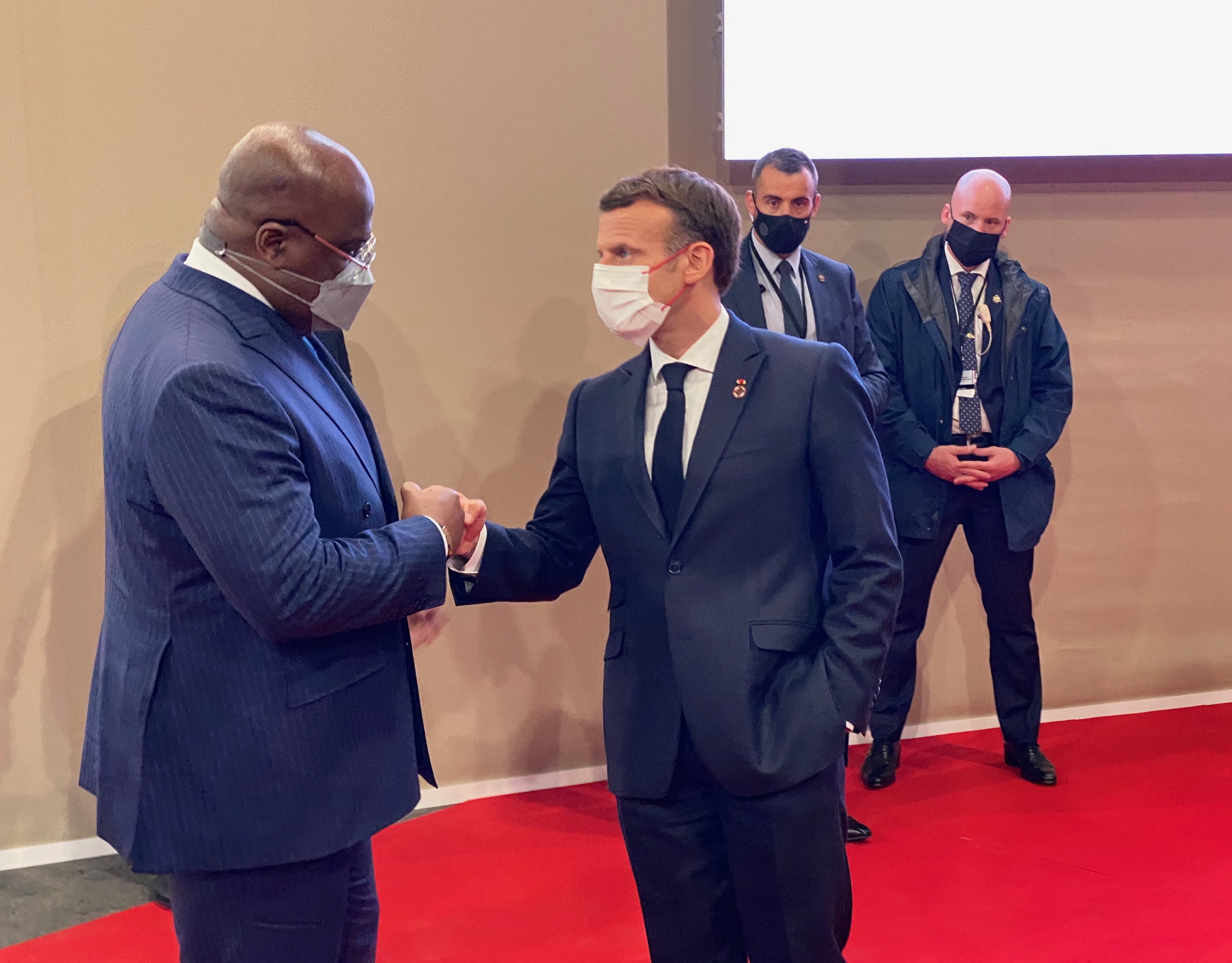
“It’s not enough,” says French President Emmanuel Macron, referring to the $33.6 billion.
“$33 billion for 55 countries is a drop of water,” concurs Macky Sall, President of Senegal.
In his address to the 76th Session of the United Nations (UN) General Assembly on 21 September, Secretary-General António Guterres welcomed “the issuance of $650 billion in SDRs by the IMF” but urged the big economies to “reallocate their surplus SDRs to countries in need.”
Mr. Guterres said many developing countries were in dire need of liquidity and bemoaned that a huge chunk of the SDRs were “going to countries that need them least.”
President Macron has announced that France would donate its SDR quota and encouraged other countries to follow his lead. “We are ready, and Portugal is ready. We must reach up to $100 billion for Africa and together triple the amount of SDRs allocated to the continent,” said at the Paris summit.
France’s quota is worth about $27.5 billion while Portugal’s is $2.8 billion.
Carlos Lopes, a former Executive Secretary of the UN Economic Commission for Africa (ECA), lauds France for taking the lead. He told Africa Renewal: “Traditionally, a donor country lends money or gives aid. The fact that France decided to give away their SDR quota is important. We are talking about a G7 member.”
Notwithstanding, Mr. Lopes, now a professor at the University of Cape Town’s Nelson Mandela School of Public Governance, is skeptical that the target of $100 billion more SDRs for Africa can be met. “His [President Macron] intentions are good but also too ambitious. He doesn’t have the power to assemble such an amount,” noted Mr. Lopes.
He further explained: “The conference did not produce the effect Mr. Macron was hoping for: France only managed to convince Portugal, who was probably under pressure as they held the EU rotating presidency [as at the time of the summit]. But other countries didn’t follow.”
Vera Songwe, the UN Under-Secretary-General and Executive Secretary of ECA, told Africa Renewal that the Paris meeting was important to continue “the conversation and pushing on the on-lending of SDRs,” which will “help the poorest countries acquire vaccines” and eventually support economic growth.
How might $100 billion worth of SDRs help African states?
It would allow Africa “to purchase more vaccines, to finance the continent’s economic recovery, to train the youth and create businesses, and to restructure and reduce our debt,” according to President Macky Sall.
