


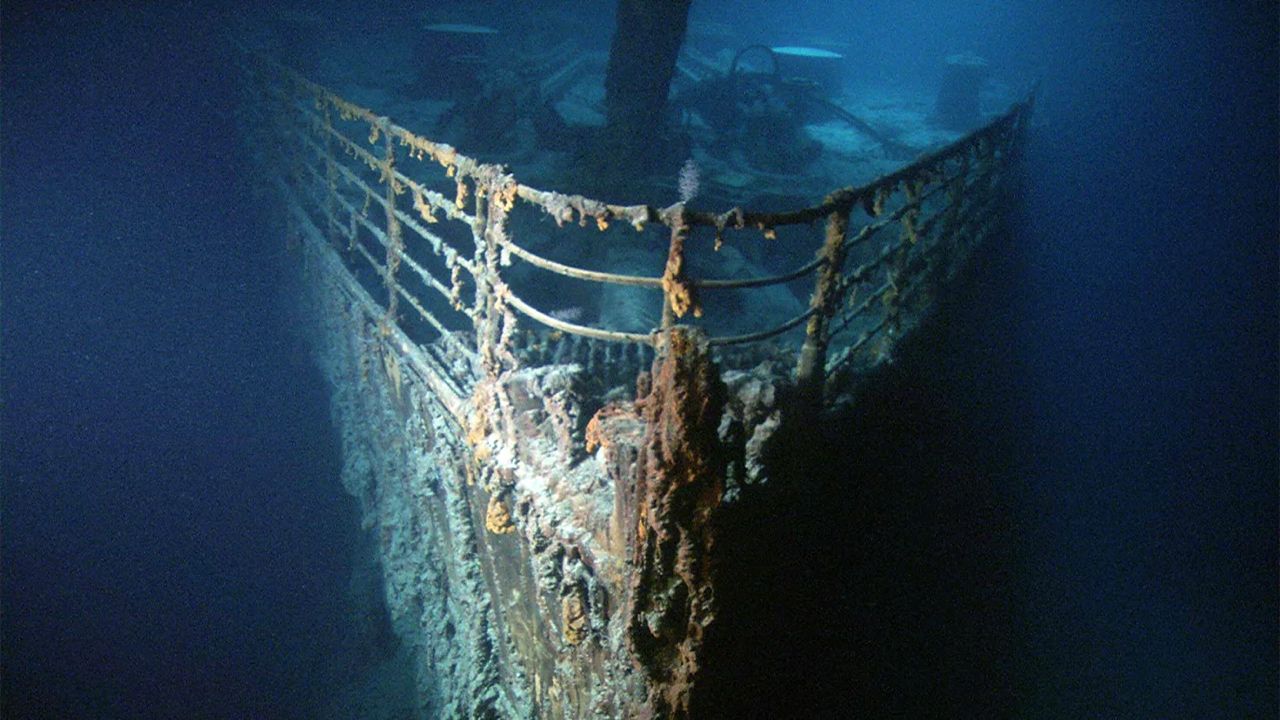
More than 112 years after it sank to the ocean floor, the wreck of the RMS Titanic is showing significant signs of decay, slowly disintegrating under the crushing pressure and deep-sea conditions at nearly 12,500 feet below the surface.
Once the pride of luxury ocean liners, the Titanic’s wreck is now in the final stages of its long, inevitable deterioration.
The Titanic famously sank on the night of April 15, 1912, after striking an iceberg on its maiden voyage, claiming the lives of more than 1,500 passengers and crew. The remains of the ship, discovered in 1985 nearly 400 miles southeast of Newfoundland, have since become a symbol of both human tragedy and maritime history. But today, images and data from recent expeditions reveal a wreck steadily succumbing to the forces of nature.
Signs of Collapse
In recent visits to the wreck, including a 2024 expedition, experts have noted significant structural changes. The ship’s iconic bow, with its once-familiar railings, has now lost a large section, revealing how the immense pressure, ocean currents, and bacteria are causing the Titanic to collapse. The railing, which had buckled in 2022, has now fallen away completely. The collapse of the ship’s superstructure is a visible reminder of how the wreck is breaking apart with each passing year.
“The iconic silhouette of the wreck will gradually change year by year,” said Gerhard Seiffert, a marine archaeologist who led an expedition to the Titanic in 2022. The wreck’s slow disintegration is largely driven by a combination of natural forces: the sheer weight of the 52,000-ton ship, deep-sea currents, and the destructive action of iron-eating bacteria.
Corrosion and Bacteria at Work
While corrosion plays a major role in the Titanic’s decay, the deep ocean environment offers unique challenges. Underwater, without oxygen, typical rusting processes are replaced by the work of bacteria that feed on iron. A biofilm of bacteria and other microbes coats the Titanic’s steel structure, slowly eating away at it. This process is visible in the “rusticles” – icicle-like formations of oxidized metal – that hang from the wreck.
One specific bacterium, Halomonas titanicae, discovered on the wreck in 1991, has evolved to thrive in these extreme conditions, breaking down the Titanic’s iron. These bacteria, along with other species that oxidize iron and produce acid, are steadily weakening the ship’s structural integrity.
As these microbes consume the Titanic, they create an unusual ecosystem. The iron-rich environment has given rise to a unique habitat, attracting a variety of marine life, including starfish, sea cucumbers, and corals. It’s a strange irony that the ship, which represents one of history’s greatest maritime disasters, has also become a biological oasis on the ocean floor.
The Future of the Titanic
Scientists estimate that the Titanic is losing approximately 0.13 to 0.2 tons of iron per day due to the rusticles. At this rate, some predict that the ship’s iconic bow could dissolve entirely within 280 to 420 years. However, deep-sea currents and occasional storms may accelerate the wreck’s deterioration. These currents, while not as powerful as those on the ocean surface, can still erode the ship’s weakened structure, gradually burying parts of the wreck in sediment.
“The more iconic regions of the wreck, such as its Grand Staircase foyer and Officer’s Quarters, may disappear around 2100,” noted Anthony El-Khouri, a microbiologist studying the wreck’s decay. Thinner parts of the ship, such as railings and decks, are already vanishing, while larger, more resilient pieces, like the engines and propellers, may last longer.
Eventually, experts believe the Titanic’s wreck will dissolve into a smudge of iron oxide on the sea floor, leaving behind only more durable materials like porcelain tiles and brass fixtures. It will be a quiet, almost humbling end for what was once the most luxurious ship in the world—a poignant reminder of human ambition and nature’s overwhelming power.
A Lasting Legacy
While the Titanic’s wreck may not survive for centuries, its legacy will endure through the history it left behind. As expeditions continue to document its final years, the ship remains a powerful symbol of both technological marvel and human fallibility.
