


With Rachel Dolezal in the news again after being fired from her job, it seems like a great time to talk about what in the Creole language lexicon is known as passé noir. This phenomenon has been going on in Louisiana and elsewhere for centuries. This lesser-known, seldom-discussed passing phenomenon is where whites pass into blackness.
One recent passé noir has been Rachel Dolezal. Her passing as black set off a firestorm of hatred that ruined her reputation and lost her a prestigious job at the NAACP. She was the target of ridicule and animus from both the black and white communities. Why was she the target of such hatred, while black women and men who pass into whiteness are treated with fascination and empathy?
The phenomenon of passing into whiteness, known to Creoles as passé blanc, has been discussed with renewed fascination in recent years. Numerous books, articles and movies analyzing why people passed into whiteness have held readers and viewers spellbound, postulating on the psychological neediness and deficits of the passé blanc.
For black people, including Louisiana Creoles, passé blanc is a term that elicits emotions from pity to contempt, to disdain. For white people, passé blanc, passing as white, confirms the racism many have been taught from the time they left the womb. Some supremacist beliefs are that white is the standard that all races are measured against. And that whiteness is the thing all people of color strive to emulate.
The phenomenon of passé noir turns the narrative of passé blanc on its head, and because it does it is rarely talked about.
Louisiana, the state with the most people who identify as white but who have African DNA, offers abundant examples of passé blanc and passé noir. I have ancestors who passed into whiteness, and others into blackness. White writers would always chronicle passé noir with a caveat. For example, “they were poor and they had very little to leave behind in the white world.” This is basically saying my white relatives had nothing to lose by passing as black, as though blackness was second prize at a beauty contest.
In the 1830s my white 5th–great-granduncle Hyacinthe Hazeur let his death certificate indicate he was black. This enabled the nine children of color he had with a free woman of color, his common-law wife Jeanette Favre, to inherit his plantation with no problems.
In the 1850s my white 3rd-great-grandfather Henry Broyard passed as black presumably to marry his wife. He also served in the U.S. Colored troops during the Civil War.
These are just stories from my family; stories of passé noir abound in Louisiana.
Christophe Glapion, a white man, declared himself black so he could marry Voodoo Madame Marie Laveau.
P.B.S. Pinchbank, a man often confused with Homer Plessy, was urged by his sister to pursue his life as a white man, but instead chose to be black. He was the first black man who served as a U.S. governor.
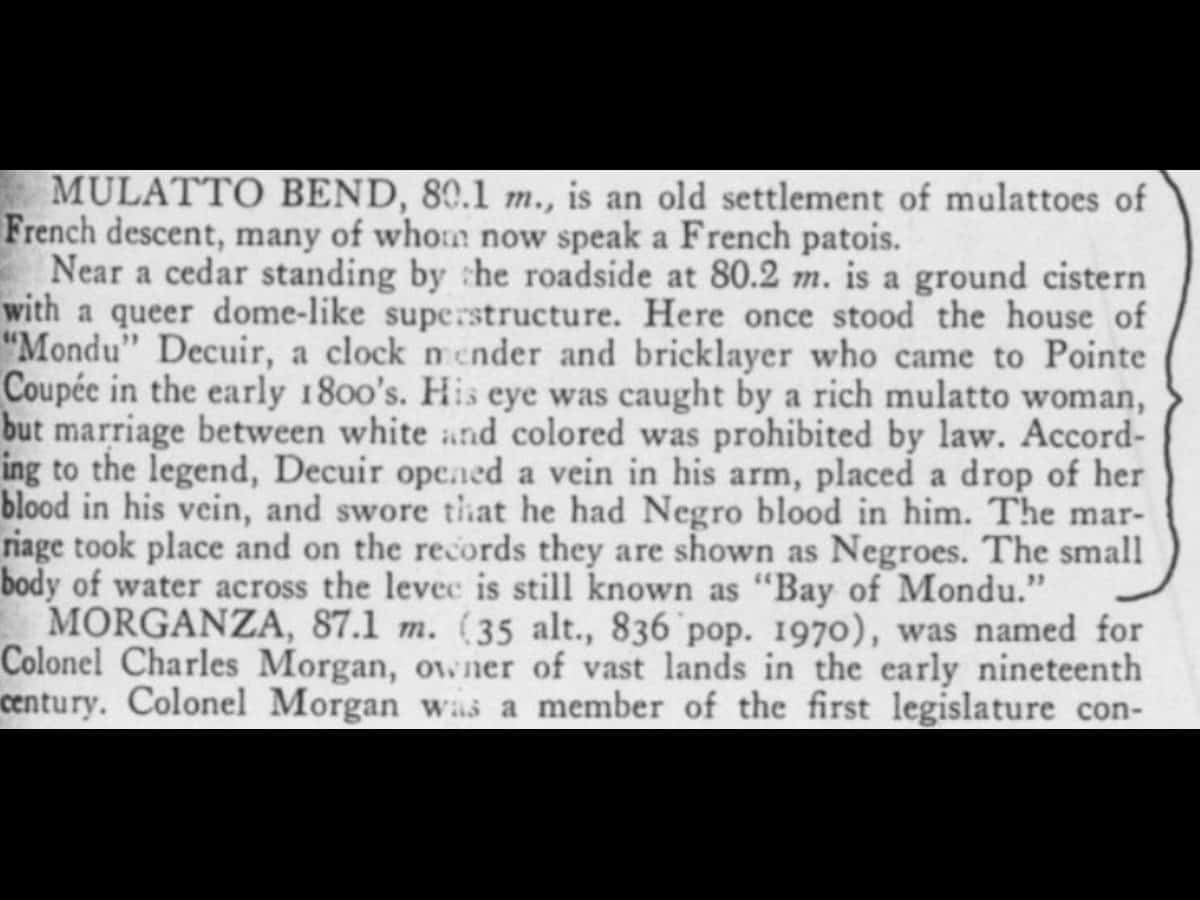
A place called Mulatto Bend on the Mississippi River is named after Mondu Decuir, a French bricklayer who wanted to marry a free woman of color he met. Because marriage between blacks and whites was illegal at the time, he took one drop of the woman’s blood into his veins and declared himself Negro, which allowed them to marry. A small body of water called the Bay of Mondu is named after him.
These cases have not generated the same intense interest and analysis as stories about passé blanc. People who passed into blackness did so out of devotion to their loved ones. They gave up the creature comforts and advantages of being white to live their lives as black people. During this Black History Month we need to ask ourselves, did Rachel Dolezal strike at the heart of something about race that people in the U.S. are afraid to face or admit?
What do white people who pass into blackness (passé noir) value that we’ve overlooked, in lieu of our insistent fascination with passé blanc? What do they know about the world that everyone else doesn’t know? Are they higher beings?
