


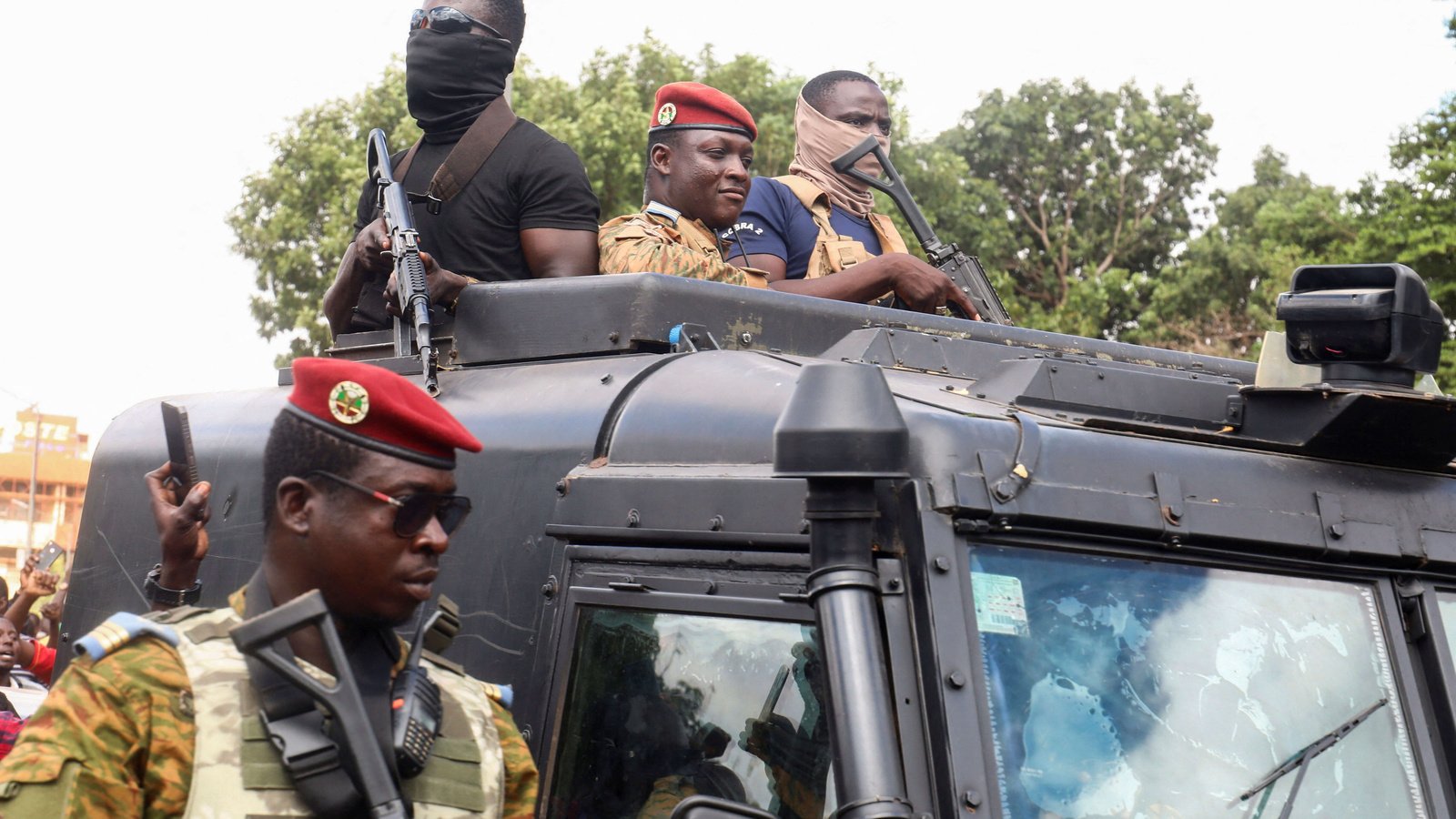
The latest crop of putschists across West Africa shares a number of important features with its professional predecessors. Prime among these is a delusional savior complex whereby military intervention in politics is whitewashed as a nationalistic rescue effort, which is then used to sanction the illegitimate deployment of legitimate violence. The Nigerien junta’s invocation of “insecurity, economic woes and corruption” as a pretext for its unconstitutional removal of President Bazoum places it firmly within this tradition.
This excuse glides over the fact that (1) the country’s insecurity owes in the main to the same military’s failure to discharge its professional duties; (2) the military has no economic training to speak of and has historically been woeful in that role; and (3) the narrative of military rectitude vis-à-vis a bankrupt society is a grand ruse. If anything—and as experience across Africa amply illustrates—the military as an institution is no different from and is indeed in many cases far worse than the civilian elite that it displaced in terms of corruption. As we have seen, the absence of institutional guardrails coupled with the fact that military rule is de facto a suspension of the constitution means that soldiers in power are accountable to no one and have no incentive to be transparent.
More on:
Niger
Burkina Faso
Mali
Guinea
Political History and Theory
That being said, there are key differences—in aesthetics, comportment, professional outlook, personal norms, temperament, and overall presentation—that appear to set the present generation of coupists apart from its predecessors. Far from being trivial, these differences arguably signal deeper transformations in the armed forces themselves, and in their overall relation to the rest of society.
Relying on political scientist Ali Mazrui’s classic insight on the emergence and sociology of the lumpen militariat, military intervention in African politics may be divided along three, progressively deteriorating, generational lines as follows:
The first generation of coup leaders comprised “officer-gentlemen” who, on the whole, were more educated, more polished, more articulate, and, for all intents and purposes, closer to the classic ideal of a military officer. While these characteristics do not make their interventions any less illegal or opportunistic, they do point to a difference in sensibility perhaps traceable to the fact that this family of putschists was drawn largely from the upper echelons of the military.
The succeeding lumpen militariat was, according to Mazrui, “by definition, an army which is under-professionalized.” More specifically, across this “semi-organized, rugged, and semi-literate soldiery,” “an internal professionalization of norms, an adherence to a professional ethnic (sic), a readiness to submit with pride to a professional discipline” were either underdeveloped or totally missing. Based on his analysis of the Ugandan situation, Mazrui speculated that “the slow experience of being held accountable may, in the long run, introduce new inhibitions in the behaviour of soldiers. One good thing which may emerge out of Africa’s agony of militarism might well be the moral socialization of African soldiers through the experience of public accountability.”
Not only has Mazrui’s speculation not been borne out; on the contrary, the militariat has become significantly less accountable and, on current evidence, cruder.
More on:
Niger
Burkina Faso
Mali
Guinea
Political History and Theory
This brings us to what I am calling the gangsta militariat, the successor to the lumpen militariat. No doubt answering to a definite hunger for strength and speed, the latter stoked in part by the perception that liberal democracy is too protracted and indecisive to be effective, gangsta militariat, all swagger, dark goggles, and combat gloves, comes with the now standard denunciation of “Western neocolonialism” and a promise to impose law and order amid chronic instability and lawlessness. For this cohort, the combat fatigues are not just professional accoutrements; they are the very emblem of an ascendant moral ethos, an anti-aesthetic in which the point is to appear mean, frazzled, rumpled, and generally unfriendly, an “appearance” taken to be commensurate with the seriousness of the task at hand.
Sani Abacha, the homicidal general who broke Nigeria on the rack and looted the country’s treasury in the process, is one of the founding fathers of the West African gangsta militariat. Taking permanent refuge behind his dark goggles, Abacha went for the jugular of Nigerian civil society, accustomed until then to an unwritten law that even an autocrat must have his normative limits. Abacha was in no mood to make friends and was quick to differentiate himself from his military predecessor Ibrahim Babangida, who took special delight in pitting the political elite against one another.
There is another interesting, almost farcical, dimension to the gangsta militariat. His entire aesthetic is that of an American gangsta, which is why the typical member often seems like a cutout from an American action movie. You realize he has nothing to offer, governance-wise. He knows too, but he also has the battalions, and it is what he uses to hold an entire country hostage.
The basic hypothesis here is that the gangsta militariat (more gangsta than militariat) is the logical outcome of the African military’s involvement in politics, insofar as the latter has resulted in the militarization of politics, the politicization of the military, and subsequently the de-professionalization of the armed forces. The collective failure of the armed forces across the Sahel to combat the Islamist insurgency and other threats to the territorial integrity of the state is one effect of this systemic de-professionalization and self-sabotage.
The three families of military intervention outlined here are, it goes without saying, mere aggregates, and it is not impossible that an example, say, of lumpen militariat might be found in gangsta militariat and vice versa. Nevertheless, the categorizations and attendant distinctions can help in making sense of the history of military intervention in Africa, and the professional degradation that is postulated as its most important outcome.
Reina Patel contributed to the research for this article.
