

Women’s economic empowerment is a critical component of sustainable development in Africa. It encompasses the ability of women to participate fully in economic life across all sectors, which not only enhances their own well-being but also contributes to broader economic growth and social progress. When women are empowered economically, they can make decisions that affect their lives, families, and communities.
This empowerment leads to increased productivity, innovation, and economic diversification, which are essential for the continent’s development. Furthermore, women’s economic participation is linked to improved health and education outcomes for future generations, creating a virtuous cycle of growth and development. The significance of women’s economic empowerment extends beyond individual benefits; it is a catalyst for societal transformation.
In many African cultures, traditional gender roles have historically limited women’s access to resources and opportunities. By challenging these norms and promoting women’s economic rights, societies can foster greater equality and social cohesion. Empowered women are more likely to invest in their children’s education and health, thereby breaking the cycle of poverty.
Additionally, women’s participation in the economy can lead to more inclusive decision-making processes, ensuring that diverse perspectives are considered in policy formulation and implementation.
The Current Status of Women’s Economic Empowerment in Africa
Despite the recognized importance of women’s economic empowerment, the current status reveals significant disparities across the continent. According to the World Economic Forum’s Global Gender Gap Report, Africa has made strides in closing the gender gap in some areas, such as education and health. However, economic participation remains a challenge.
Women are often concentrated in informal sectors with limited job security and low wages. For instance, in sub-Saharan Africa, women represent a substantial portion of agricultural laborers but have limited access to land ownership and credit facilities, which hinders their ability to invest in productive activities. Moreover, the COVID-19 pandemic has exacerbated existing inequalities, disproportionately affecting women in various sectors.
Many women-owned businesses faced closures due to lockdowns and reduced consumer spending, leading to increased unemployment rates among women. The pandemic highlighted the vulnerabilities of women in the workforce and underscored the need for targeted interventions to support their economic recovery. While some countries have implemented policies aimed at addressing these challenges, the overall progress remains uneven, with rural women often facing greater obstacles than their urban counterparts.
Barriers to Women’s Economic Empowerment in Africa


Numerous barriers impede women’s economic empowerment in Africa, ranging from socio-cultural norms to institutional constraints. One of the most significant challenges is the deeply entrenched patriarchal system that governs many societies. Traditional beliefs often dictate that men are the primary breadwinners, relegating women to subordinate roles within both the household and the economy.
This cultural bias not only limits women’s access to resources but also affects their self-perception and aspirations, creating a cycle of disempowerment. In addition to cultural barriers, legal and institutional frameworks often fail to support women’s economic rights adequately. In many African countries, laws regarding property ownership, inheritance, and access to credit are biased against women.
For example, despite international commitments to gender equality, some legal systems still uphold customs that deny women the right to inherit land or property from their families. This lack of legal protection restricts women’s ability to secure loans or invest in businesses, further entrenching economic disparities. Additionally, inadequate access to education and vocational training limits women’s skills development, making it challenging for them to compete in the job market.
Successful Models of Women’s Economic Empowerment in Africa
Despite the challenges faced by women in Africa, several successful models of economic empowerment have emerged across the continent. One notable example is the Grameen Bank model of microfinance, which has been adapted in various African countries to provide women with access to small loans. These microfinance initiatives have proven effective in enabling women entrepreneurs to start or expand their businesses.
For instance, in Kenya, organizations like Kiva have facilitated microloans that empower women to invest in agriculture or small-scale enterprises, leading to increased income and improved living standards. Another successful model is the establishment of women’s cooperatives, which foster collective action and provide women with a platform for economic engagement. In countries like Ghana and Uganda, women’s cooperatives have been instrumental in promoting agricultural production and marketing.
By pooling resources and sharing knowledge, these cooperatives enhance women’s bargaining power in markets and improve their access to training and financial services. The success of these models demonstrates that when women come together and support each other economically, they can overcome barriers and achieve significant progress.
Government Policies and Initiatives for Women’s Economic Empowerment in Africa
Governments across Africa have recognized the importance of women’s economic empowerment and have begun implementing policies aimed at addressing gender disparities. For instance, several countries have adopted gender-responsive budgeting practices that allocate resources specifically for programs targeting women’s economic empowerment. In Rwanda, the government has implemented policies that promote women’s participation in decision-making processes and support female entrepreneurship through access to finance and training programs.
Additionally, regional initiatives such as the African Union’s Agenda 2063 emphasize gender equality as a key pillar for sustainable development. This agenda calls for member states to adopt policies that promote women’s rights and economic participation. Countries like Ethiopia have made significant strides by establishing national strategies focused on empowering women economically through vocational training programs and support for women-owned businesses.
These government initiatives are crucial for creating an enabling environment where women can thrive economically.
The Role of Education in Women’s Economic Empowerment in Africa
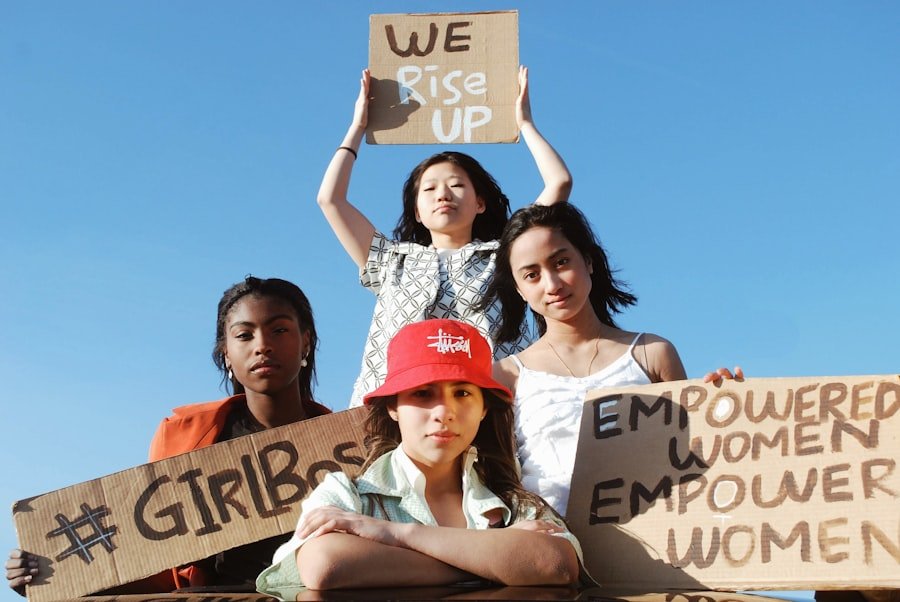

Education plays a pivotal role in advancing women’s economic empowerment in Africa. Access to quality education equips women with the skills and knowledge necessary to participate effectively in the labor market. Studies have shown that educated women are more likely to secure better-paying jobs and engage in entrepreneurial activities compared to their uneducated counterparts.
For example, initiatives like the African Girls’ Education Initiative have focused on increasing girls’ enrollment in schools across various African nations, leading to improved literacy rates among young women. Moreover, education fosters critical thinking and confidence among women, enabling them to challenge societal norms that limit their economic participation. Programs that promote STEM (Science, Technology, Engineering, and Mathematics) education for girls are particularly important as they open doors to high-demand fields that offer better job prospects.
In countries like South Africa, organizations are working to encourage girls’ interest in technology and entrepreneurship through mentorship programs and workshops. By investing in education for girls and young women, African nations can create a more skilled workforce that drives economic growth.
The Impact of Women’s Economic Empowerment on Families and Communities in Africa

The impact of women’s economic empowerment extends beyond individual benefits; it has profound implications for families and communities as well. When women gain financial independence, they are better positioned to contribute to household income, leading to improved living standards for their families. Research indicates that women tend to allocate a larger portion of their earnings towards their children’s education and health care compared to men.
This investment not only enhances children’s well-being but also contributes to breaking the intergenerational cycle of poverty. Furthermore, empowered women often become role models within their communities, inspiring other women and girls to pursue education and economic opportunities. As more women engage in entrepreneurial activities or join the workforce, communities experience increased economic activity and social cohesion.
For instance, in rural areas where women have started small businesses or cooperatives, there has been a noticeable improvement in community infrastructure as profits are reinvested into local development projects. This ripple effect underscores the importance of supporting women’s economic empowerment as a means of fostering broader community development.
The Intersection of Women’s Economic Empowerment and Gender Equality in Africa
Women’s economic empowerment is intrinsically linked to the broader pursuit of gender equality in Africa. Achieving gender equality requires dismantling systemic barriers that hinder women’s participation in all aspects of life, including the economy. When women are empowered economically, they gain greater agency over their lives and can advocate for their rights more effectively.
This empowerment contributes to shifting societal attitudes towards gender roles and promotes a culture of equality. Moreover, gender equality is essential for sustainable development; it ensures that both men and women can contribute equally to economic growth. Countries that prioritize gender equality tend to experience higher levels of economic development and social stability.
For example, Nordic countries have demonstrated that investing in gender equality leads to robust economies with high levels of female labor force participation. In Africa, initiatives aimed at promoting women’s rights must be integrated into national development strategies to create an environment where both genders can thrive equally.
The Role of Technology in Advancing Women’s Economic Empowerment in Africa
Technology has emerged as a powerful tool for advancing women’s economic empowerment in Africa. The proliferation of mobile technology has opened new avenues for women entrepreneurs by providing access to information, markets, and financial services. Mobile banking platforms like M-Pesa in Kenya have revolutionized how women manage their finances by enabling them to send money, save securely, and access credit without needing traditional banking infrastructure.
Additionally, technology facilitates networking opportunities for women entrepreneurs through online platforms that connect them with mentors, investors, and customers globally. Social media has become an essential marketing tool for many women-owned businesses, allowing them to reach wider audiences without significant financial investment. Initiatives such as She Leads Africa leverage technology to provide training programs focused on digital skills development for young women aspiring entrepreneurs.
By harnessing technology effectively, African women can overcome traditional barriers and enhance their economic prospects.
Challenges and Opportunities for Women’s Economic Empowerment in Africa
While there are numerous opportunities for advancing women’s economic empowerment in Africa, significant challenges remain. One major challenge is the persistent gender-based violence that affects women’s ability to participate fully in economic activities. In many regions, violence against women not only poses immediate physical risks but also creates an environment of fear that limits women’s mobility and access to markets or employment opportunities.
However, these challenges also present opportunities for innovative solutions. For instance, organizations working on women’s rights are increasingly focusing on integrating economic empowerment programs with initiatives aimed at combating gender-based violence. By addressing both issues simultaneously, they can create safer environments for women while enhancing their economic prospects.
Additionally, partnerships between governments, NGOs, and private sector actors can lead to comprehensive strategies that tackle systemic barriers while promoting women’s entrepreneurship.
The Future of Women’s Economic Empowerment in Africa
The future of women’s economic empowerment in Africa holds promise but requires sustained commitment from all stakeholders involved—governments, civil society organizations, private sector actors, and international partners alike. As awareness grows regarding the importance of gender equality for sustainable development, there is potential for transformative change across the continent. Continued investment in education and vocational training will be crucial for equipping young women with the skills needed for emerging job markets.
Moreover, leveraging technology will play an increasingly vital role in shaping the future landscape of women’s economic empowerment. As digital platforms continue to evolve, they will provide new opportunities for networking, mentorship, and access to financial resources tailored specifically for women entrepreneurs. By fostering an ecosystem that supports innovation while addressing existing barriers such as legal discrimination or cultural biases against women’s work outside the home, African nations can pave the way toward a more equitable future where women’s contributions are recognized and valued across all sectors of society.
In conclusion, while challenges persist on the path toward achieving full economic empowerment for women in Africa, there is a growing recognition of its importance for sustainable development. By addressing barriers head-on through targeted policies and initiatives while harnessing technology’s potential alongside educational advancements—Africa stands at a pivotal moment where it can redefine its approach towards empowering half its population economically.
Women’s economic empowerment in Africa is a crucial topic that has garnered significant attention in recent years. One insightful article that explores the broader implications of economic empowerment in various sectors is available at this link: Billie Eilish – Your Power. While the article primarily focuses on the music industry, it highlights the importance of empowering individuals, particularly women, to harness their potential and contribute to economic growth. This theme resonates with the ongoing efforts to enhance women’s roles in Africa’s economic landscape.