



Apparently, the application of new technologies—the use of material such as polymers, 3-D printing, and other modular designs—is making it more difficult to address tracing? Did the meeting come to an understanding on the way forward?
Well, these emerging technologies are all about improving the performance of these weapons and reducing the costs of making them, but they create new challenges for tracing or detecting them.
Some are made of materials that prevent scanners from detecting them at various security points. It is conceivable that someone can put such a weapon in a bag and a scanner cannot detect it. Technology is moving so fast, and many countries have a hard time in terms of human and financial resources to catch up.
We agreed that this would form part of the next review conference in 2023 so that we can discuss more issues about how to mark, record-keep and trace these kinds of weapons, especially those in danger of falling into the hands of terrorists or ending up in conflict areas. I hope that between now and 2023, there will be more discussion on this and, frankly, more capacity building for countries that are having a hard time.
You talk about countries having hard times. Are developing countries, for instance, the only ones having a hard time catching up with the new technologies or is it a widespread issue?
It is very widespread. In fact, only a handful of countries are meeting the technology challenge. Most of the world is still trying to play catch up. And it’s really a race between those who manufacture these weapons and those who regulate them, to make sure that the regulators have the capabilities to keep up with the manufacturers. As you know, the manufacturers are in a small number of countries. So, it is a global issue, really.
How about the management of stockpiles? Would you say the unfortunate explosions in armories in Equatorial Guinea in March this year and the other one in Beirut, the year prior, highlighted the need for better management?
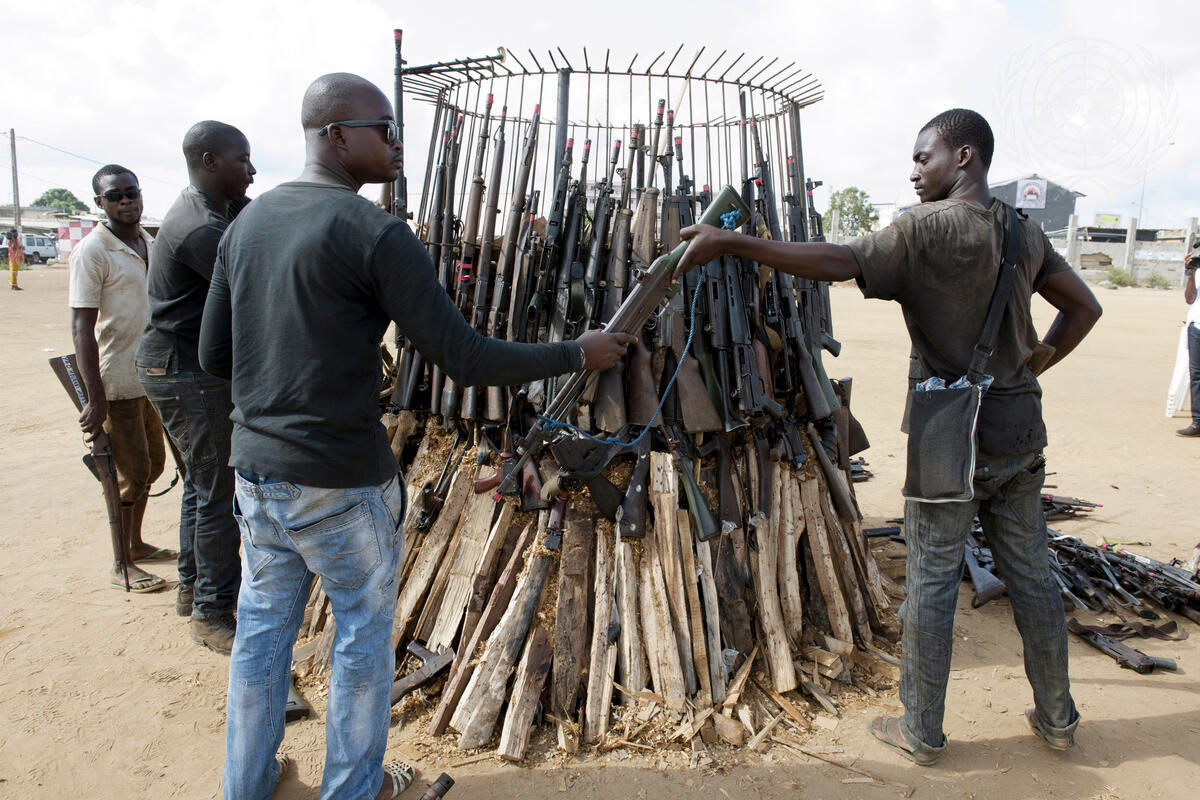
Many arms stockpiles exceed the immediate need and even, sometimes, the projected future needs. When there is a conflict and the management of those stockpiles is weak, those arms are sometimes diverted into illicit traffic. But I think—of course, I am sorry about the tragedy in Beirut—the greatest case of this specific question is the stockpiles of arms that emerged in Libya with the fall of the Gaddafi government. Those stockpiles were immense. The conflict basically opened them up and those weapons spread into the Sahel. Today, thousands of Africans who have been killed in the Sahel by terrorist groups have been killed by the stockpiles diverted out of Libya following the fall of that government. In fact, the stockpile of weaponry that the Libyan government had was far beyond its needs. And now many of those weapons are making their way, from hand to hand, throughout the Sahel and other parts of Africa.
