



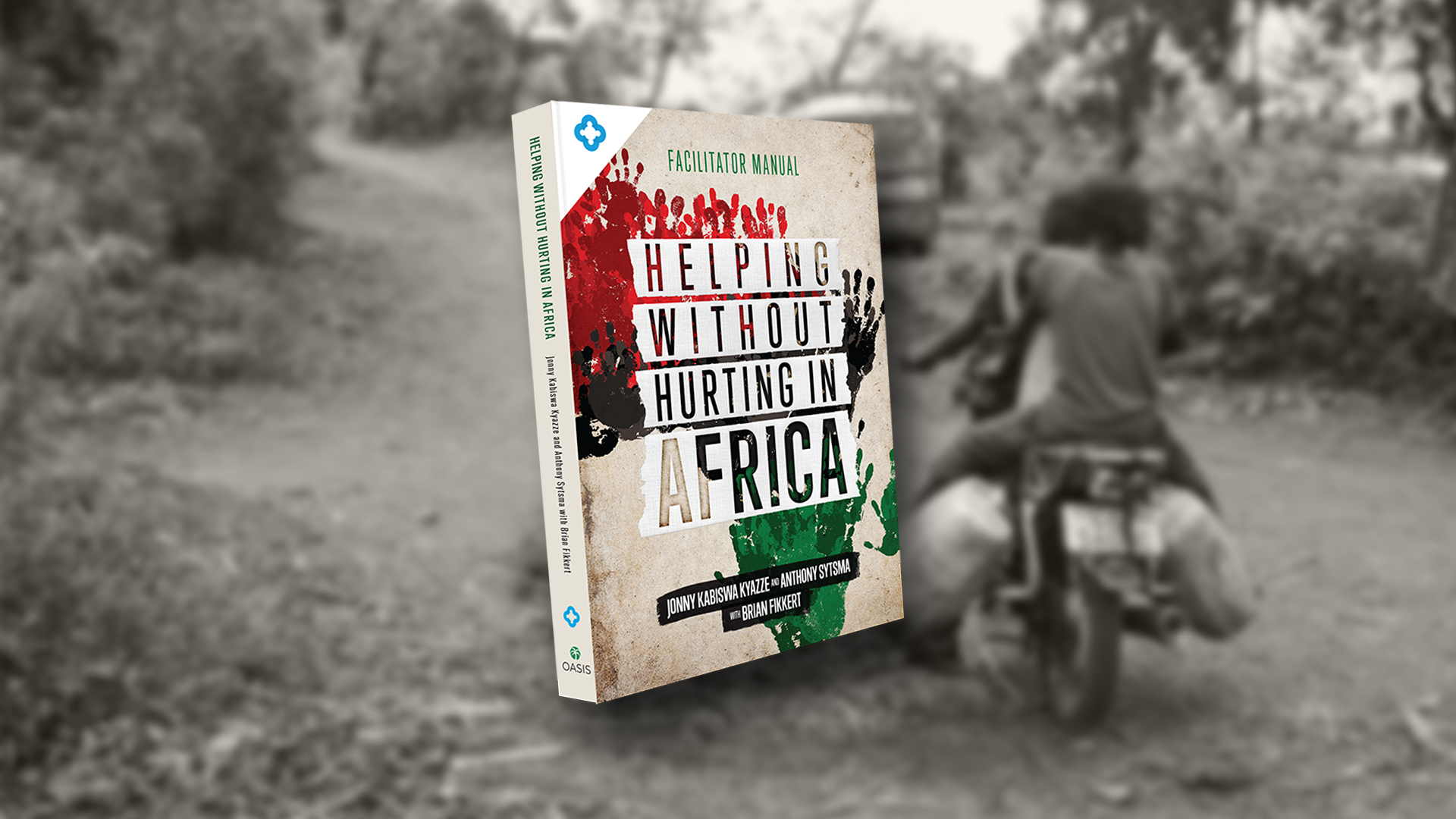
About 30 million more Africans fell into extreme poverty (living on less than US$1.90 a day) through the COVID pandemic. Poverty continues to ravage the continent of Africa. How can the African church respond to this persistent and pervasive problem? The book Helping Without Hurting in Africa attempts to address this question.
Personally, I have always been captivated by efforts to address poverty. This is because I grew up as a firsthand witness to poverty, both in my family and in my community. We suffered tremendously while our country limped slowly towards recovering from the 22 year long civil war, under Joseph Kony’s Lord’s Resistance Army. Poverty robbed us of our dignity. The war, in many ways stripped us of our identity. So how can the church be part of the solution to the problem of poverty that racks Africa?
How can the church be part of the solution to the problem of poverty that racks Africa?
In Helping Without Hurting in Africa, Jonny Kabiswa Kyazze and Anthony Sytsma (with Brian Fikkert) offer biblical guidance in responding to this question. Each author has experience in working with non-governmental organisations in Africa: Jonny Kabiswa Kyazze is a Ugandan and has over 16 years experience in community based development, having worked for various international development organizations at different management levels; Anthony Sytsma, a missionary and ordained minister, has been involved in pastoral training in some of poorest regions of Uganda, and has spent a lot of time equipping churches to care for the poor. Brian Fikkert is one of the authors of the best-selling book, When Helping Hurts, Founder and President of the Chalmers Center, and has vast experience in international economics and equipping churches to help the poor.
Introducing ‘Helping Without Hurting in Africa’
The book is a practical and contextual application of the book When Helping Hurts, by Steve Cobbert and Brian Fikkert. It is a training manual designed to inspire African Christians in positions of influence to foster transformation in their communities (p6). Throughout, the authors provide practical, step-by-step actions to achieve this goal. A Participant Manual is also available to download.
A training manual designed to inspire Christians in positions of influence to foster transformation in their communities.
The major question this book is answering is this: How can Christians in Africa transform poverty-stricken communities? The answer is to transform the mindsets of the people (p8). Transformed individuals will transform communities. The book explores this answer throughout its 20 chapters.
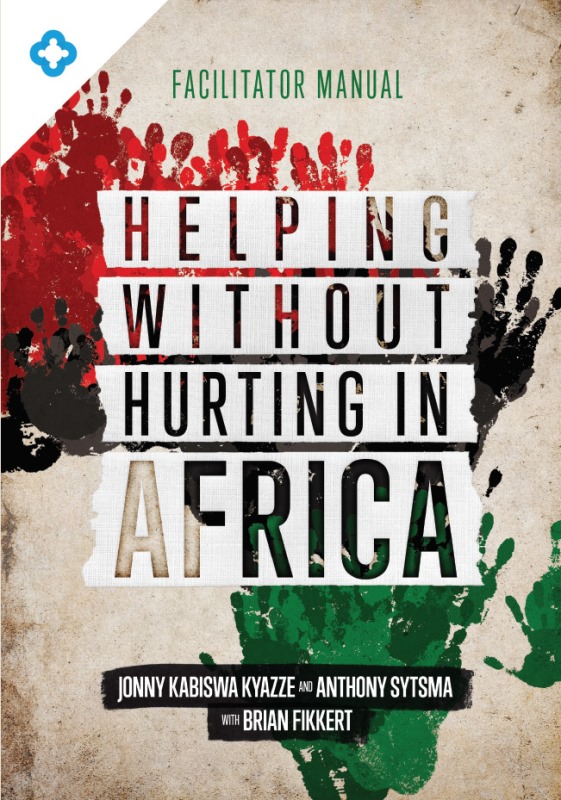
Helping Without Hurting in Africa
Jonny Kabiswa Kyazze, Anthony Sytsma, and Brian Fikkert
Helping Without Hurting in Africa
Jonny Kabiswa Kyazze, Anthony Sytsma, and Brian Fikkert
Oasis. 384 PAGES.
Based on the principles of the best-selling American book When Helping Hurts: How to Alleviate Poverty without Hurting the Poor…and Yourself, Helping Without Hurting in Africa trains leaders to proclaim the gospel in both word and deed, changing mind-sets and helping them apply biblical principles to care wisely and compassionately for people who are poor without unintentionally doing harm.
Oasis. 384 PAGES.
The authors write that, “in addressing the problem of poverty in Africa, many foreign governments and organisations have done more harm than good. This is primarily because of a poor diagnosis of the phenomenon of poverty. We know that medically, a poor diagnosis of an illness will lead to a wrong treatment” (p52). Thus, the book argues that a serious challenge to properly responding to poverty is due to a wrong diagnosis. A right diagnosis of poverty will lead to the correct treatments. It is important to understand that what we believe to be the cause of poverty will determine the response we offer to address it (p52).
Identifying the Real Problems Behind Poverty
The authors offer a peculiar diagnosis and therefore suggest a different treatment for poverty. They do this by presenting three issues: a principle, a philosophy, and finally a pathway for addressing poverty at its root.
1. A Gospel Principle
Firstly, the book offers a core principle for understanding poverty: in order to adequately address poverty in Africa there needs to be a transformation of the people’s mindset. The biblical gospel is the only powerful impetus for this transformation. It must be our foundation and motivation. Thus the authors argue that to tackle poverty we need to confront the prosperity gospel. This so-called gospel is sinking sand, a quick fix that ultimately hurts the poor (p205).
2. A Three-pronged Philosophy
Secondly, the book offers a philosophy for responding to poverty in Africa. Poverty is not just lack of material goods; it goes beyond lacking money (p64). But many Africans understand poverty purely in terms of lacking money, which is a misleading view. They believe that if you have money, then you aren’t poor. However, poverty is about broken relationship with God, self, others, and with creation.
Poverty is not just lack of material goods; it goes beyond lacking money.
Thus any philosophy for approaching poverty must be much broader than financial aid. The authors suggest three responses to disaster and poverty, and it’s important to distinguish our actions in each response. (a) Relief should only follow immediately after a disaster. (b) Rehabilitation seeks to bring people back to their normal condition, as they were before the disaster. (c) Development must aim to move people towards a holistically better way of life.
3. The Pathway to Redemptive Relief
Finally, Helping Without Hurting in Africa offers a path to follow in practically addressing the vast challenge of poverty. This is a path that begins to transform communities from the place of their strength(s). This helpfully cuts against needs-based approaches, which work with people from the place of weakness (p124). An asset-based approach to community development calls communities to identify their resources, and make those the beginning of their pathway to transformation.
Two Brief Critiques
At times I felt that Helping Without Hurting in Africa doesn’t explicitly address the matter of the motivation which non-Christian organisations put forward for the transformation of communities. There are many people addressing poverty using a similar philosophy in Africa. But their motivations aren’t biblical. The gospel isn’t their foundational principle. So it’s critically important that in addressing poverty our motives are aligned with the Bible. Excellent methods to address poverty with wrong motivations, will only lead to greater poverty.
In many African churches the concept of transformation has totally replaced evangelism.
As a pastor I believe another shortcoming in the book is that the authors leave the relationship between evangelism and transformation unclear. In many African churches the concept of transformation has totally replaced evangelism. Many church leaders in Africa are starting NGOs to transform societies with high levels of poverty. The goal is more to care for the perishing and not rescue the spiritually dead. The testimonies are of communities with better water, more schools and hospitals, without stating that the lost have been reached.
I Heartily Recommend this Resource
In conclusion, Helping Without Hurting in Africa presents contextually relevant and practical directives for how the African church can participate in addressing the problem of poverty. It offers a solid foundation for this intervention, founded on the gospel. Indeed, the church in Africa has a role to play in responding to poverty. This book is a helpful tool that will empower the whole church to take the whole gospel to the whole world.
