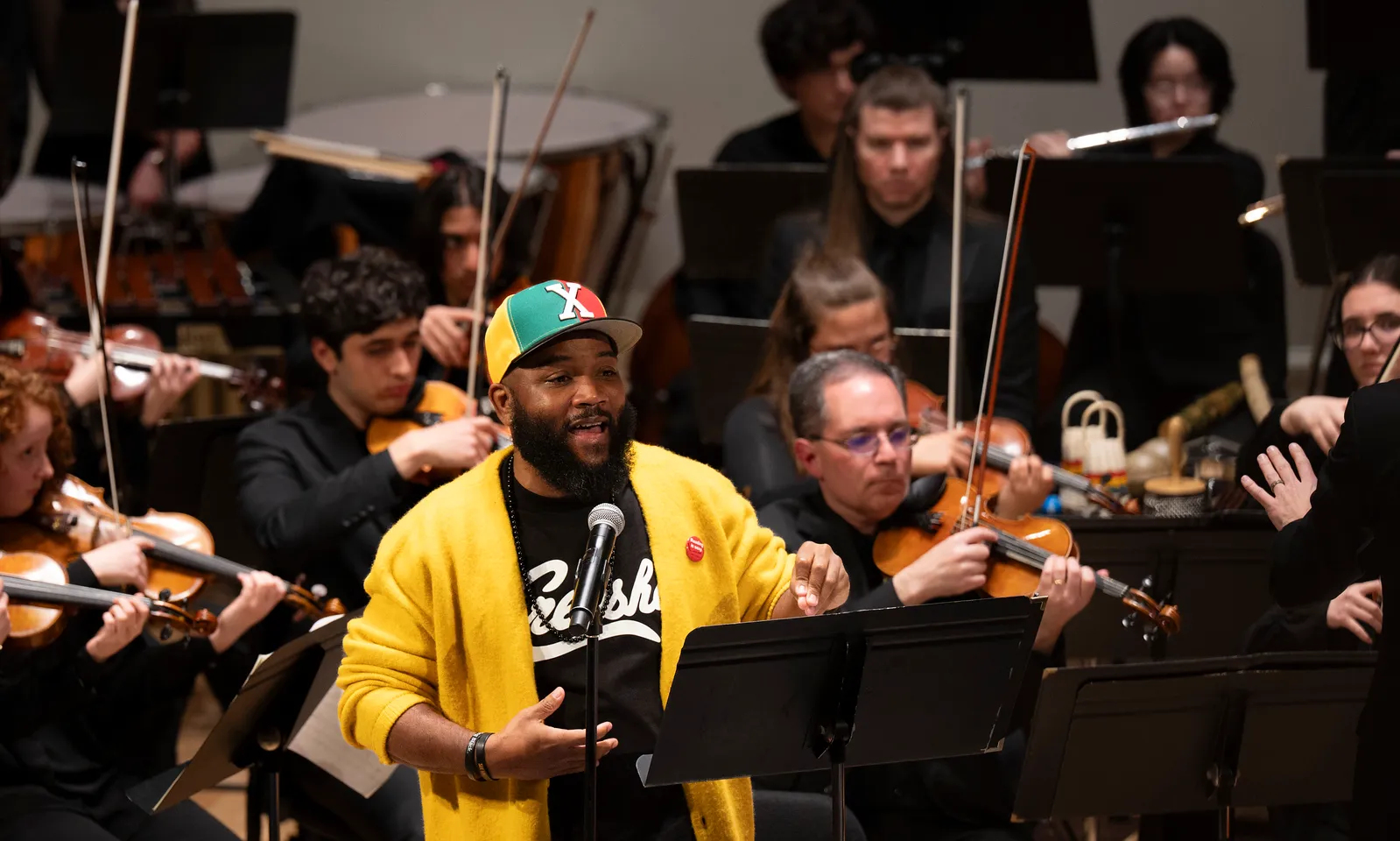
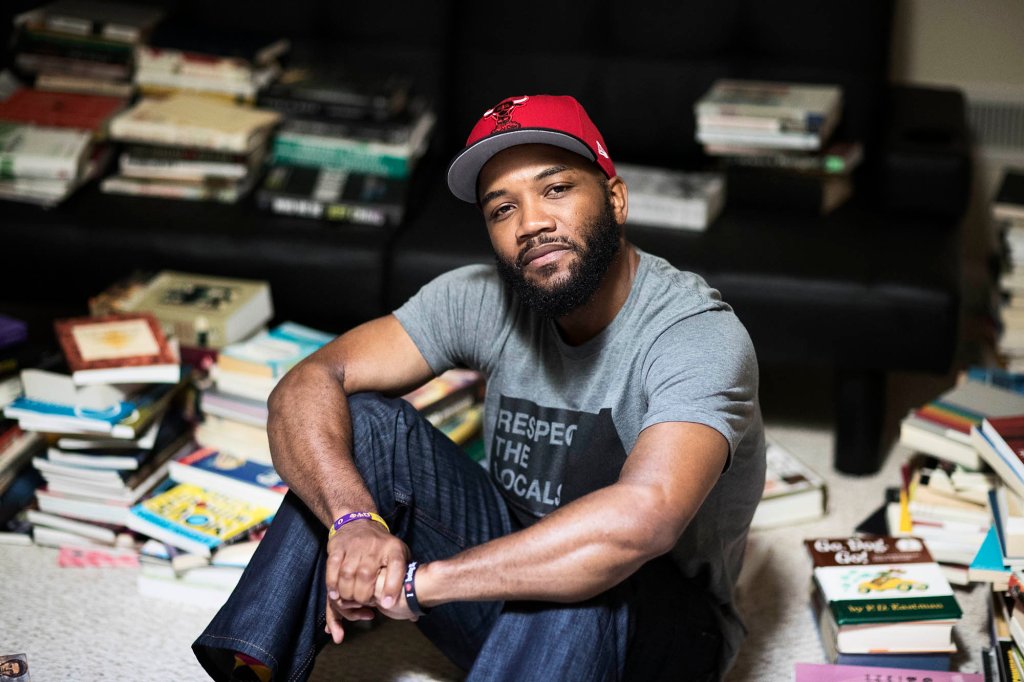
I was targeted by Charlie Kirk’s organization, Turning Point USA, because I make rap music.
Before I was appointed professor of Hip-Hop in 2017, I wrote an album called Owning My Masters: The Rhetorics of Rhymes & Revolutions to earn a Ph.D. Of course, this was a big deal to me, earning a doctorate by making rap music, but I also think it was a big deal for Hip-Hop because the lyrics, the beats, the visuals – the album – were what earned me that degree. When I got the job, it felt like having “Hip-Hop” in my title was even more significant.
Charlie Kirk, who was killed at an event at a university in Utah, despised rap music and rappers. His political allies do, too. It should come as no surprise that Kirk called the music “degenerate Hip-Hop stuff,” and said people should stop listening to rap, “and go back to listening to the music that built our civilization.”
The entry on the Turning Point Professor Watchlist about me includes the titles to songs from Owning My Masters, screen shots of lyrics from the album, and commentary I’ve written about how right-wing personalities like Ben Shapiro and Tom MacDonald use rap to weaponize the anger of young white men.
“It makes sense to me that an organization like Turning Point USA would target someone like me who does work through rap. They understand how powerful a tool music can be for their culture wars.”
I’ve known about Turning Point USA’s Professor Watchlist since I was a doctoral student at Clemson University in South Carolina. A couple of professors I worked with there were added to the list while I was a student.
Even before I was listed on the Turning Point site, my music had attracted right-wing backlash. I think that’s just something rappers have had to deal with for as long as Hip-Hop has existed.
Fifty-plus years has been plenty of time for rap to become a powerful culture war weapon.
In my forthcoming book, Being Dope, I describe it as “rapwashing.” It’s a specific kind of scapegoating folks do with Hip-Hop. It works how it sounds—cultural assumptions about rap music are used to create associations between people and stereotypical ideas, especially regarding violence, drugs, and criminal behavior. Though the negative associations are probably easy to imagine, it’s important to know that rapwashing is also used to benefit individuals and organizations.
The beneficial associations made through rapwashing follow a pretty standard formula, too. They might be trickier to recognize than the negative ones, though. Consider how organizations like the NFL, the Grammys, and even the U.S. State Department have used Hip-Hop artists and rap music under the guise of addressing social justice issues, often without making any concrete or substantial change.
The negative associations go as far back as the 1986 Rolling Stone article about Run-DMC by Ed Kiersh. He wrote, “To much of white America, rap means mayhem and bloodletting.”
The group’s stadium tour for Raising Hell was repeatedly reported as connected to crime that happened in cities where the tour stopped. The presence of rap music, to these reporters, invited anarchy, offense, and lawbreaking. Fifteen years later, in 2001, No Limit rapper Mac Phipps had his lyrics used as evidence against him in a murder trial. He served 21 years of a 30-year sentence for a crime witnesses later claimed to be coerced into blaming on Phipps. The same year Phipps was released, in May 2022, Atlanta rapper Young Thug was charged, among 28 defendants, with conspiracy and street gang activity under Georgia’s Racketeer Influenced and Corrupt Organizations Act. Prosecutors cited lyrics of his songs as “overt acts in furtherance of the conspiracy.”
In October 2023, a teacher named Domonique Brown was fired from her job because a parent complained that she was a bad influence on students because she’s a rapper. When she was fired, she had reportedly worked at Taylor Preparatory High School for seven years and had been teaching U.S. History. She had previously been honored as Teacher of the Month. She’s pursuing a master’s degree and hopes to eventually earn a doctorate. Her achievements and accolades are admirable, but they have much less to do with the way rapwashing interrupted her teaching career. A student petition in support of Brown garnered more than 200 signatures, according to a WXYZ Channel 7 report. Since then, Brown has released a viral video for a song called “Drippin 101” that features students from her former workplace.
Rapwashing has been used to excuse far more sinister things than a teacher losing their job. It was also at play when public attention focused on Trayvon Martin’s hoodie in February 2012, and the music playing in the truck when 17-year-old Jordan Davis was shot and killed by Micheal Dunn in November that same year.
Rapwashing was used in an attempt to implicate Micheal Brown in his own killing at the hands of Darren Wilson. It’s why 20-year-old Willie McCoy, who was killed by police in Vallejo, Calif., in 2019, was described as a “rapper” after he was killed by police. As McCoy was stirred from sleep in his car by the officers, they shot at him 55 times in 3 and a half seconds. That same year, rap was used to justify the killing of 36-year-old Eric Reason, who was shot while fleeing from an off-duty police officer in a Valero gas station parking lot.
“When people tell me they hate rap music, I never hear that as an invitation to debate.”
In each of these cases, attempts were made to blame and dehumanize the deceased by describing them as rappers or in relation to Hip-Hop culture. It doesn’t matter that they weren’t famous or well-known rappers. It matters even less that rap had nothing to do with the circumstances of any of them being killed.
It makes sense to me that an organization like Turning Point USA would target someone like me who does work through rap. They understand how powerful a tool music can be for their culture wars. The way their founder and people like him describe rap music mirrors a long history of scapegoating rap. Understanding rapwashing in the past and in the present is important because understanding history helps us make sense of the present.
Currently, at schools across the country, people are being pressured into silence and compliance with right-wing demands that instructors teach sanitized versions of history. This has become more intense in the days since Charlie Kirk was killed. It seems that his followers want people to be scared into either silence or celebration of him. I won’t do any of those things.
When people tell me they hate rap music, I never hear that as an invitation to debate. I usually hear it as a veiled way for them to communicate how they really feel about me and the people who make the music I love. I make it a point not to debate what’s racist with folks who’ve mastered being racist in all the old ways and innovate new ways to practice racism daily.
Sure, hating Hip-Hop may be about personal tastes. It’s also, sadly, and far too often, bound up with matters of life, death, and livelihood.