



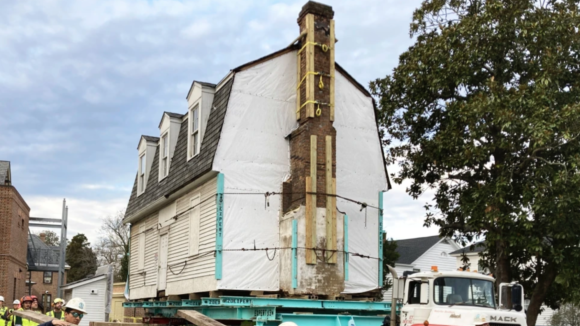
The oldest surviving schoolhouse for enslaved Black people and children was relocated to the Colonial Williamsburg museum in Virginia.
The post Historic Schoolhouse For Black Children Moved To Virginia Museum appeared first on Blavity.
According to NBC, the historic Bray schoolhouse was built 25 years ahead of the American Revolution, near the college campus of William & Mary. The small white building served as a safe learning ground for as many as 30 students at a time, including free Black children and escapees of slavery.
The school came to fruition after Benjamin Franklin, the chairman of a London-based charity, named it after philanthropist Reverend Thomas Bray in 1760. Franklin’s charity also launched schoolhouses in other cities, including New York and Philadelphia.
The lessons and curriculum were taught by a white teacher named Ann Wager, who taught 300 to 400 young students literacy and words from the Book of Common Prayer. The School ran until 1774, with only the Philly schoolhouse location being reopened after the Revolutionary War.
After years of being private property, William & Mary received the schoolhouse as a part of their Lemon Project that launched in 2009 in a research initiative that seeks to explore the university’s involvement in slavery and segregation and its continued relationship with the African American community.
The Bray School was groundbreaking for students despite Virginia laws imposing anti-literacy laws until the 1800s. During the Bray school teachings, many states forbade educating enslaved people.
Tonia Merideth, the Bray School Lab’s oral historian, is super excited to learn about the history of her people after learning ancestors were educated.
“Everything that I learned about my ancestors was wrong,” she said. “They could learn. They did learn. They were able.”
The museum where the schoolhouse will stay on display was founded in 1926 but did not tell Black stories until 1979.
