
- Interview by
- Feven Merid
When the directors of the documentary film Khartoum set out to craft its story, they could never have been prepared for one of the deadliest wars of our times breaking out. In April 2023, the Rapid Support Forces (RSF) militia and the Sudanese Armed Forces began warring with each other. Throughout Sudan, life would never be the same. Since the start of the fighting, some eight million people have been displaced internally, and four million fled the country. Tens of thousands have been killed. Food insecurity and famine triggered by the war have left half of Sudan’s population—almost 25 million—facing extreme hunger. From the onset, Khartoum, its sister city Omdurman, and the surrounding areas became battlegrounds for intense fighting. More than two years later the intensity has only spread. In October, El Fasher, a key city in the Darfur region, fell to the RSF militia giving them control of the area. It is a clash that might be a civil war on its face, but it has international stakes. The United Arab Emirates’ support for the RSF militia continues, while arms from China, Russia, Serbia, Türkiye, and others have been identified.
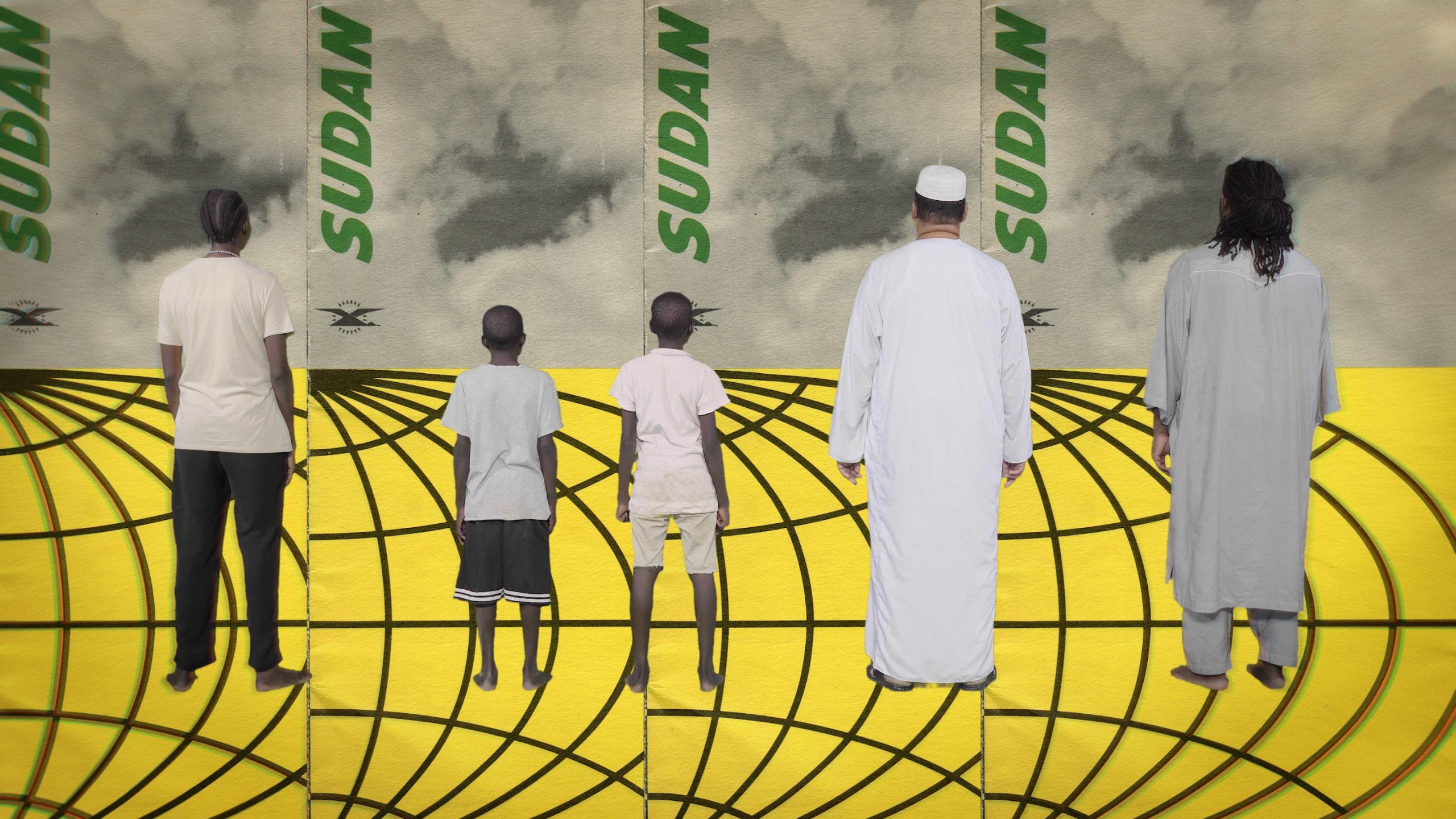
To illustrate this complex moment in Sudan, directors Ibrahim Snoopy, Anas Saeed, Rawia Alhag, and Timeea Ahmed turned to the inner workings of life in Khartoum. They found five civilians: Khadmallah, a tea vendor; Lokain and Wilson, two young boys who collect plastic bottles for money; Majdi, a civil servant Majdi and Jawad, a Sufi Rastafarian resistance organizer, to show the city’s inner workings. Each coming from different backgrounds, they represent the mix of classes and ethnicities that come together in Khartoum. Partially shot before the devastation of the 2023 war, the film unintentionally became a time capsule. When fighting became untenable, both directors and subjects made the decision to leave, finding refuge in Nairobi. At some points, the film takes a step back and turns the camera on itself, showing the directors and each of their subjects pausing filming to console one another on set, the background graphics at once displaying Khartoum streets cut back to their natural state, a green screen.
In the end, despite weathering some of the greatest challenges a film production could face, the four directors and their creative director, Phil Cox, along with the production team, completed Khartoum. Released this year, the film has been making its rounds through screenings around the world. Last week, I spoke to Snoopy and Cox about making a film during war, director-subject relationships, and their hopes for the film. This conversation has been edited for length and clarity.