



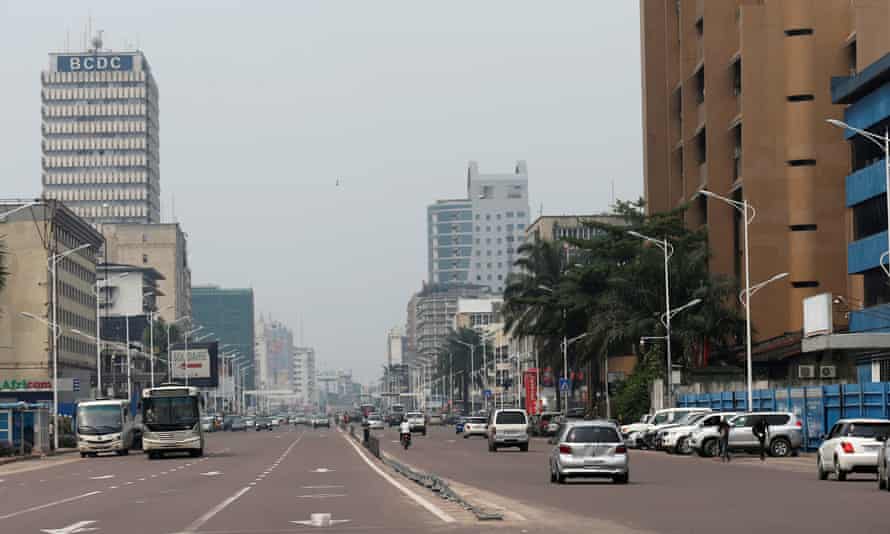
Formerly Zaire, the Democratic Republic of the Congo is located in central Africa and has a small coastline. In Africa, it is the third largest country and the world’s 12th largest. It has Africa’s fourth highest population and the 18th highest in the world with 85,906,342 million people.
The country is often referred to as DR Congo, DROC, DRC, or RDC. It is also called Congo-Kinshasa after the capital. The country borders the Central African Republic and Sudan to the north. To the east, it borders Uganda, Rwanda, and Burundi, Zambia and Angola to the south, and the Atlantic Ocean to the west. In the east, Lake Tanganyika separates it from Tanzania. At Muanda, DR Congo has a 40 km coastline. There, the Congo River empties in the Gulf of Guinea.
The country was formerly known as the Congo Free State, Belgian Congo, Congo-Leopoldville, Congo-Knshasa, and Zaire. As a member of the Southern African Development Community (SADC), it is affiliated with southern Africa despite being in the central African region.
The country was devastated by the Second Congo War, which began in 1998. It involved seven different armies and is often referred to as “African World War.” Fighting continues in the country’s east despite a peace agreement signed in 2003. In that region, the amount of sexual violence is described as the world’s worst. The deadliest conflict since World War II, the Second Congo War has killed 5.4 million people.
DRC’s citizens are among the world’s poorest, with the second lowest per capita GDP.
Early history
During the second millennium BC, early peoples came to the central African area. They maintained livestock, produced food, and developed the oil palm. Starting in the area of South Cameroon on the Sanaga River, the Neolithic’s first people can be followed southwards and southeastwards. The first villages in the DRC were in the vicinity of Mbandaka and Lake Tumba and the people were known as the “Imbonga Tradition: around 650 BC. North of the Angolan border in the lower Congo, the Neolithic advance was the “Ngovo Tradition” around 350 BC.
In Kivu in the east, the “Urewe Tradition” settlements appeared around 650 BC. Congo’s few archeological sites are the Urewe;s western extension. This culture has been found in Rwanda, Uganda, Burundi, Tanzania, and western Kenya. These people understood smelting iron as shown by excavations.
Further west, the earliest evidence is in Cameroon and near Bouar in Central Africa. North of the Equatorial Forest, data places iron smelting between 650 BC and 550 BC. This technology developed independently from other in the Neolithic expansion some 900 years later. Food-producing villagers settled the Congo River network slowly. Evidence suggests villages reached the area around 1,150 BC.
These Bantu-speaking villagers displaced Pygmy populations into other parts of the country. Later migrations from the Kordofan and Darfur regions and East Africans moving into the eastern Congo, added to the ethnic groups present. The Bantu brought agriculture, fishing, fruit collecting, hunting, small livestock, and arboriculture before 3,500 BC.
The Upemba transitioned to the Kingdom of Luba gradually. There were several societies that developed out of the Upemba before the Luba originated. The region’s mineral wealth gave these kingdoms riches. The Luba established a demand for their metal-working. A strong central government based on chieftains was established by the 16th century. The Congo’s eastern regions were constantly raided for slaves by invaders from Arab/Zanzibari groups like the Tippu Tip.
The African Congo Free State (1877–1908)
From the 1870s to the 1920s, Europeans explored the area. Sir Henry Morton Stanley was one of the first and his explorations were under the sponsorship of Belgian King Leopold II. The Belgian king wanted the Congo as a colony and to accomplish this he played powers against each other.
At the Conference of Berlin in 1885, Leopold acquired right to the Congo, naming it the Congo Free State. His reign in the Congo began with infrastructure projects, including railway construction from the capital to the coast. All projects were designed to extract wealth from the colony, which led to African’s exploitation.
In the colony, the local population was oppressed to produce rubber for the growing global market. Leopold built several buildings in his home country with the money made off the rubber production. The army was sent to the colony to enforce production quotas. The army, known as the Force Publique, accomplished this by cutting limbs off of workers. From 1885-1908, millions dies from disease and exploitation. Diseases included sleeping sickness and smallpox. A commission later determined that Congo lost half its population, but no accurate records exist.
International protests resulted from the practice in the Congo. These were led by Roger Casement and E.D. Morel. Arthur Conan Doyle and Mark Twain also spoke out. Heart of Darkness by Joseph Conrad was set in the Congo.
Belgium’s parliament eventually responded to the pressure by taking over the colony’s administration from the king in 1908. It was then called the Belgian Congo.
Political crisis (1960–1965)
In May 1960, the Mouvement National Congolais, a nationalist movement, won parliamentary elections. The MNC was led by Patrice Lumumba. Lumumba was appointed Prime Minister. Joseph Kasavubu was elected by parliament to be the president. He was part of the Alliance des Bakongo (ABAKO). Other parties included the Parti National de Peuple (PNP) led by Albert Delvaux and Laurent Mbariko, the Parti Solidare Africain (PSA) led by Antoine Gizenga. On June 30, 1960, the Belgian Congo won its independence and became the Republic of the Congo. The provinces of Katanga and South Kasai began a struggle for secession shortly after independence. In Katanga, Moise Tshombe led the movement. At this time, most Europeans still in the country fled, giving the Congo the ability to replace the European military and administration.
Upon its independence, the French colony of Middle Congo also took the Republic of Congo name upon independence. The colonies became known by their capital names Congo-Brazzaville and Congo-Leopoldville. Newspapers also called Congo-Leopoldville The Congo and Congo-Brazzaville Congo. After Mobutu’s 1965 coup the name again changed to the Democratic Republic of the Congo. In 1971 it became the Republic of Zaire.
Kasavubu dismissed Lumumba on September 5, 1960, leading Lumumba to declare the action unconstitutional. Joseph Mobutu has been previously appointed the Congo army’s chief of staff. The army was known as Armee Nationale Congolaise (ANC). Mobutu took advantage of the leadership conflict and began a mutiny. He paid his soldiers with money from Belgium and the U.S., whose government did not support communism or other leftist leaders. They financed Mobutu to establish order in the country.
Patrice Lumumba was kidnapped and executed by Katangan and Beglian troops. Confusion followed and a temporary government was established led by Evariste Kimba. U.N. forces assisted to end the Katanga secession in January 1963. Other, short-lived governments, headed by Cyrille Adoula, Joseph Ileo, and Moise Tshombe took over in quick succession.
Zaire (1971–1997)
After five unstable years, Mobutu overthrew Kasavubu in a coup in 1965. Due to his opposition to communism, the U.S. supported him. Mobutu made himself the head of state and established a one-party system. He held periodic elections where he was the only candidate. There was peace and stability, but human rights violations and corruption occurred.
With corruption so widespread, the term “Zairean Sickness” was coined. Mobutu had accumulated $4 billion by 1984. International aid loans enriched Mobutu while the country’s infrastructure deteriorated. At that point, Zaire became a kleptocracy.
Mobutu began an African nationalist campaign in 1966 by renaming cities. He changed Leopoldville Kinshasa. Stanleyville became Kisangani, Coquihatville became Mbandaka, and Elisabethville became Lubumbashi.
Mobutu renamed the country the Republic of Zaire in 1971, its fourth name change in 11 years. He renamed the Congo River the Zaire River. Mobutu even changed his own name to Mobutu Sese Seko Kuku Ngbendu Wa Za Banga. This translates to The Great Unstoppable Warrior who goes from Victory to Victory, Leaving Fire in his Trail.
From the 1970s and 1980s, Mobutu visited several U.S. Presidents. In June 1989, he was invited to meet with President Bush, the first African head of state to do so. U.S. relations with him cooled after the Soviet Union’s collapse.
Opponents in Zaire demanded reform. Due to this, Mobutu declared the Third Republic in 1990. This was supposed to start democratic reforms but these were largely cosmetic. Mobutu stayed in power until forced to flee in 1997. The nation then chose to retake the name the Democratic Republic of the Congo.
Rwandan/Ugandan Invasions and Civil Wars
The neighboring Rwandan Civil War and genocide spilled into Zaire in 1996. The Rwandan Hutu militia began to use Zaire refugee camps as a base for attacks into Rwanda. They eventually worked with Zaire’s armed forces (FAZ) to fight Tutsis in Zaire.
In response, Ugandan and Rwandan armies invaded Zaire to fight the Hutu, overthrow Mobutu, and control Zaire’s mineral resources. Other Zairean leaders soon joined them. These included Laurent-Desire Kabila, leader of what became known as the Alliance des Forces Democratiques pour la Liberation du Congo-Zaire (AFDL). The foreign forces and local leaders wanted to oust Mobutu. In May 1997, Mobutu fled the country. Kabila moved into Kinshasa and declared himself president.
President Kabila requested the foreign armies that helped him gain power withdraw. He…
