




London
CNN
—
When Africa needs medicines, all too often the continent must look abroad.
African nations consume about 25% of vaccines produced globally, but import nearly 99% of their supply, according to the African Union Development Agency. For packaged medicines, only 36% of demand is produced locally, and just 3% is supplied by regional trade, according to the World Economic Forum.
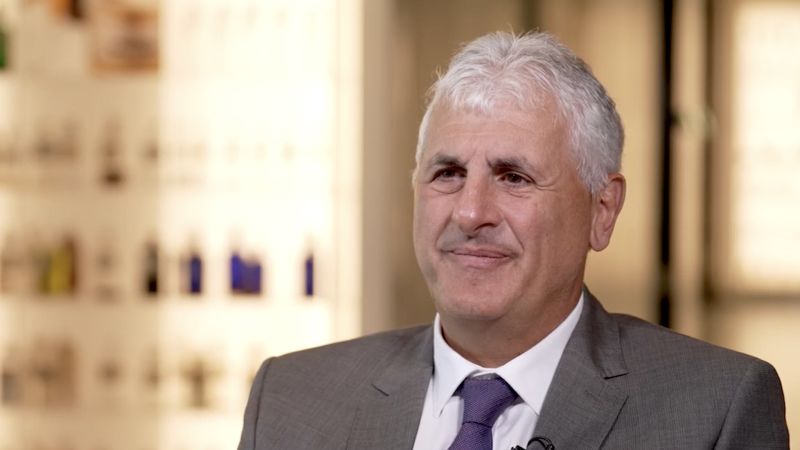
Of the roughly 600 manufacturers of packaged medicines operating on the continent, South Africa’s Aspen Pharmacare is one of the largest, with more than 9,000 employees in over 50 countries. CEO Stephen Saad discussed the future of the pharmaceutical sector in Africa, and what lessons Aspen Pharmacare has learned from the Covid-19 pandemic, with CNN’s Eleni Giokos.
The following interview has been edited for length and clarity.
During the pandemic, we’ve seen a spotlight on the inequalities that exist on the continent in the pharmaceutical sector. Aspen has had a very strong commercial presence across Africa and now you’re moving up the value chain. Certainly Covid has catalyzed a lot of work that you’re doing. Tell me what you’re up to.
Saad: You mentioned inequalities. [Covid] really sparked the world’s attention to say, ‘Hey, this doesn’t seem right.’ We were very proud to be able to deliver vaccines to the continent in the quantities that we did, but the reality of Covid was that Africa didn’t get vaccinated. But what we’ve learned — whether it was Aids or multi-drug-resistant TB — is that we have to be strong regionally. We have really doubled down and instead of saying, ‘Look we’ve lost the Covid vaccine volumes and so we’re closing up,’ we’ve actually put [in] even more capacity. We’re committed to one person one vaccine in Africa and we’re working very hard towards that process.
If I had to ask you to describe what the pharmaceutical sector looks like right now in Africa, what would your answer be?
The answer is simple. When Covid came and Africa needed vaccines, over 90% of the vaccines were supplied by India — and that wasn’t great. At the end of the day, you can’t ask politicians from other countries to supply someone else before them. I don’t think anybody wants Africans to suffer, but the reality is when the borders close, whether it was Europe or India, they looked after their own population first. If it hadn’t been for Aspen, there would have been no vaccines made in Africa for the continent.
There’s a lot of money going into it now, there’s a lot of investment, there are many initiatives — many of them government-driven. We, off our own bat, have decided that we want to be a source not just of vaccines but biologicals — we would really like to be assisting in oncology, diabetes. We’ve got a lot that we would like to do across the continent to make sure we get access, because there are so many diseases that are just so under-serviced.
The World Trade Organization has done a lot on the policy front for Africa. The Continental Free Trade Area will hopefully make it a lot easier for cross-border trade in the pharmaceutical space. What challenges do you face?
There are numerous challenges. We have facilities in Accra [Ghana], Dar-es-Salaam [Tanzania], Nairobi [Kenya] … It is not always easy to get registrations approved. You decide not to put medicine in Kenya, for example, because of the cost of registration and the time taken. Whereas if it was already registered, we’d be exporting manufacturing into one of those territories.
It’s not so much a tariff issue or a trade issue, this is really a regulatory issue, where your medicine is required to be registered in a specific country in a specific way. For example, you can register a product across Europe [via] a central regulatory body. I think that is something that Africa should also consider.
Even though you say you’re doing good, you still have to make money. How do you balance out all of these factors?
There is this [misconception] that for you to supply cost-affordably means that it’s not very profitable. So much is about economies of scale. I remember when we did ARVs [antiretrovirals, used to treat HIV] and we were desperately trying to cut the price by nearly 90%. We got some fantastic pricing from everyone, but we still made a loss. The decision we made was, let’s go for it. At worst we would have a pretty expensive social investment project, but we backed ourselves that with increased volumes we would be able to reduce pricing. That’s what happened — the volumes came in, the prices, the technologies, and it became affordable. So sometimes you just have to go in and do it. I can’t tell you it was an exact science, but I do believe there’s a balance to be had.
I do think the world acknowledges that there are people that can pay and there are people that can’t pay. To deny people that can’t pay simply because they don’t have money is not a model that’s sustainable.
