



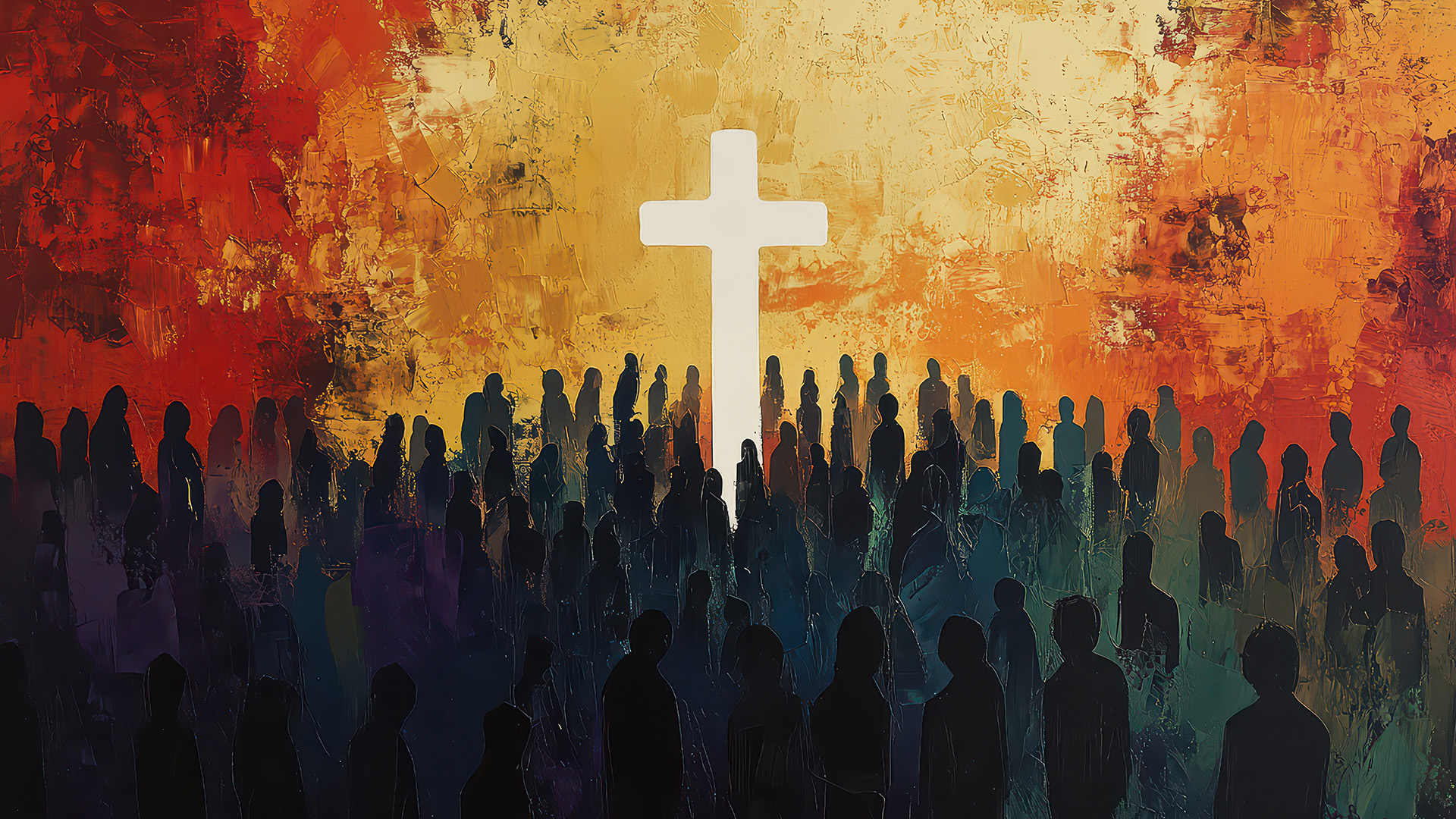
Only a cross-shaped faith can transform a glory-hungry continent. The African church stands at a crossroads. Across pulpits, airwaves, and revival tents, the gospel has often been repackaged as a message of success and self-fulfilment. It’s a message that’s less about Christ crucified than man glorified. In many ways, this gospel mirrors what Martin Luther identified as the ‘theology of glory,’ a message that exalts human effort and downplays the scandal of the cross.
Only a cross-shaped faith can transform a glory-hungry continent.
Writing to a young friend in ministry, Luther offered this counsel: “Learn Christ and Him crucified.” Essentially, Luther was urging his friend to learn to say: “You, Lord Jesus, are my righteousness, but I am your sin.” Like the apostle Paul, Luther refused to shift an inch from the scandalous centre of the gospel. “We preach Christ crucified, a stumbling block to Jews and folly to Gentiles” (1 Corinthians 1:23). Without “lofty speech or wisdom,” but “in weakness and fear and much trembling,” Christ crucified was Paul’s message.
That same message is what energised Luther and the larger Reformation movement. It wasn’t founded on human strength or systems, but the unadorned power of the cross. This is the same message Africa needs today. In an age of spiritual consumerism, performance-driven religion, and miracle-centered faith, we must return to the rugged centre of Christianity. We need to hear of Christ crucified. This may not promise worldly success. But it offers something much better: a crucified Saviour and risen Lord; a gospel that truly saves.
What Is the Theology of Glory?
The theology of glory is man’s attempt to reach God on his own terms. It leans on self-will, religious effort, human wisdom, and visible success. It looks impressive and sounds spiritual. But it blinds people to their need for grace.
Luther saw this in the medieval church. For their salvation depended on human merit; grace was earned through penance; and suffering was interpreted as a sign of God’s displeasure. He called this a theology of glory because it exalted human works instead of divine grace. Today, Africa is plagued by similar errors.
We first see this in the prosperity gospel, where God’s blessings are measured by health and wealth. Secondly, the theology of glory is apparent in our fixation on the man of God, where spiritual power is mediated through one’s connection to a prophet or apostle. Thirdly, revivalism tends towards a theology of glory, where emotional highs and public miracles are mistaken for spiritual maturity. Fourthly, legalistic systems point away from the cross and leave people chasing breakthroughs and deliverance, which can be bought through tithes, fasting, or ‘sowing a seed.’
ATR Has Provided Fertile Ground for the Theology of Glory
What Luther identified as the medieval theology of glory resonates deeply with cultural impulses.
The theology of glory offers spiritual triumph on human terms rather than God’s.
In many African Traditional Religions (ATR), the spiritual realm is approached as a means to secure protection, prosperity, healing, or ancestral favour. Religion is often transactional—gods or spirits are appeased to ensure well-being and success. Tragically, much of this mindset has been carried into Christian practice through syncretism. The result is a gospel that seeks divine power without divine sacrifice, breakthrough without repentance, and favour without fellowship with the crucified Christ. This blending of ATR and Christianity often reinforces a glory-centered religion, one that treats God more like a spiritual ATM than a redeeming Lord. In such a setting, the theology of the cross doesn’t only sound foreign—it sounds foolish.
In all these iterations, the pattern is the same: glory now, suffering never. The theology of glory offers power without the cross and spiritual triumph on human terms rather than God’s.
What Is the Theology of the Cross?
“He deserves to be called a theologian, however, who understands the visible and manifest things of God as seen through suffering and the cross.” So writes Luther, in his 1518 Heidelberg Disputation. In other words, true knowledge of God does not come through displays of power or wisdom as the world sees it, but through the weakness and foolishness of the cross (1 Corinthians 1:18-25).
The theology of the cross begins where human pride ends. It teaches us that God is most fully revealed in the crucified Christ, “despised and rejected by men…a man of sorrows and acquainted with grief” (Isaiah 53:3). It declares that salvation is not earned but freely given. We don’t climb up to God; he stoops down to us in both the incarnation and atonement of Jesus Christ (Philippians 2:5–8).
The cross dismantles all pride. It tells us that we cannot save ourselves.
The Christian life, then, isn’t one of climbing the ladder of blessing but of dying with Christ and rising again with him (Galatians 2:20; Romans 6:4-6). To Luther, the cross wasn’t merely the way to salvation; it was the way God revealed himself. Thus, God isn’t most clearly seen in earthly strength, philosophical brilliance, or religious performance. He is seen in the humiliation of Jesus. Beaten. Mocked. Bleeding. Crucified. Glorious. That is where God speaks. That is where grace is poured out. And that is where sinners are justified; not through penance or progress, but by grace alone, through faith alone, in Christ alone.
The cross dismantles all pride and boasting. It tells us that we cannot save ourselves. The cross means that God’s power is revealed in weakness; that divine wisdom begins with surrender, not strength (1 Corinthians 1:17-24).
Why This Matters for Africa
Africa is hungry for hope. But she’s weighed down by spiritual counterfeits. In the name of Christ, we have witnessed revivals fuelled by hype yet devoid of the gospel. We’ve been sold miracle solutions and motivational Christianity, dressed in biblical language. The result is a Christianity obsessed with success, power, and earthly glory. This is not the gospel. It is a theology of glory—offering resurrection without crucifixion, crowns without crosses, Pentecost without Calvary.
We’ve been sold motivational Christianity, dressed in biblical language.
Africa must recover the scandalous gospel: God saves not through man’s ascent to glory but through Christ’s descent into suffering. Righteousness is not something we perform but something we receive. The Christian life is shaped not by spectacle but by sacrifice; not by earthly ease but a receiving of eternal grace.
The theology of glory offers hope. It promises transformation. Power. But it comes at the cost of the truth. The theology of the cross gives us so much more. Only a cross-shaped faith can confront a glory-seeking gospel. But such faith must also shape our lives. So in the next article of this three-part series, we’ll consider how the cross combats self-shaped spiritualities.
