



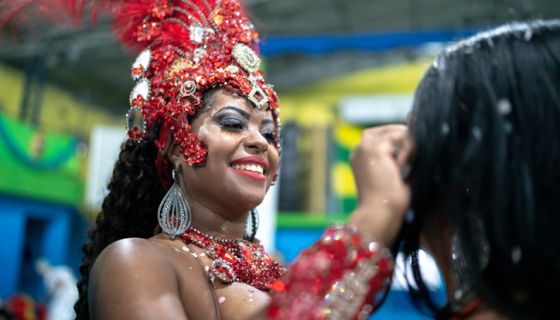
Brazil is home to Samba, the country’s most popular form of music, and the most prominent Black population outside of the continent of Africa. And with 54% of the South American nation’s population of 209 million people being descendants of Africans, the beauty and culture of carnival have not only preserved a rich heritage but also produced some of the baddest, Blackest passistas de Samba on the globe.
Mayara Lima- Rainha de Bateria da Paraíso do Tuiuti
The 26-year-old native of Cidade de Deus (City of God) is the “Queen of The Drum” and principal dancer and instructor at Paraíso do Tuiuti. Mayara’s edgy skill as a passista (dancer in Portuguese) has made her a fave on social media. Although Samba can be a structured dance, especially during carnival, the vicenarian’s thorough incorporation of classic footwork and round-the-way girl elements– has made her a social media fave.
Maryanne Hipolito- Madrinha de Bateria da Cubango
Maryanne has been on the Samba scene since she was six, starting as a junior passista with Cubango. Eventually, the chocolate beauty, dental surgeon and priestess of Oxum in the Candomblé tradition worked her way up to “Godmother of The Drums” in 2022– a coveted honor in Brazil. The talented dancer brings grace and elegance into the African art form and carries pride in her ancestry in her dance and life.
Evelyn Bastos- Rainha da Mangueira Oficial
The 29-year-old president of Mangueira School of Samba in Rio de Janeiro had Instagram in a chokehold during this year’s Brazilian Carnival with her sultry representations of the orisas Oxum and Iansã in the Candomblé tradition.
Evelyn is also the star of Brazil’s popular television show SAMBA CORAÇÃO, a series she hosts with the legendary Selminha Sorriso.
Bellinha Delfim- Musa de Unidos do Viradouro
The gorgeous carnival muse is an accomplished passista and owner of Delfim Atelier– an extravagant headgear line explicitly made for fellow dancers. Bellinha’s dynamic attack on the art form is a thrill to watch. She’s also a new mother to a gorgeous infant daughter.
The “Rainha de Bateria” is a tradition that began in the 1970s in the South American country. The very first queen was Brazilian actress Adele Fátima appeared as the first rainha for “Mocidaded Independente.” Initially, the addition of a woman leading was criticized, but eventually, the queen became a beloved integral figure of carnival in Brazil.
The coveted position is held by women who are extremely beautiful, along with having the chops to dance to Samba. The passistas also represent individual dance schools in the areas they live in. Other dancers who didn’t win were given the positions like a muse, godmother and drummer princess of carnival.
According to Black Brazil Today, racism has played a significant role in the Black tradition. In 2015, traditionally, Black roles were being given away to white Brazilians. And although Brazil’s citizens claim that racism is non-existent– the deletion of Black faces leading the bateria was painfully obvious. And real talk- white Brazilian passistas simply don’t hit like sisters do.
Samba is a musical genre created by Blacks in the country after arriving from Angola. Based on the religious practices of the residents of Bahia, Salvador, the music has evolved into something bigger than favelas after it migrated to Rio de Janeiro. Samba de Roda was the music played during Candomblé rituals to celebrate. Women only performed it. It’s a dying art form, but its derivative modern samba is on and poppin’– thanks to the Black passistas who keep the tradition moving forward.
