


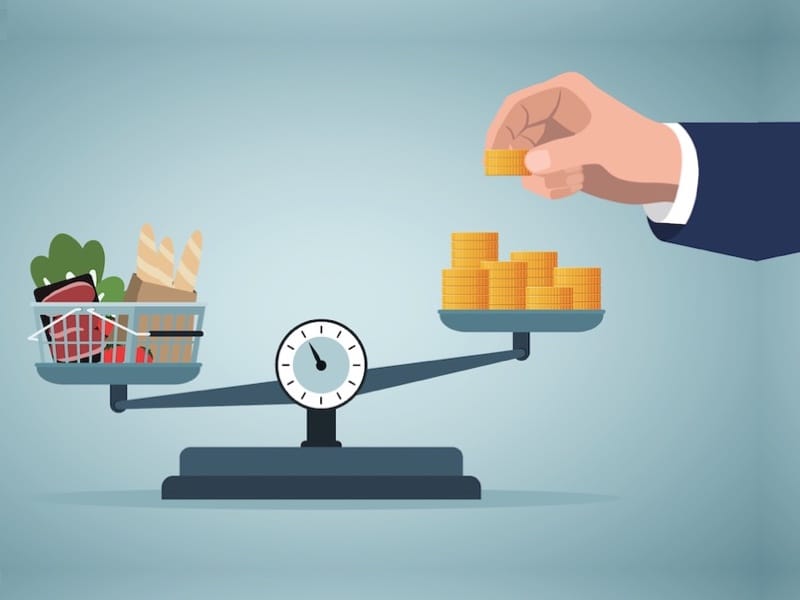
In Summary
- Africa’s strongest purchasing-power cities correlate with institutional maturity, low dependence on the informal sector, and steady expansion of the service sector.
- Cities leading this ranking are building local consumption economies, where household spending supports retail, finance, housing, and transport systems at scale.
- Purchasing power has become a competitive urban index across Africa, shaping migration patterns, skilled-labor retention, and domestic capital formation.
Deep Dive!!
Lagos, Nigeria, Wednesday, November 5 – African cities are entering a defining phase in their economic evolution, where the strength of household purchasing power has become just as important as GDP growth or population numbers. With rapid urban migration, rising cost-of-living pressures, and expanding middle-income populations, the core measure of prosperity is no longer simply how many people live in cities, but how far their income stretches each month.
Recent regional urban-development reports, including OECD and African Development Bank findings, show that urbanisation across Africa has accelerated from roughly 54% in 2020 and is projected to reach about 65% by 2050. This shift is intensifying scrutiny on wage stability, cost-of-living management, and household spending capacity as the real determinants of urban economic security.
Across the continent, governments and city authorities have begun prioritising income resilience and market predictability through reforms aimed at strengthening labour systems, improving municipal revenue frameworks, and expanding digital public-service delivery.
Countries such as South Africa, Morocco, Rwanda, and Namibia have, over the past three years, introduced policy frameworks that target consumer-price stability, formal-sector job growth, and infrastructure reliability, recognising that household spending power underpins both economic mobility and investor confidence. Where utilities remain consistent, formal employment dominates, and housing markets are structured, residents tend to enjoy higher real consumption power and stronger financial tolerance against inflation cycles.
Conversely, cities that still rely heavily on informal labour structures, private generators, and unregulated transport systems continue to face hidden economic friction that erodes income value. Studies across African urban markets consistently show that interruptions in power supply, fragmented transport routes, and informal housing raise household expenditure significantly over time.
As Africa moves deeper into its urban century, purchasing power is emerging as a clearer lens for evaluating which cities are building sustainable middle-class systems and which are still struggling to translate growth into affordability.
This ranking highlights the ten African cities where household income currently stretches the furthest in early 2025, drawing on the latest Numbeo cost-of-living and purchasing-power insights alongside documented governance reforms, infrastructure performance, and labour-market structure. The goal is not just to identify high-performing cities, but to understand the economic and policy conditions that make them work.
10. Tunis, Tunisia
Tunis holds a purchasing-power index of 35.7, supported by a wage environment that has long relied on the public sector as the anchor of household earnings. Civil-service roles in administration, education, healthcare, and utilities continue to shape the city’s middle-income base, offering predictable salary schedules and structured employment. This system has helped Tunis maintain relative income stability even during regional inflation cycles, which gives households a level of monthly certainty uncommon in many parts of the continent.
Behind this stability is a strategic governance approach that treats urban planning and wage security as intertwined. Tunisia’s National Urban Policy framework, developed with international technical assistance, has guided land-use planning, infrastructure investment, and municipal service delivery in a coordinated way. Alongside this, the Urban Rehabilitation and Renewal Agency (ARRU) has continued to implement programs such as PRIQH II, targeting improvements in informal districts through infrastructure upgrades, utility access, and neighborhood-level planning reforms. These initiatives reduce pressure on family spending by improving basic service quality and keeping essential living costs grounded in regulation rather than market volatility.
Purchasing power in Tunis is also shaped by Tunisia’s historic use of price management. Subsidies on bread, cooking oil, and fuel, along with controlled urban transport fares, ease cost burdens for low- and middle-income households. Rent remains moderate compared to coastal tourism corridors, helping residents retain more disposable income. Still, structural challenges remain. Currency pressures affect import-linked consumption, and the private sector is not yet absorbing enough young graduates into steady, higher-earning roles. This creates a tension where the city offers income security, but the pace of salary growth remains measured.
Reform momentum is focused on widening the wage engine beyond public payrolls. The National Urban Mobility Policy launched recently aims to modernize transport governance, improve transit efficiency, and cut commuting-related spending pressure. Parallel to this, social-housing legislation and targeted municipal finance programs under the Urban Development and Local Governance Program are designed to strengthen service delivery and widen access to affordable housing. Meanwhile, tech hubs such as the El Ghazala Technology Park continue to push higher-value employment pathways in ICT and applied research. As these reforms mature, Tunis is positioning itself to evolve from a state-anchored wage model toward a balanced urban economy that sustains stronger household purchasing power and nurtures a modern middle-class base.
9. Marrakech, Morocco
Marrakech records a purchasing-power score of 37.2, reflecting a city whose household income strength is shaped by a tourism-driven economy, service industries, and a growing administrative and logistics presence. Earnings across hospitality, aviation support, trade, construction services, and municipal roles form the backbone of household consumption. The city’s status as one of North Africa’s most visited destinations sustains employment in hotels, riads, transport, food services, crafts, and real-estate support functions. While this creates steady income during peak periods, households often navigate seasonal fluctuations and cost pressures linked to global travel trends and domestic tourism cycles.
Beneath its cultural reputation, Marrakech operates a layered urban economy. The airport, conference facilities, and large-scale tourism corridors provide administrative and aviation-linked wage opportunities, while education and healthcare centres feed a professional workforce that anchors income in growing neighbourhoods. Small-business activity remains highly organised, especially in textiles, furniture workshops, traditional crafts, and food retail in the Medina and Gueliz zones. Formal logistics and warehousing nodes around the outskirts create income channels beyond tourism, supporting supply chains serving both Marrakech and central regions. The real estate market, driven by domestic buyers and regulated foreign demand, supports legal services, architecture firms, property maintenance, and skilled trades, broadening the city’s earning spectrum.
Urban governance has played an active role in stabilising income environments. Marrakech has implemented long-term spatial frameworks focused on preserving heritage cores, regulating peri-urban expansion, and aligning tourism infrastructure with transport corridors. Investments in sanitation systems, Medina restoration, water-supply reinforcement, and solid-waste upgrades aim to strengthen service reliability for residents and businesses. The city’s Urban Resilience Plan, developed with international technical partners, introduced structured risk-management tools for water stress, heat adaptation, and infrastructure continuity. These decisions reduce disruptions that typically push household costs higher in fast-growing cities. Transport reforms, including structured bus fleets and taxi-sector regulation, have gradually improved mobility and reduced commuting burdens on workers.
In recent years, Marrakech has focused on widening economic participation and stabilising household budgets. The rollout of digital-administration systems, business-licence reforms, and municipal-revenue improvements supports formal enterprises and makes compliance easier for small operators. Public-realm investments in Jemaa el-Fna, the Medina network, and peripheral neighbourhoods aim to protect tourism income while keeping everyday commercial life functional and safe. Housing-delivery initiatives and utility-expansion efforts target affordability for working families, while skills programmes in hospitality management, renewable-energy maintenance, and craft-sector modernisation help residents move into higher-earning roles. As resilience projects, mobility reforms, and diversified training pipelines continue, Marrakech is positioning itself to convert its service-driven economy into more stable household purchasing power rooted in broader economic access and long-term urban planning discipline.
8. Casablanca, Morocco
Casablanca records a local purchasing-power index of 39.2, reflecting an urban economy where income levels are moderate by global standards but structurally more advanced than many peers. As Morocco’s largest city and principal economic hub, Casablanca concentrates manufacturing, finance, and service activity within a metropolitan region that accounts for roughly one-third of the national GDP. According to the 2024 review of Morocco’s National Urban…
